

What Japanese Millet Actually Is
Japanese millet (Echinochloa esculenta) is a warm-season annual grass that grows fast, tolerates wet soils, and produces heavy seed heads that wildlife and livestock find highly attractive. It is closely related to barnyard grass but has been selectively bred over generations for larger seed yield and better palatability. Farmers and land managers across the southeastern and midwestern United States plant it heavily for duck impoundments, deer food plots, and cattle forage programs.
The plant typically reaches heights between 3 and 5 feet within 60 to 90 days of germination, making it one of the fastest-maturing cereal grains available to growers. Its rapid growth cycle is a major reason wildlife managers favor it over slower-establishing alternatives. Unlike many warm-season grasses, Japanese millet begins producing usable seed heads in as little as 45 days under ideal conditions, giving land managers flexibility that other species simply cannot match.
The grain itself is small, round, and rich in carbohydrates, which makes it especially valuable as a high-energy food source for migratory waterfowl arriving in late autumn. Many growers who plant sunflowers for wildlife food plots also add Japanese millet to their rotation because the two crops mature at different times and together extend the feeding season significantly.
Soil and Climate Requirements for Japanese Millet
Japanese millet thrives in warm temperatures and performs best when soil temperatures at planting depth reach at least 65 degrees Fahrenheit. Air temperatures between 70 and 95 degrees Fahrenheit support the fastest growth rates. The crop has no meaningful cold tolerance and should never be planted while frost risk remains. In most of the United States, this means planting begins no earlier than late April in the south and mid to late May in northern states.
One of the most important and underappreciated traits of Japanese millet is its tolerance for poorly drained soils. It can germinate and establish in soils that stay wet for extended periods, conditions that would kill most other summer annuals. This makes it the preferred choice for low-lying areas, flood plains, and managed wetland impoundments where water levels fluctuate seasonally. That said, it also performs acceptably in well-drained upland soils as long as adequate moisture is present during the first two weeks after germination.
Soil pH between 5.5 and 7.0 covers the full range of conditions where Japanese millet grows without significant yield penalty. Growers do not need to chase a perfect pH to get a productive stand. If you are also managing aquatic planting zones alongside your millet fields, understanding how beneficial bacteria affect pond health can help maintain the water quality in adjacent impoundments where millet is flooded for waterfowl.
How to Prepare the Seedbed Before Planting
A firm, weed-free seedbed gives Japanese millet its best possible start. The seed is small, roughly the size of a grain of sand, which means it needs good seed-to-soil contact to germinate reliably. Loose, fluffy soil causes the tiny seeds to fall too deep or sit in air pockets where they dry out before the root can establish. Running a cultipacker or roller over the field after tillage is strongly recommended, especially in sandy or light soils.
Eliminate existing vegetation before planting. Japanese millet is competitive once it gets going, but young seedlings are extremely vulnerable to being shaded out by weeds in the first two weeks. A burndown herbicide application two weeks before planting, followed by light tillage, gives you a clean starting surface. In no-till situations, a higher seeding rate compensates partially for competition, but weed control remains the single biggest factor determining whether a stand succeeds or fails.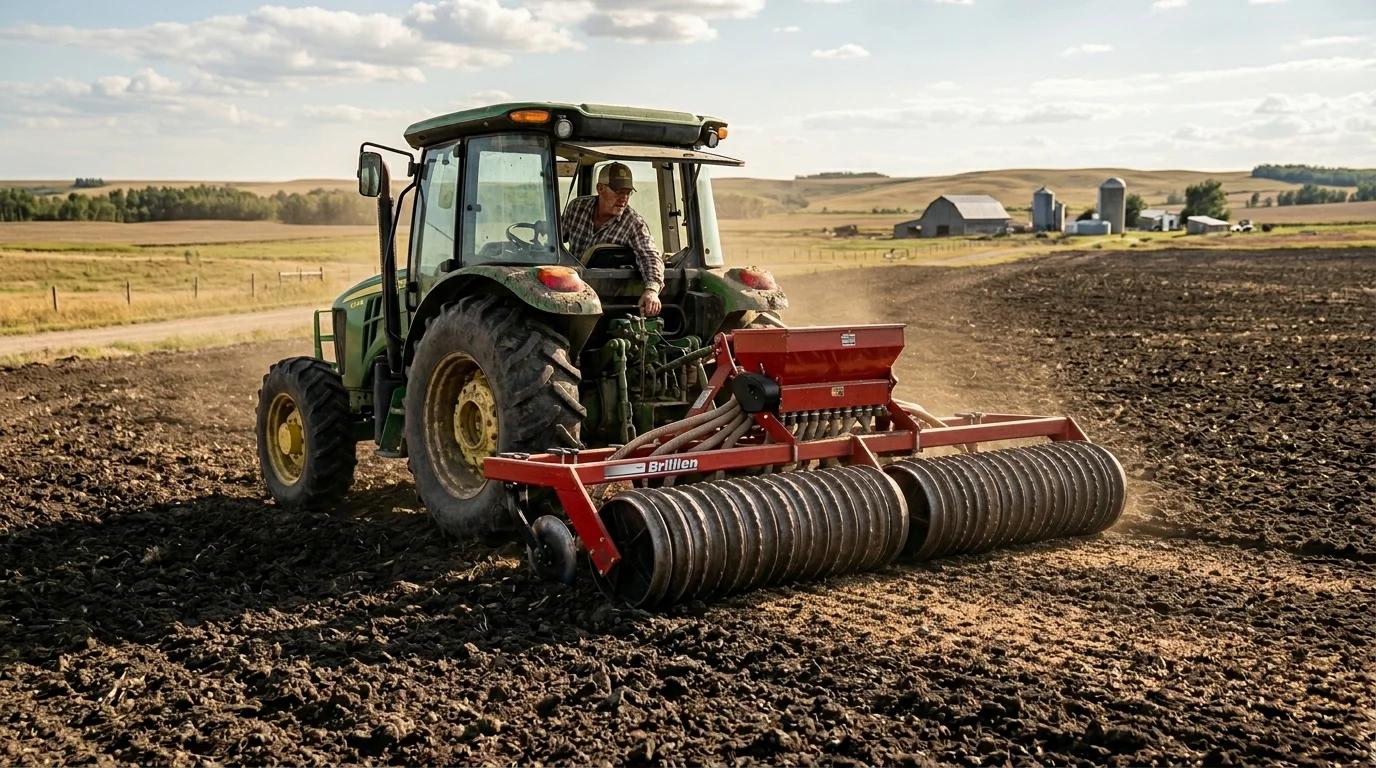
Soil fertility requirements are modest compared to row crops like corn. A basic soil test pointing to phosphorus and potassium levels in the medium range is sufficient to support a productive stand. Growers who also manage programs for crops like alfalfa hay production will find that Japanese millet is far less demanding on soil nutrient reserves, making it an easy crop to slot into a rotation without heavy fertilizer investment.
Seeding Rates, Planting Depth, and Spacing
The standard seeding rate for Japanese millet drilled into a prepared seedbed falls between 15 and 20 pounds of pure live seed per acre. For broadcast seeding followed by light disking or dragging, increase the rate to 25 to 30 pounds per acre to account for uneven seed placement. Over-seeding is a common mistake. Planting too thick results in tall, spindly plants with thin stems that lodge easily and produce fewer seed heads per plant than a properly thinned stand.
Planting depth should never exceed half an inch. Most agronomists recommend a quarter inch to three-eighths of an inch as the ideal range. Planting deeper than half an inch dramatically reduces germination rates because the seedling runs out of stored energy before it can reach sunlight. In very sandy soils prone to surface drying, planting at the deeper end of this range and following up with irrigation or relying on rainfall within three days of planting gives the best results.
Row spacing for drilled plantings is typically 6 to 7 inches. Wider rows slow canopy closure and allow weeds to establish between rows, creating problems that are very difficult to correct once the crop is up. Narrower rows close canopy faster and suppress weeds more effectively. For wildlife plots where aesthetics matter less than seed production, solid broadcasting followed by rolling gives a dense, uniform stand that maximizes seed head density per square foot.
When to Plant for Waterfowl Season Timing
Timing a Japanese millet planting so the grain is mature and standing in water during peak waterfowl migration takes careful calendar math. The crop matures in approximately 60 to 75 days from germination depending on temperature. Growers targeting early teal season in September need to plant no later than late June. For peak mallard migration in November across most of the central flyway, a planting date in late July or early August hits the timing correctly.
Flooding the field too early before the grain is fully ripe and hardened results in seed that softens and loses nutritional value quickly. Waiting until the seed heads have fully matured and dried before flooding is the professional standard. Many experienced waterfowl managers plant staggered fields at two-week intervals to extend the feeding period across the entire migration window rather than concentrating all available grain in one brief window.
Fertilizing Japanese Millet for Maximum Yield
Nitrogen is the primary nutrient that drives Japanese millet yield. A total application of 60 to 80 pounds of actual nitrogen per acre supports strong growth and full seed head development in most soil types. Split applications work better than a single pre-plant dose. Apply half the nitrogen at or shortly before planting and the remaining half at the 4-leaf growth stage, roughly three to four weeks after emergence. This approach feeds the plant when it is actively building stem and leaf tissue rather than front-loading nitrogen that can volatilize or leach away before the plant needs it.
Phosphorus and potassium applications should be based on soil test results rather than blanket recommendations. In soils testing low in phosphorus, adding 40 to 60 pounds of P2O5 per acre improves root development and early establishment noticeably. Potassium needs are generally low for Japanese millet compared to other forage crops. Many growers producing Japanese millet on soils that previously grew row crops find that residual fertility from those programs is adequate for potassium without supplemental applications.
Micronutrient deficiencies are rarely limiting in soils within the normal pH range. Sulfur can be a useful addition in sandy, low organic-matter soils, particularly in the southeast where sulfur depletion is common. Adding 10 to 15 pounds of sulfur per acre alongside the main nitrogen application improves protein content in the grain and overall plant vigor without significant added cost.
One pattern I see repeatedly in poor-performing Japanese millet stands is nitrogen timing, not nitrogen rate. Growers apply the full dose at planting, a heavy rain event moves it below the root zone in the first two weeks, and the crop runs short of nitrogen at the exact point when it is setting seed heads. Splitting applications always outperforms single pre-plant dosing in this crop, especially in coarse-textured soils with low cation exchange capacity.
Weed Control in Japanese Millet Plantings
Japanese millet has very limited herbicide options registered for use on it in the United States. Growers accustomed to the extensive herbicide programs available for corn or soybeans will find the options for Japanese millet significantly narrower. Pre-emergent herbicide choices are limited, and post-emergent grass herbicides obviously cannot be used on a grass crop without causing crop injury. This reality makes pre-plant weed management the foundation of the entire weed control strategy.
The best approach is a clean seedbed system. Burn down existing vegetation with a non-selective herbicide at least 10 to 14 days before planting. Follow with shallow tillage to disrupt any germinating weed seeds. Plant into the prepared bed at the correct rate and depth to get a fast, uniform stand that closes canopy quickly. Once Japanese millet canopy closes at roughly 30 days after emergence, most annual broadleaf weeds cannot compete effectively with the tall, dense crop.
Perennial weeds such as bermudagrass and nutsedge are a different challenge. Neither is fully suppressed by canopy closure. Fields with heavy perennial weed pressure should receive a targeted control program the season before Japanese millet planting to reduce the seedbank. Attempting to manage heavy perennial grass or sedge pressure within the same growing season as Japanese millet rarely succeeds and often results in a failed or severely compromised stand.
Managing Water Levels in Millet Impoundments
For waterfowl management, water level control is just as important as the crop itself. The goal is to flood the standing grain to depths between 6 and 18 inches, which places the seed heads within easy reach of dabbling ducks while keeping water shallow enough for wading birds. Flooding too deep submerges the grain and makes it inaccessible. According to guidance from the U.S. Fish and Wildlife Service, impoundments managed at 6 to 12 inches of water during peak migration hold the highest densities of waterfowl per acre compared to deeper flooded fields.
Timing the initial flooding matters. Introduce water slowly after the grain has fully hardened, typically 75 to 90 days after planting. A gradual rise in water level over 5 to 7 days is preferable to a rapid flood because it allows invertebrates time to concentrate in the flooded zone. These invertebrates, small aquatic insects, crustaceans, and worms, are as important to ducks as the grain itself, particularly for early-season teal and later arriving divers.
Pumping or draining capability significantly affects how well a manager can time water levels to migration. Fields without water control structures are entirely dependent on rainfall and natural hydrology. Adding a simple water control structure is often the single highest-return infrastructure investment a waterfowl manager can make. The ability to flood or drain a field within 48 hours transforms a passive planting into an active, responsive management system that adapts to real-time migration patterns.
Maintaining Soil Health After the Season
Japanese millet is an annual crop that decomposes relatively quickly after flooding and freezing. The decomposing biomass adds organic matter to the soil, which benefits both the next planting cycle and the broader wetland ecosystem. Shallow disking or mowing the residue after the hunting season speeds decomposition and reduces the risk of disease carryover in the following season’s planting. Fields that are allowed to accumulate thick mats of undecomposed residue year after year can develop soil conditions that favor fungal pathogens and slow germination of the next crop.
Rotating Japanese millet with other wildlife crops or leaving fields fallow every third or fourth year helps manage weed pressure, disease pressure, and soil structure. Many managers alternate millet with browntop millet, grain sorghum, or native warm-season grass plantings to vary the seed source available to wildlife and prevent any single weed species from becoming dominant through repeated exposure to the same growing conditions and timing.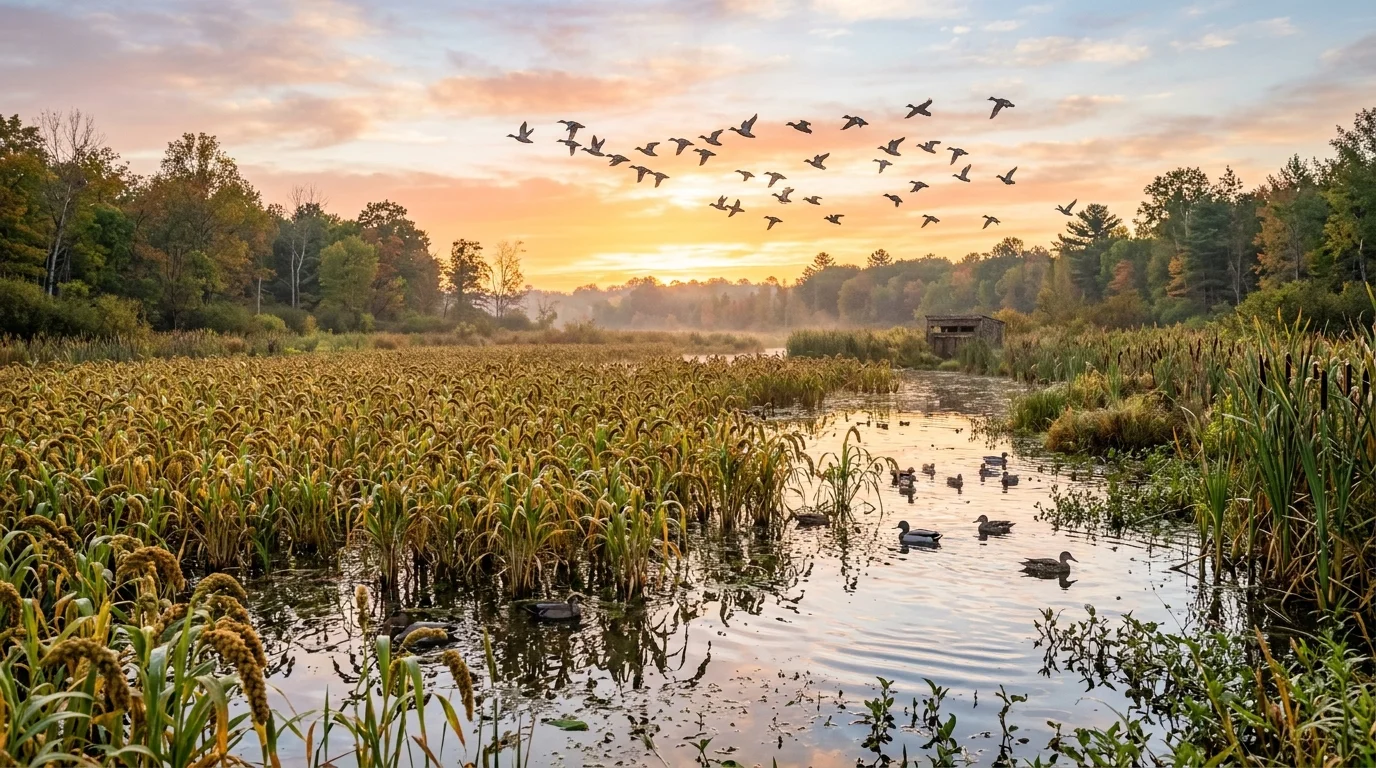
Common Mistakes Growers Make with Japanese Millet
The most widespread misconception about Japanese millet is that its wet soil tolerance means it can be planted into standing water. This is incorrect. Japanese millet needs moist soil to germinate but cannot establish from seed in flooded conditions. The seedling must have access to oxygen in the soil pore space during germination and the first week of root growth. Planting into saturated or flooded ground results in seed rot and complete stand failure regardless of seeding rate or seed quality.
A second common error is planting too late in the season. Growers who miss the ideal planting window and attempt to push a crop in August in northern states often find the plant reaches the flowering stage just as temperatures drop in September, which prevents seed head fill and produces a crop with almost no wildlife value. Japanese millet needs a full 60 to 75 frost-free days after germination to produce mature, filled grain. If that window is not available, planting a different short-season species is a better decision than gambling on a late millet stand.
Seed quality is also misunderstood. Growers sometimes store Japanese millet seed for multiple seasons to save cost. Millet seed, like chia seeds and similar small-seeded crops, degrades in germination rate over time, especially under warm or humid storage conditions. Using seed older than two seasons without conducting a germination test first is a risky practice. A simple germination test done two weeks before planting tells you exactly what emergence rate to expect and allows you to adjust seeding rates accordingly rather than discovering a poor stand after the planting window has closed.
Japanese Millet as a Livestock Forage Option
Beyond wildlife management, Japanese millet has genuine value as a summer forage for cattle. It produces dry matter yields of 3 to 6 tons per acre under good growing conditions, which is competitive with pearl millet and browntop millet for short-season summer forage production. Beef cattle and stocker calves graze it readily when it is managed properly. The key management rule for livestock is to avoid grazing until the plants reach at least 18 to 24 inches in height. Grazing shorter plants removes the growing point and severely stunts regrowth.
Rotational grazing with Japanese millet outperforms continuous stocking in both forage yield and stand longevity. Allowing the paddock to rest and recover to 18 to 24 inches between grazing events before re-entry gives the root system time to rebuild carbohydrate reserves. Strip grazing with temporary electric fencing is a practical and low-cost method for controlling grazing pressure and maximizing the number of grazing days per acre that a single planting delivers over the season.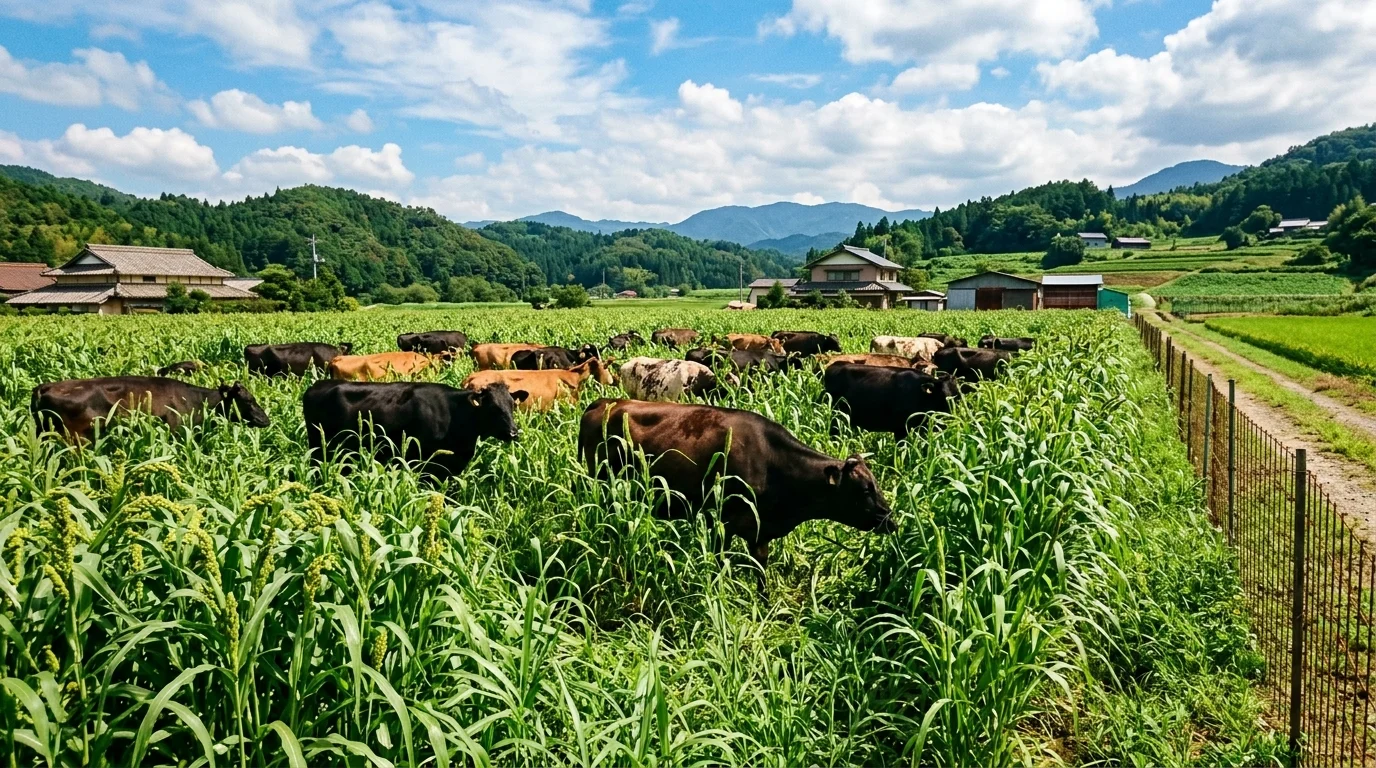
One concern specific to Japanese millet in livestock systems is the risk of nitrate toxicity during drought stress periods. When the plant experiences water stress, nitrates accumulate in the lower stems rather than being converted to protein. Grazing drought-stressed Japanese millet, or feeding it as green chop, during or immediately after a drought period carries real risk for cattle health. Testing the forage for nitrate levels before grazing during drought conditions is a straightforward precaution that experienced livestock managers treat as standard practice.