
Alfalfa (Medicago sativa) is one of the oldest cultivated crops on earth, with records of its use stretching back more than 6,000 years to ancient Iran and Central Asia. Today it remains the fourth largest crop grown in the United States by harvested area, covering approximately 17 million acres annually according to USDA data. For farmers, livestock producers, and agricultural researchers, understanding how to grow alfalfa for hay is not simply a matter of planting and waiting. It demands a clear understanding of soil chemistry, plant biology, cutting schedules, and market timing.
This guide covers everything from seedbed preparation to post-harvest economics, with specific attention to the biological processes that make alfalfa one of the most productive and soil-enriching crops in modern agriculture.
The Botanical Profile of Medicago Sativa
Alfalfa belongs to the family Fabaceae, the legume family, which places it in the same biological group as soybeans, clover, and peas. Unlike grasses such as timothy or orchardgrass that are commonly grown alongside it in mixed hay fields, alfalfa is a true legume. This distinction has enormous practical consequences for soil fertility and crop rotation planning.
The plant grows as a perennial in most temperate climates, meaning a single well-established stand can produce high-quality hay for four to ten years without replanting. Its root system is one of the most remarkable in all of agriculture. A mature alfalfa taproot can penetrate 4 to 6 meters into the soil profile, allowing the plant to access deep moisture reserves during dry periods when shallow-rooted grasses fail completely. This deep root architecture also plays a critical role in breaking up compacted subsoil layers, improving drainage and aeration for subsequent crops in the rotation.
At the cellular level, alfalfa forms a symbiotic relationship with soil bacteria called Rhizobium meliloti. These bacteria colonize the root system and form small nodules, visible as pea-sized bumps along the roots when pulled from the ground. Inside those nodules, atmospheric nitrogen gas is converted into ammonium, a plant-available form of nitrogen that feeds the alfalfa crop and enriches the surrounding soil. A healthy alfalfa stand can fix between 100 and 300 kilograms of nitrogen per hectare per year, depending on soil conditions, inoculant quality, and stand density.
The aboveground structure consists of multiple stems rising from a central crown, producing trifoliate leaves and small purple to violet flowers at maturity. The flowering stage is the key visual signal farmers use to time their harvest, as bloom percentage directly correlates with the trade-off between total dry matter yield and nutritional quality in the cut forage.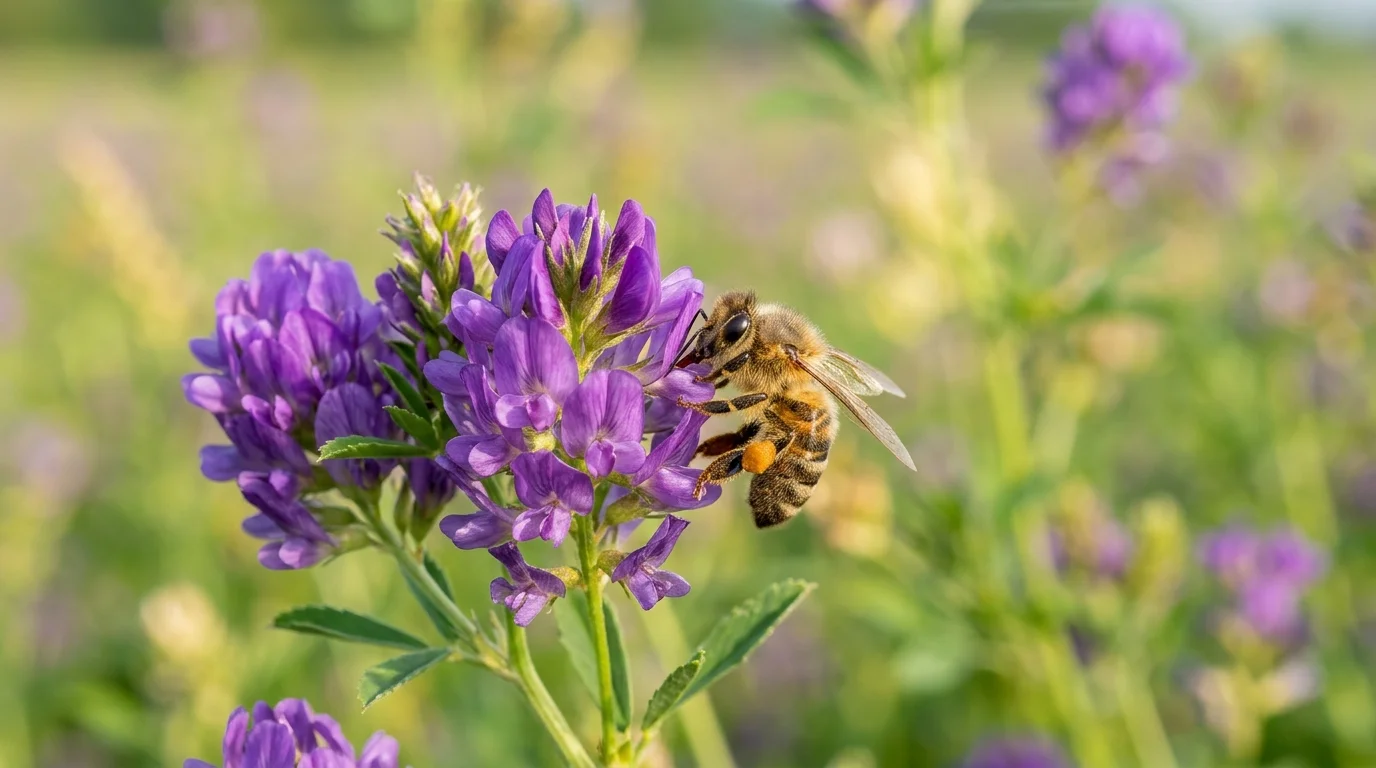
Establishing the Crop: Planting Strategies for Yield
The difference between a stand that lasts three years and one that lasts eight often comes down to decisions made before the first seed touches the ground. Soil preparation, pH management, inoculation, and seeding rate are the four pillars of successful alfalfa establishment.
Soil pH is the foundation. Alfalfa requires a soil pH between 6.5 and 7.5 for optimal growth. Below pH 6.0, aluminum and manganese become soluble in the soil at concentrations that are toxic to the root system, and Rhizobium bacteria cannot survive in sufficient numbers to form effective nodules. A standard soil test completed four to six months before planting gives enough time to apply agricultural lime and allow it to react with the soil before seeding. On acidic soils, lime application is not optional. It is the single highest-return investment in the entire establishment process.
Seedbed preparation should produce a firm, fine-textured surface that allows good seed-to-soil contact. Alfalfa seeds are small, approximately 450,000 seeds per kilogram, and should be planted at a depth of 6 to 12 millimeters. Planting too deep causes seedling death before emergence. Planting too shallow exposes seeds to surface drying. A correctly calibrated drill planter set to a seeding rate of 15 to 20 kilograms per hectare on pure stands achieves the stand density needed for competitive weed suppression in the establishment year.
Inoculation with the correct Rhizobium meliloti strain is essential when alfalfa has not been grown in a field for three or more years. Commercial inoculants are available as powder or liquid formulations and should be applied to seed just before planting. Uninoculated alfalfa grown in rhizobium-deficient soils will show classic nitrogen deficiency symptoms including pale yellow-green leaves and stunted growth, even on otherwise fertile land.
Choosing the Right Variety for Your Region
Alfalfa varieties are classified by a dormancy rating system running from 1 (most dormant, suited to cold northern climates) to 11 (non-dormant, suited to warm southern climates). Matching variety to climate is not a preference. It is a yield and persistence decision. A dormancy 9 variety planted in Minnesota will suffer severe winter kill. A dormancy 2 variety planted in southern California will fail to produce the multiple annual cuts that the climate could support.
Modern varieties also carry ratings for resistance to specific diseases including Phytophthora root rot, Fusarium wilt, and bacterial wilt. In regions where these pathogens are established in the soil, choosing a resistant variety is significantly more effective and economical than attempting to manage them chemically after establishment.
Planting timing varies by region but follows one of two windows: spring seeding or late summer seeding. Spring seeding requires early establishment to give the stand time to develop before summer heat stress. Late summer seeding, typically six to eight weeks before the first killing frost, allows the plant to establish roots before dormancy without facing heavy weed competition from warm-season annual weeds that dominate spring seedbeds.
The Forage Lifecycle Harvesting and Economic Value
Alfalfa hay production economics are driven by one central variable: cutting management. Every cutting decision involves a direct trade-off between yield and quality, and optimizing that trade-off requires understanding the plant’s internal energy dynamics. Proper airflow management during drying is also essential.
Alfalfa stores carbohydrate energy reserves in its crown and upper taproot tissue. These reserves fuel regrowth after each cutting. When a field is cut too early, before reserves have rebuilt sufficiently, stand persistence declines rapidly. When cut too late, after full bloom, stem lignification increases dramatically and the digestibility of the hay falls below the threshold acceptable for high-performance animals like dairy cows and performance horses.
The standard timing guideline used across the industry is to cut at the 10 percent bloom stage, when approximately one in ten plants shows open flowers. At this stage, total digestible nutrient content is high, fiber content is manageable, and root energy reserves have recovered enough to support strong regrowth. Relative Feed Value scores in this cutting window typically range from 150 to 180, placing the hay in the premium quality bracket that commands the highest market prices.
Most productive alfalfa regions achieve three to five cuttings per growing season. In the southwestern United States, where irrigated production under warm temperatures is possible, eight or more cuttings per year are documented. Annual dry matter yields for well-managed stands range from 12 to 20 tonnes per hectare in high-input irrigated systems, with dryland production in the Great Plains averaging 5 to 10 tonnes per hectare depending on rainfall.
Economic value is strongly tied to quality testing results. Commercial hay buyers and dairy operations purchase alfalfa based on laboratory analysis of crude protein, acid detergent fiber, neutral detergent fiber, and relative feed value. Premium dairy-quality alfalfa hay in the United States has historically traded at prices 30 to 50 percent above standard hay grades, making the investment in proper cutting timing and rapid field drying a clear financial priority.
Field drying time after cutting is a critical quality window. Once cut, plant respiration continues and consumes sugars, reducing energy content in the forage. Rain events during the drying period cause leaching of soluble nutrients, primarily potassium and non-structural carbohydrates, reducing hay value significantly. Tedding and raking equipment accelerate drying by increasing airflow through the windrow, and most commercial producers target a field-to-bale timeline of 48 to 72 hours under favorable weather conditions.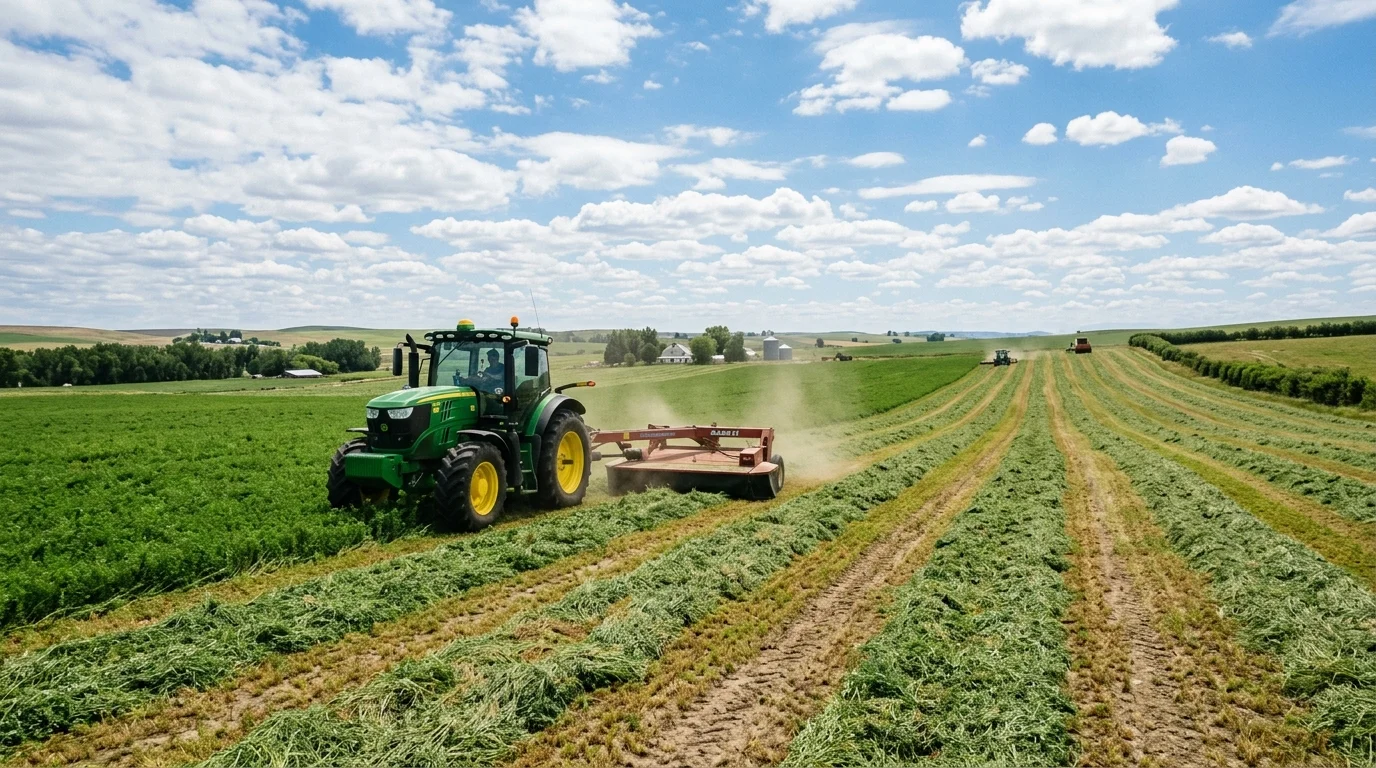
Pest and Disease Pressure During the Growing Season
Alfalfa weevil (Hypera postica) is the most economically damaging insect pest across North American alfalfa production, with annual losses estimated at over $500 million. Larvae feed on leaf tissue beginning in early spring, and severe infestations can reduce first-cut yield by 30 to 50 percent. Monitoring for larval populations and using economic threshold-based spray decisions, rather than calendar-based applications, produces the best balance of control and input cost.
Potato leafhopper (Empoasca fabae) is a particular threat to newly seeded stands and summer regrowth. It injects a toxin while feeding that causes characteristic V-shaped yellowing on leaf tips, a symptom called “hopper burn.” Leafhopper-resistant varieties with dense leaf hairiness have become the preferred management tool for producers in affected regions, reducing insecticide applications by 50 percent or more in university trial data.
Culinary Versatility: The Science of Sprouting
While alfalfa’s primary role in global agriculture is as livestock forage, its use in human nutrition through sprouted seed consumption has grown substantially over the past three decades. Alfalfa sprouts are produced by germinating seeds in humid, temperature-controlled conditions for five to seven days, yielding tender white shoots with green leaf tips that are consumed raw in salads, sandwiches, and fresh preparations.
The nutritional transformation during germination is significant. Dry alfalfa seed contains enzyme inhibitors that limit nutrient bioavailability. Germination deactivates these inhibitors and produces a substantial increase in vitamin C content, which is essentially absent in the dry seed. Sprouted alfalfa also becomes a concentrated source of vitamin K, folate, and the phytoestrogen compounds saponins and isoflavones that have attracted research interest for their potential role in cholesterol management.
According to nutritional analysis data reviewed by the U.S. Food and Drug Administration, a 100-gram serving of raw alfalfa sprouts contains approximately 23 calories, 4 grams of protein, 2 grams of fiber, and meaningful quantities of calcium, iron, and B vitamins. For a food with a caloric density this low, the micronutrient profile is remarkable.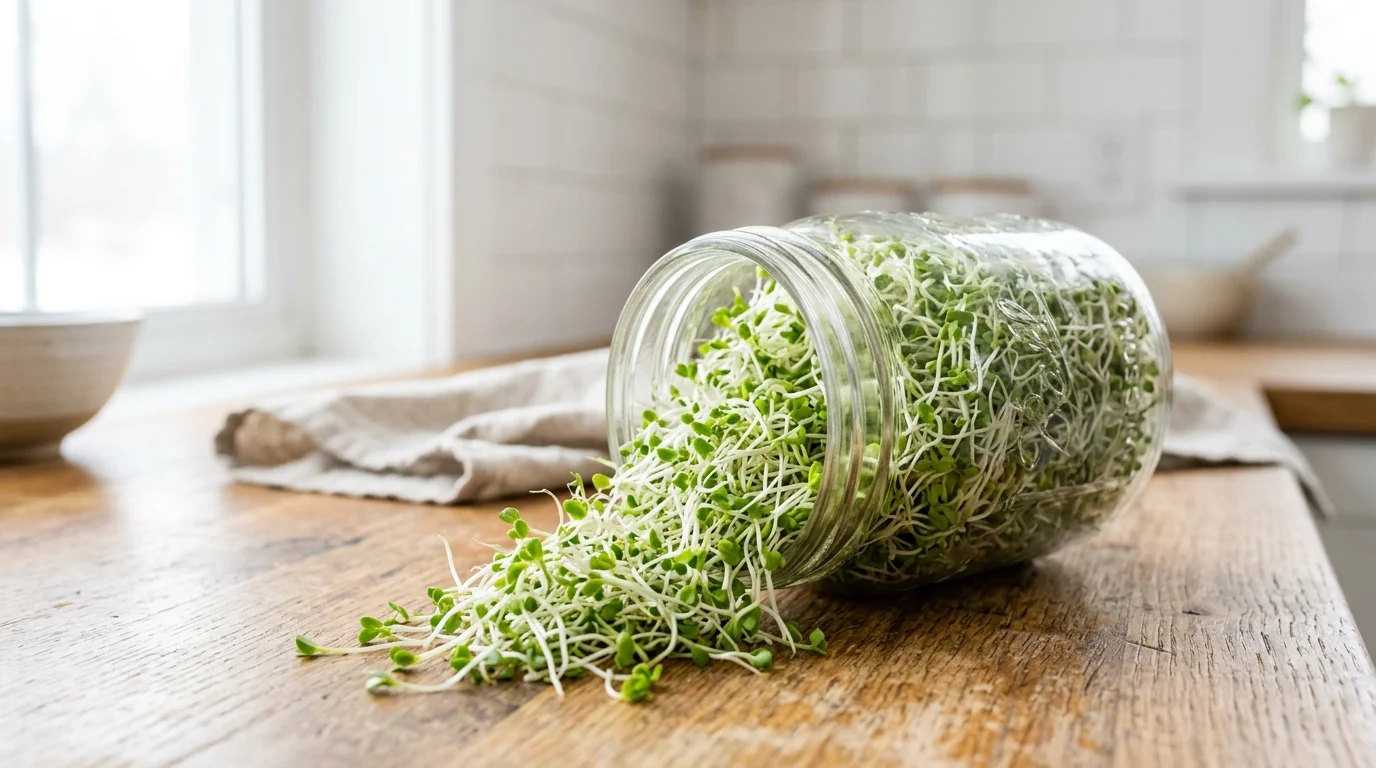
The commercial sprout industry in the United States generates annual revenues estimated above $250 million, driven largely by consumer demand in natural food retail and foodservice channels. Production is concentrated in California, Colorado, and Washington, where year-round climate conditions support consistent facility operations.
Expert Insight Note
While often confused with various grass species due to its use in hay, alfalfa is a potent legume that fixes atmospheric nitrogen into the soil, drastically reducing the need for chemical fertilizers in agricultural rotations. What most producers do not account for, however, is crown management during mechanical harvesting. The crown is the dormant meristematic tissue sitting just 1 to 3 centimeters below the soil surface, and it is the source of every new shoot after cutting. When harvesting equipment is set too low, repeated scalping of the crown during the season causes cumulative cellular damage that does not express itself as visible stand loss until the following spring, when sections of the field fail to emerge from dormancy. Experienced agronomists conducting stand assessments in April frequently find the damage originated in late August cuttings from the previous year. Setting cutter bar height to a minimum of 7 to 8 centimeters above ground level is not just a yield management decision. It is the single most important factor in stand longevity beyond variety selection.
Culinary Applications Beyond the Salad
Alfalfa sprouts entered mainstream Western food culture largely through the natural food movement of the 1970s, but their use in Asian culinary traditions predates that by centuries. In Korean and Chinese cuisine, germinated legume shoots have historically been a seasonal vegetable consumed both raw and lightly cooked. Alfalfa sprouts fit naturally into this tradition given their mild, slightly nutty flavor and tender texture.
Beyond raw applications, alfalfa sprouts are increasingly incorporated into blended beverages, cold-pressed juices, and fermented preparations where their chlorophyll content and enzyme activity contribute nutritional value. Food technology researchers have also explored alfalfa leaf protein concentrate as a potential animal feed supplement and as a green protein ingredient in human food formulations, given that the dried leaf fraction contains 18 to 22 percent crude protein on a dry matter basis. You can think of it as a cleaner nutritional source.
The saponin compounds in alfalfa have generated particular research interest beyond basic nutrition. Saponins are naturally occurring plant compounds that form soapy lathers when mixed with water. In the digestive system, they are believed to bind to cholesterol molecules and reduce their reabsorption through the gut wall. Several human trials have examined alfalfa saponin supplementation as a complementary approach to cholesterol management, with results that, while preliminary, have motivated continued clinical research. Management of high-quality forage often parallels long-term equipment care.