

Growing a peony from seed is one of the most rewarding long-term projects a gardener can take on. It is also one of the least understood. Most guides skip over the real biology of what peony seeds need, leaving gardeners confused when nothing sprouts after months of waiting. This guide walks you through the full process from seed collection to your first bloom, with the specific details that actually make a difference.
Peonies grown from seed are not clones of the parent plant. Each seed carries a unique genetic combination, which means you may end up with flowers in colors, forms, or fragrances that differ from what you started with. That genetic variation is precisely what makes seed-grown peonies interesting to serious growers and breeders.
Do Peonies Actually Produce Seeds
Yes, peonies produce seeds, but not every variety does so reliably. Single and semi-double peony varieties produce seed pods far more readily than fully double types. Double-flowered peonies have petals where the reproductive structures would normally be, which reduces or eliminates their ability to set seed after pollination.
After a peony blooms and gets pollinated, the seed pod develops over summer and is typically ready to harvest in late July through September depending on your climate. The pod looks like a thick, leathery follicle that splits open when the seeds inside are mature. At that point the seeds are dark brown to black and firm. Immature seeds are white or tan and should not be used for germination.
One thing most people miss is that peony seeds have a very short viability window. Once the pod splits and the seeds are exposed to air and drying, germination rates drop quickly. Fresh seeds sown within a few weeks of harvest consistently outperform seeds that have been stored for months.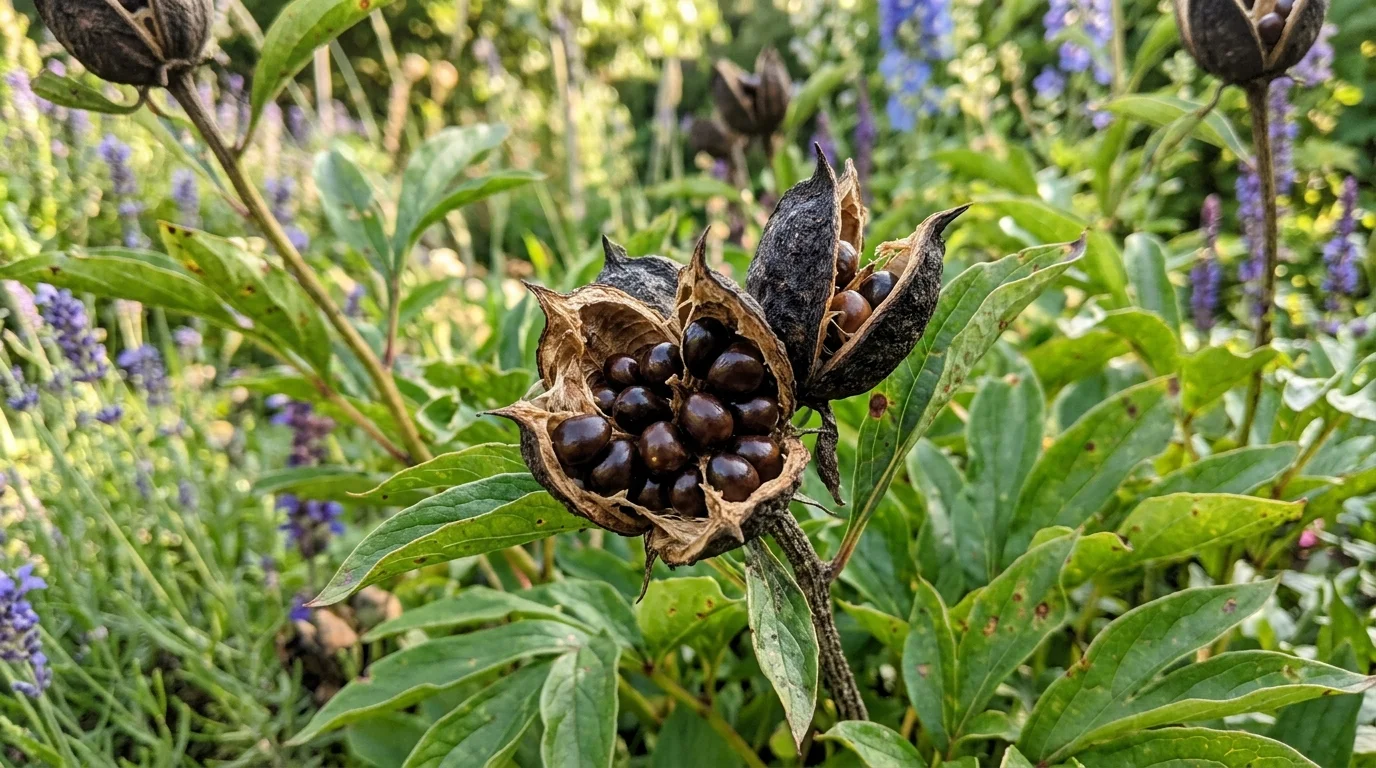
Why Peony Seeds Need a Two-Stage Dormancy Break
This is where most gardeners go wrong. Peony seeds have what botanists call a double dormancy. The embryo inside the seed is not fully developed when the seed is first harvested, and the seed coat adds an additional barrier on top of that. Unless both dormancy stages are addressed in the correct order, the seed simply will not sprout.
The first stage is a warm stratification period. This warmth triggers the root (radicle) inside the seed to develop. Without this stage, the embryo is physiologically unable to respond to cold. The second stage is a cold stratification period, which signals to the seed that winter has passed and spring conditions are safe for germination. Skipping either stage, or doing them in the wrong order, means you will wait a full extra year for results at best, or lose the seeds entirely.
Research from the Royal Horticultural Society confirms that this double dormancy cycle is non-negotiable for Paeonia species and most hybrid varieties. The warm period typically runs 3 to 4 months, followed by a cold period of equal length. Plan on this process taking the better part of a year before you see a single sprout above soil.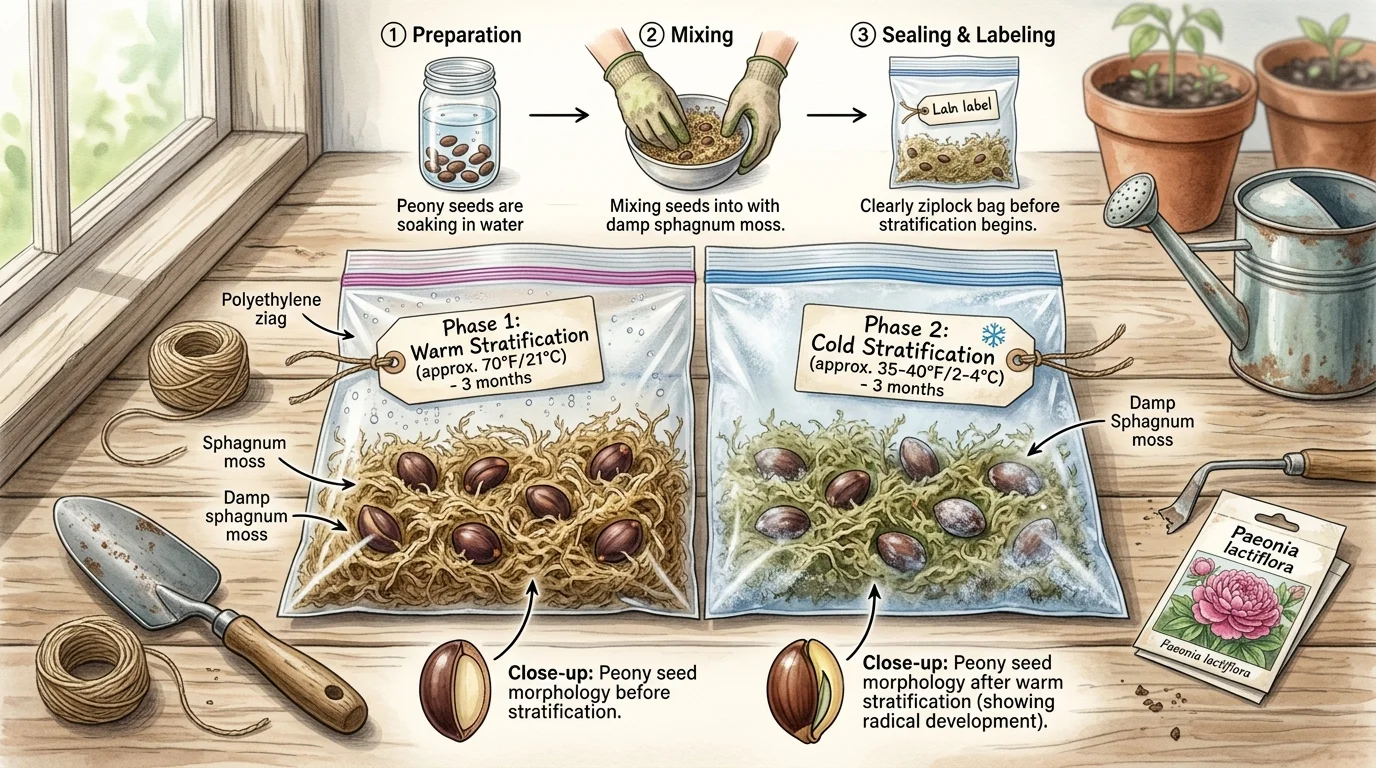
How to Harvest and Prepare Peony Seeds
Harvest the seed pods just as they begin to crack open naturally. If you wait until the pod fully opens, birds and squirrels may find the seeds before you do. The seeds should be dark, plump, and firm when pressed between your fingers. Discard any that feel hollow or look shrunken.
Clean the seeds by removing any pulp or pod material clinging to them. Some growers soak the seeds in clean water for 24 hours before beginning stratification. This softens the seed coat slightly and can speed up the first root emergence during warm stratification.
Place the cleaned seeds in a plastic bag or container filled with lightly damp sphagnum moss, perlite, or vermiculite. The moisture level matters more than most guides acknowledge. The medium should feel barely damp, similar to a wrung-out sponge. Too wet and you risk fungal rot. Too dry and the embryo development stalls. Check the moisture every few weeks during the warm period and add a few drops of water if needed.
The Warm Stratification Stage
Store the prepared seeds at room temperature, ideally between 21 and 27 degrees Celsius, for 3 to 4 months. A spot in your home that stays consistently warm works well. Avoid direct sunlight and avoid anywhere with extreme temperature swings. Steady warmth is what drives embryo development during this phase.
After roughly 10 to 12 weeks of warm stratification, check the seeds for root emergence. You may notice small white rootlets pushing through the seed coat. This is a sign that the warm phase has done its job and the seeds are ready to move into cold stratification. Some seeds may show roots earlier. Move any seed that shows a root into the cold stage immediately rather than waiting for all seeds to catch up.
Seeds that show no root development after 16 weeks of warmth may have been immature at harvest, stored too long before starting the process, or allowed to dry out. Those seeds are unlikely to be viable and can be discarded.
The Cold Stratification Stage
Once roots appear, transfer the seeds to the refrigerator. Keep them at 4 to 5 degrees Celsius for another 3 to 4 months. Use the same slightly damp stratification medium in a sealed bag or container. This cold period simulates winter and is what triggers the shoot (epicotyl) to emerge after warmth returns.
Check on the seeds monthly during refrigeration. Look for any signs of mold and remove affected seeds promptly. The rootlets will continue to grow slowly during this time, which is perfectly normal. By the end of the cold period you should have seeds with visible roots and the beginnings of a tiny shoot.
Some gardeners wonder whether they can shortcut this process by buying peony seeds online and sowing them directly. The answer is no. Any viable peony seed, fresh or not, still requires both stratification stages. There is no substitute for the time these seeds need.
Many growers make the mistake of placing seeds directly into outdoor soil in autumn, expecting the natural freeze and thaw cycle to handle stratification. In practice, outdoor soil temperatures fluctuate too unpredictably, the seeds often dry out unevenly, and rodents find them. Controlled indoor stratification in a sealed bag with damp moss gives you far more consistent germination rates, often above 70 percent for fresh seeds, compared to single-digit rates from outdoor direct sowing.
Sowing Stratified Peony Seeds
Once seeds have completed both stratification stages and show both a root and a small shoot, they are ready to go into pots or a prepared bed. Use a well-draining potting mix. A blend of standard potting soil with added perlite works well. Peonies do not like sitting in wet conditions, so drainage matters from the very beginning.
Plant each seed about 3 to 5 centimeters deep with the root pointing downward. Water the pot gently and keep the growing medium consistently moist but not saturated. Place the pot in a location with indirect light at first. Once the shoot emerges and the first leaves unfurl, move the seedling into a spot with more light. If you enjoy growing plants from seed in various conditions, the same patience required here applies when you grow lilies from seeds, another perennial that rewards a careful start.
Expect the first true leaves to appear within a few weeks of planting stratified seeds. The seedling will look modest in its first season. It is building a root system underground, which is the real priority for the plant in year one.
What Peony Sprouts Look Like in the First Season
Peony sprouts are easy to miss or misidentify. In the first few weeks after emergence, they look like a slender reddish or dark pink shoot pushing through the soil. The first leaves are often small and may have a slightly waxy texture. The red or burgundy color in the early growth is normal and comes from anthocyanin pigments that protect the young tissue from sunlight stress.
As the season progresses, the seedling will typically produce 2 to 5 leaves in the first year and rarely grow taller than 15 to 20 centimeters. This is not a sign of failure. Peonies are investing energy into root development during year one. A large, well-established root system is what eventually powers those enormous blooms years later.
Keep the seedling well-watered through its first summer but avoid overwatering. If you are growing other flowering plants from seed simultaneously, the techniques for managing soil moisture are surprisingly similar to what you need when you grow cherimoya seeds, where careful watering and patience in the early stages determine long-term success.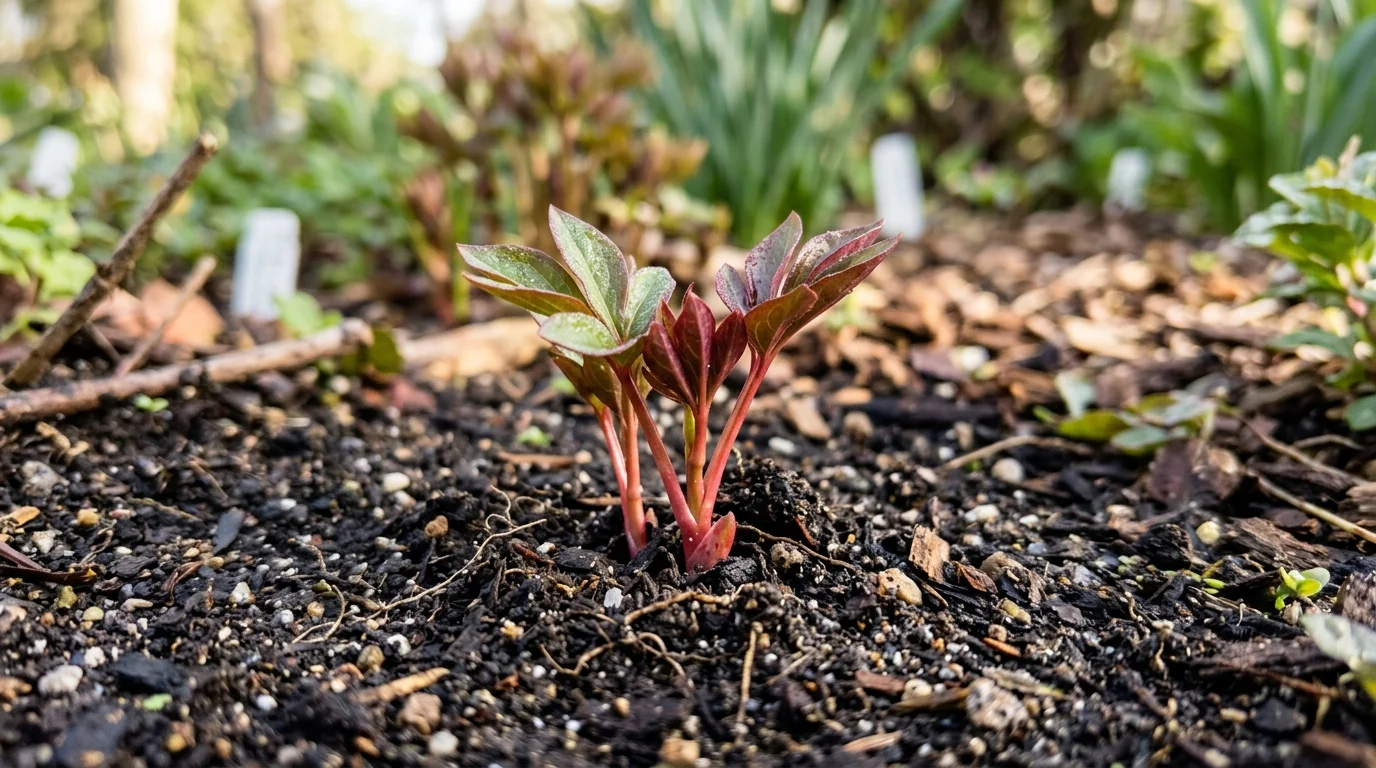
Caring for Peony Seedlings Through Their First Few Years
Peony seedlings need a minimum of 3 to 5 years before they produce their first bloom. This is the reality of growing from seed and the main reason most gardeners opt for root divisions or potted plants instead. However, seed-grown plants often end up more vigorous once established because they develop their own deep, undisturbed root system from the very beginning.
Feed seedlings with a balanced fertilizer in spring once they are in their second year. A fertilizer with slightly higher phosphorus supports root development and eventual flower production. Avoid heavy nitrogen applications, which push leafy growth at the expense of roots and flowers. Pull any weeds around the seedlings promptly since young peonies compete poorly with aggressive weeds in their early years.
In cold climates, mulch the seedlings lightly in late autumn to protect the shallow root zone from hard freezes. Remove the mulch in early spring before new growth begins. Peonies are cold-hardy perennials in general, but very young seedlings benefit from this extra protection in their first winter or two.
A Common Mistake About When Peonies Bloom
Many new growers assume that if a peony does not bloom in year two or three, something has gone wrong with the plant. This is not the case. Peonies grown from seed rarely bloom before year 3, and it is entirely normal for a seed-grown peony to take 5 years or longer before producing its first flower. Dividing or transplanting the seedling during these early years delays blooming further.
The same misunderstanding affects established peonies that have been moved. A transplanted peony often skips blooming for 1 to 2 years after relocation as it re-establishes its root system. This is not a dying plant. It is a plant redirecting all its energy into roots. Patience is genuinely the most important skill in peony growing, whether from seed or from a division.
Another misconception worth addressing is planting depth. Peonies planted too deep will grow lush foliage but refuse to bloom for years. For mature plants grown from divisions, the eyes (growth buds) should sit no more than 3 to 5 centimeters below the soil surface. For seedlings this is less of an immediate concern since they are planted more deeply, but as they mature and get transplanted to a permanent location, depth becomes critical to getting reliable annual blooms.
Choosing the Right Spot for Long-Term Growth
Peonies are long-lived perennials. A well-placed peony can bloom reliably for 50 to 100 years with minimal intervention. Picking the right permanent location before transplanting a mature seedling matters enormously. Choose a spot with full sun, at least 6 hours of direct light per day. Peonies tolerate partial shade but bloom far more freely in full sun.
Soil quality has a direct impact on flowering. Peonies prefer a slightly alkaline to neutral soil pH, roughly 6.5 to 7.0. Heavy clay soil needs amendment with compost and coarse material to improve drainage. If you garden in clay soil, many of the soil preparation techniques that help when you want to grow grass in clay soil apply here too, particularly around improving drainage and structure before planting perennials.
Good air circulation around the plants reduces the risk of botrytis blight, a fungal disease that is the most common problem peony growers face. Avoid planting peonies directly against walls, fences, or dense shrubs where air movement is restricted. Space plants at least 90 centimeters apart to allow airflow even as the clumps expand over years.
Do Peonies Bloom More Than Once a Year
Peonies bloom once per season, typically for 7 to 10 days during late spring to early summer depending on the variety and your climate. They are not repeat-blooming plants in the way that roses can be. However, you can extend the overall peony season in your garden by planting early, midseason, and late-blooming varieties together. The full peony season across all varieties typically runs from late April through June in most temperate climates.
Intersectional peonies, sometimes called Itoh peonies after the breeder Toichi Itoh who first developed them, have a slightly longer bloom period than many herbaceous types and tend to produce more flowers per plant. These are hybrids between tree peonies and herbaceous peonies. They grow from seed but require the same double dormancy stratification process and the same multi-year wait before flowering.
After blooming finishes, leave the foliage in place. The leaves continue photosynthesizing and sending energy down into the root system through summer and autumn. Cutting the foliage back too early weakens the plant and reduces next year’s bloom quality. Wait until the first frost kills the foliage before cutting the stems back to ground level.