
Growing garlic in Wisconsin is one of the most rewarding things a home gardener or small-scale farmer can do with a patch of ground. Wisconsin’s cold winters, rich glacial soils, and distinct four-season pattern are nearly ideal conditions for producing large, flavorful hardneck garlic. If you have been putting this off because Wisconsin winters seem too brutal, think again. The cold is not the problem. It is the secret ingredient.
Garlic planted in fall goes dormant under frozen ground, experiences the cold period it needs to develop properly, and then surges back into growth when soil temperatures climb in April and May. That cold dormancy period is called vernalization, and without it garlic produces a round, undivided bulb instead of the segmented cloves you are after. Wisconsin delivers vernalization reliably every single year, which is exactly why this state produces outstanding garlic.
This guide covers everything from selecting the right variety for Wisconsin’s growing zones through planting, overwintering, scape harvest, and curing. Whether you garden in Milwaukee, Madison, Green Bay, or a small town in the Northwoods, the fundamentals apply and the adjustments between zones are straightforward.
Why Wisconsin Soil and Climate Produce Outstanding Garlic
Wisconsin sits across USDA hardiness zones 3b through 6a, with most of the state landing in zones 4 and 5. That range covers some of the coldest growing conditions in the continental United States, and garlic handles it without complaint. Hardneck varieties, which dominate Wisconsin production, are cold-hardy down to negative 30 degrees Fahrenheit with proper mulch cover. The state’s winters provide exactly the cold exposure that drives strong bulb development the following season.
The soil story is equally good. Large portions of Wisconsin sit on glacial till, a mix of sand, silt, clay, and organic matter deposited by retreating glaciers thousands of years ago. In many regions, that results in deep, loose, well-draining loam that garlic roots can penetrate easily. The Driftless Area in southwestern Wisconsin and the lake plain soils along Lake Michigan both produce outstanding conditions for root vegetables including garlic.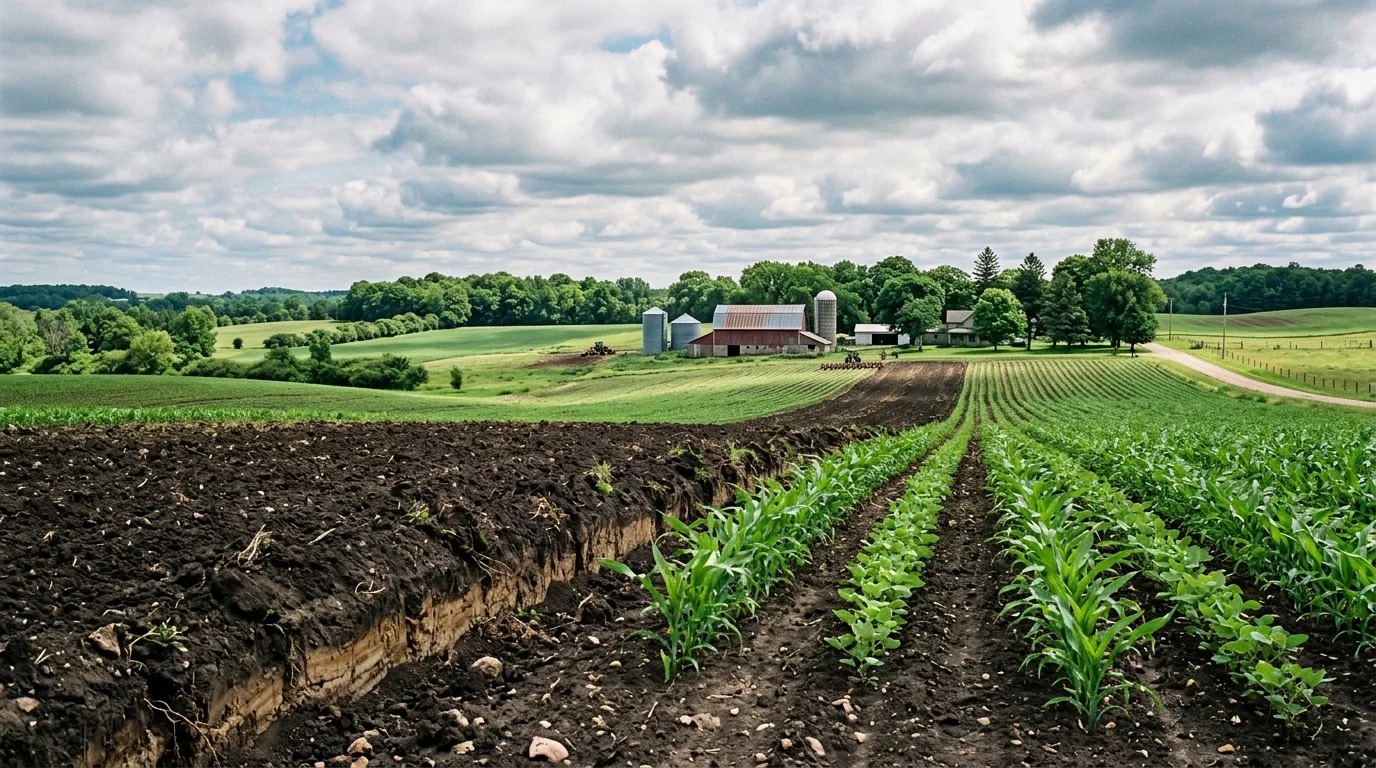
Wisconsin also receives relatively even rainfall through the growing season, typically averaging 30 to 34 inches annually, which reduces the irrigation burden compared to drier states. The cool spring temperatures slow down pest and disease pressure during garlic’s critical bulbing period in May and June, giving Wisconsin growers a natural advantage over gardeners in warmer, more humid southern states.
That said, Wisconsin soils in many agricultural areas trend toward slightly acidic conditions, particularly in heavily forested northern regions. Garlic performs best between pH 6.0 and 7.0. A quick soil test before planting, available inexpensively through the University of Wisconsin Extension, tells you exactly where you stand and what amendments, if any, you need to apply before fall planting.
Hardneck vs Softneck Garlic and Why Wisconsin Growers Should Choose Wisely
The garlic you see braided and hanging in farmhouse kitchens is almost always softneck. The garlic that tastes extraordinary and stores through a Wisconsin winter is almost always hardneck. That distinction matters enormously for Wisconsin gardeners, and most online guides gloss over it.
Hardneck garlic produces a central flowering stalk called a scape and develops fewer but larger cloves arranged around a woody central stem. Varieties like Rocambole, Porcelain, and Purple Stripe dominate Wisconsin production because they are cold-hardy, flavor-forward, and well-suited to the state’s frost patterns. Rocamboles like German Red and Killarney Red develop rich, complex flavor with a lingering heat that softens when cooked. Porcelains like Music and Georgian Fire produce fewer but enormous cloves and store longer than Rocamboles.
Softneck garlic, including Artichoke and Silverskin types, can grow in the warmer southern parts of Wisconsin near Madison and Milwaukee. These varieties store for eight to twelve months under ideal conditions, longer than most hardnecks. The tradeoff is smaller cloves, less flavor complexity, and reduced cold hardiness. At zone 4 and 5, softneck varieties are more vulnerable to winter damage without heavy mulching.
For most Wisconsin gardeners, hardneck varieties are the clearer choice. They perform reliably from the Illinois border up through the Upper Peninsula boundary, they signal harvest time through a predictable leaf-count method, and the flavor difference compared to softneck is noticeable immediately after curing. Start with one or two hardneck varieties your first season, evaluate the results, and expand from there.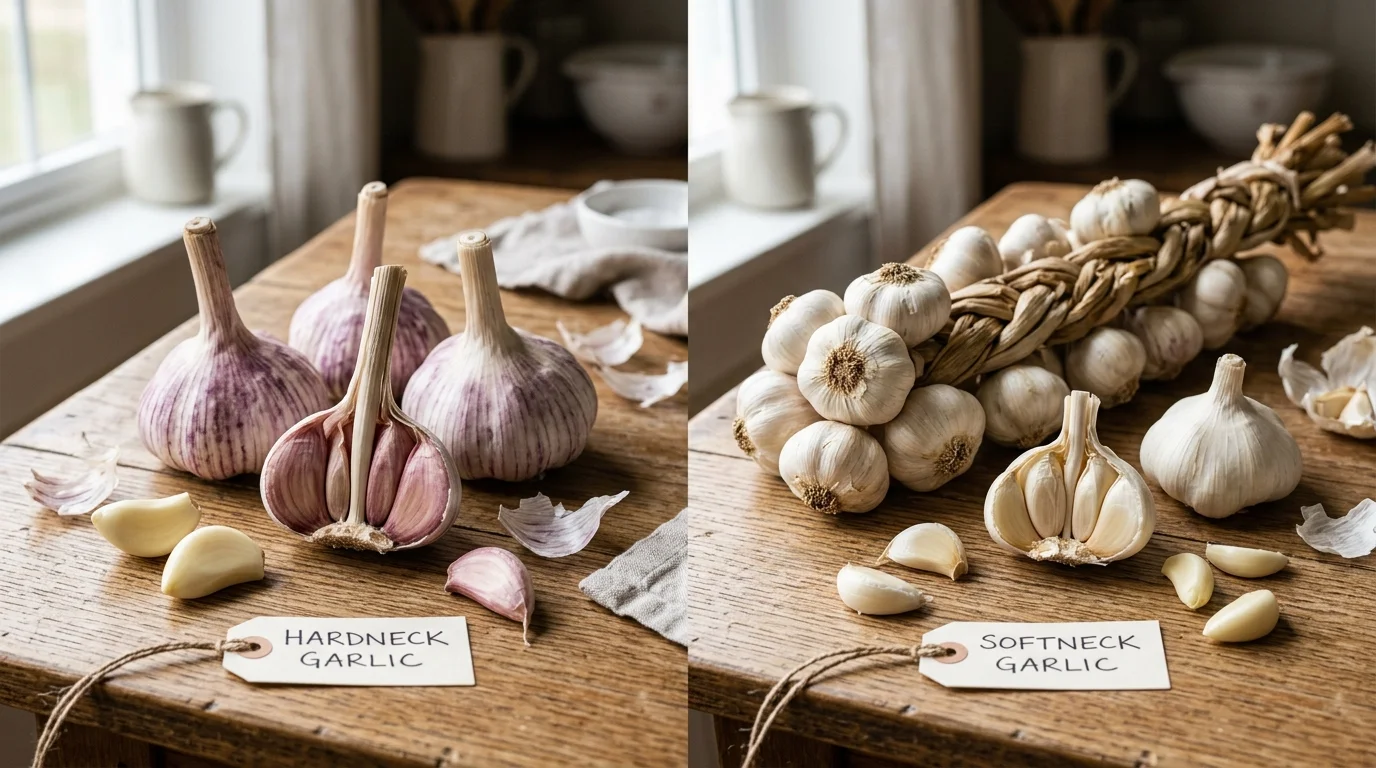
When to Plant Garlic in Wisconsin for Maximum Bulb Size
Planting timing is the variable that separates average garlic from exceptional garlic in Wisconsin. The window is specific and worth respecting. Plant too early and the cloves push heavy top growth before winter that gets damaged by hard freezes. Plant too late and the cloves cannot establish enough root mass before the ground freezes, resulting in small bulbs or poor overwintering survival.
The ideal planting window for most of Wisconsin runs from late September through mid-October. Southern Wisconsin gardeners in Madison, Janesville, and Racine can often push into the third week of October and still get adequate root establishment. Northern Wisconsin gardeners in Wausau, Rhinelander, and Ashland should target late September and even the first few days of October to ensure four to six weeks of root growth before freeze-up.
Root establishment before winter is the goal, not shoot growth. You want the cloves to anchor into the soil and develop a healthy root system while temperatures are cool but before they drop below freezing consistently. That root mass is what feeds the rapid spring surge when soil temperatures climb above 40 degrees Fahrenheit in April.
Avoid planting immediately before a heavy rain event. Newly planted cloves in waterlogged soil can develop fungal issues at the base before they establish. Ideally, plant into moist but not saturated soil and apply mulch the same day to seal in that moisture and begin insulating against the coming cold.
Preparing the Bed and Getting the Soil Right Before You Plant
Garlic grows underground and it needs loose, fertile, well-draining soil to form large, well-defined bulbs. Tight, compacted soil physically restricts bulb expansion and produces small, poorly shaped bulbs regardless of how well you manage water and fertility above ground. Bed preparation is not optional. It is the foundation of a successful crop.
Work the soil to a depth of at least 8 to 10 inches using a garden fork or broadfork rather than a rototiller when possible. Tilling breaks down soil structure over time and can create a hardpan layer below the tine depth. A broadfork loosens the profile without inverting layers, which preserves the soil biology that supports healthy root development.
Incorporate 2 to 3 inches of aged compost into the top layer before planting. Compost improves drainage in heavy clay soils, adds water retention in sandy soils, and feeds the soil biology that makes nutrients available to plant roots. Wisconsin extension research consistently shows that garlic grown in compost-amended beds produces 15 to 25 percent larger bulbs than garlic grown in unamended native soil.
If your soil test shows pH below 6.0, apply pelletized limestone at the rate recommended by your test results and work it into the top 6 inches. If pH is above 7.2, which is less common in Wisconsin but possible in areas with high calcium content, elemental sulfur brings it down toward the target range. Getting pH right before planting is far more effective than trying to correct it mid-season after problems appear.
Planting Depth Spacing and Mulching for Wisconsin Winters
Break your seed garlic into individual cloves the day you plant, not days or weeks in advance. The exposed clove face dries out quickly and slows root establishment when cloves are separated too far ahead of planting. Source certified seed garlic rather than grocery store garlic, which is often treated to suppress sprouting and may carry diseases that persist in your soil for years.
Plant each clove with the flat root end facing down and the pointed tip facing up, 2 to 3 inches deep and 6 inches apart within rows spaced 12 inches apart. The deeper end of that range, 3 inches, is preferable in Wisconsin because it places the clove below the zone of most intense freeze-thaw cycling near the soil surface. Shallow-planted cloves in zone 4 and 5 conditions are significantly more vulnerable to frost heaving, a process where repeated freezing and thawing physically pushes the clove up and out of the ground.
Mulching after planting is non-negotiable in Wisconsin. Apply 4 to 6 inches of clean straw mulch over the entire bed immediately after planting. That mulch insulates the soil, slows freeze-thaw cycling, retains moisture through the dry winter months, and suppresses early spring weeds when growth resumes. Many experienced Wisconsin garlic growers consider mulching the single most important practice for consistent overwintering success.
Pull the mulch back slightly from directly over the rows in early April when you see green shoots beginning to push up through it. Too much mulch over emerging shoots slows their development and can create a humid environment at the soil surface that encourages fungal issues. Once shoots are 3 to 4 inches tall, the mulch between rows continues to do its job suppressing weeds and retaining moisture through the growing season.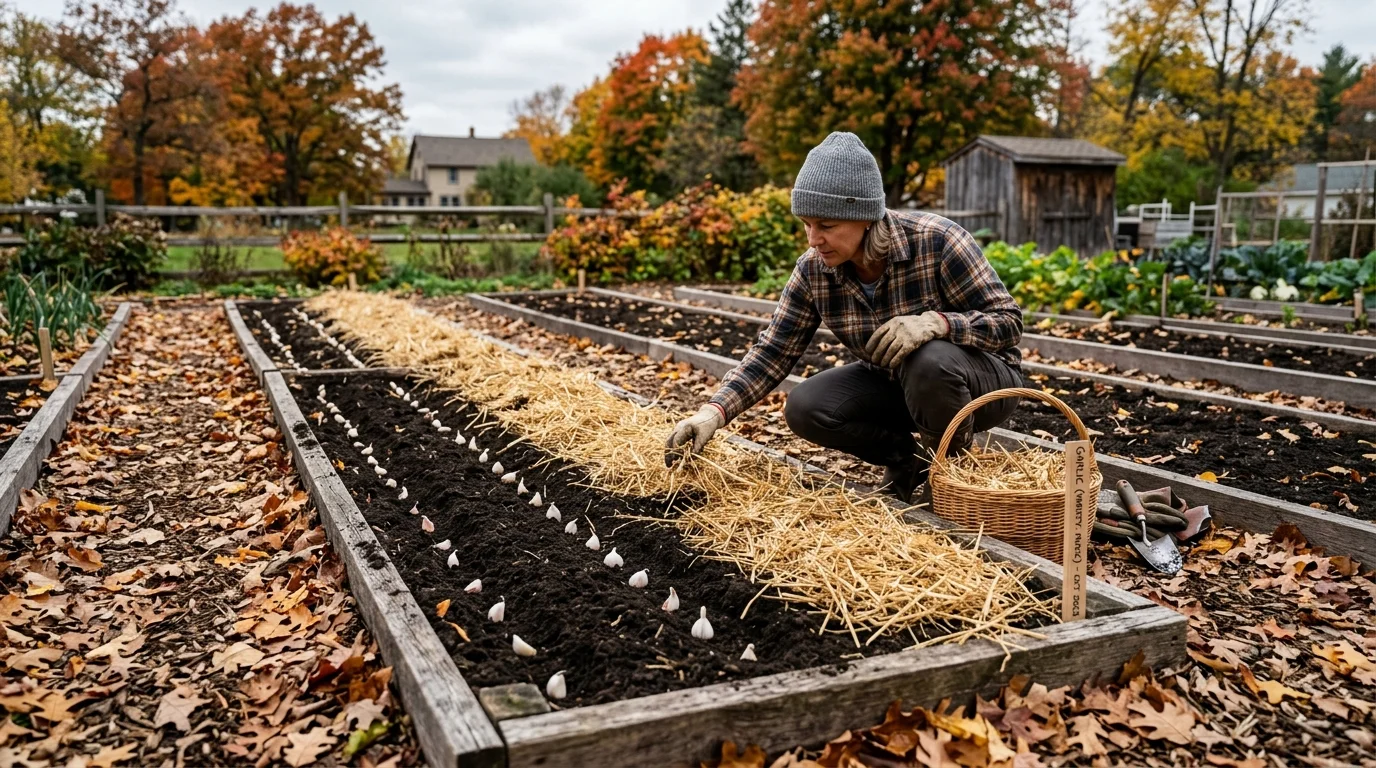
Feeding and Watering Wisconsin Garlic Through the Growing Season
Spring is when garlic makes most of its above-ground growth, and that leafy growth directly determines bulb size. Each green leaf on the plant corresponds to one wrapper layer around the bulb. More healthy leaves mean more wrapper layers, which means better-protected, longer-storing bulbs. Feeding the plant well through April and May pays off at harvest in both bulb size and quality.
When shoots are actively growing in April, apply a balanced organic fertilizer or a side-dressing of aged compost to the bed. Feather meal, blood meal, or a balanced granular organic blend all provide the nitrogen garlic needs for rapid leaf development at this stage. Work amendments gently into the soil surface without disturbing roots.
Back off nitrogen after late May. Pushing nitrogen after the plant shifts its energy toward bulb development encourages top growth at the wrong time and can actually reduce final bulb size. A light application of bone meal or greensand in early June supports the phosphorus and potassium demands of bulb sizing without overstimulating foliage.
Wisconsin’s rainfall usually covers garlic’s water needs through much of the spring season. Supplement with irrigation during dry spells to maintain consistent soil moisture, aiming for about 1 inch of water per week. Taper irrigation noticeably after mid-June and stop completely two weeks before your expected harvest date. Dry conditions in the final two weeks firm the outer wrapper and dramatically improve storage quality after curing.
Expert Insight Note
Most Wisconsin garlic guides focus on surface-level practices like mulching and watering schedules, but one factor that consistently goes unaddressed is the impact of planting density on disease pressure in humid years. Wisconsin’s late spring and early summer can bring extended periods of overcast, humid weather that favors the development of botrytis neck rot, a fungal disease that infects garlic through the neck tissue and causes silent internal decay that is not visible until you cut the bulb open after harvest or during storage. Planting at or beyond 6-inch spacing within rows and 12-inch row spacing is not just about bulb size. It is about airflow. Dense plantings in humid conditions dramatically increase the likelihood of fungal spread from plant to plant, and once botrytis is established in a planting, losses can reach 20 to 40 percent of the crop. According to research published through the University of Wisconsin Extension, proper spacing combined with timely irrigation cutoff are the two most effective practices for reducing postharvest fungal losses in allium crops grown in humid continental climates.
Harvesting Scapes and Why You Should Never Skip This Step
Hardneck garlic produces a scape, a curling green flowering stalk that emerges from the center of the plant in late May or early June across most of Wisconsin. Leaving the scape on the plant allows it to direct energy toward seed production, which competes directly with bulb sizing. Removing the scape as soon as it completes one full curl redirects that energy downward and into the bulb. Research from multiple university extension programs has documented 20 to 30 percent increases in final bulb weight in plots where scapes were removed at the right time versus plots where they were left on.
Snap or cut the scape as close to the point where it emerges from the central leaves as possible. Do not pull it out because that can damage the interior stalk. Within days of scape removal you can often observe the soil around the base of the plant cracking slightly as the bulb begins expanding rapidly below ground.
Scapes are a genuinely excellent vegetable. They taste like mild, fresh garlic and can be grilled, chopped into stir-fries, blended into pesto, or pickled in vinegar brine. Wisconsin farmers market vendors often sell scapes as a premium seasonal item in June, several weeks before the main garlic harvest arrives. For home growers, they are a free bonus from the same bed you already planted and tended.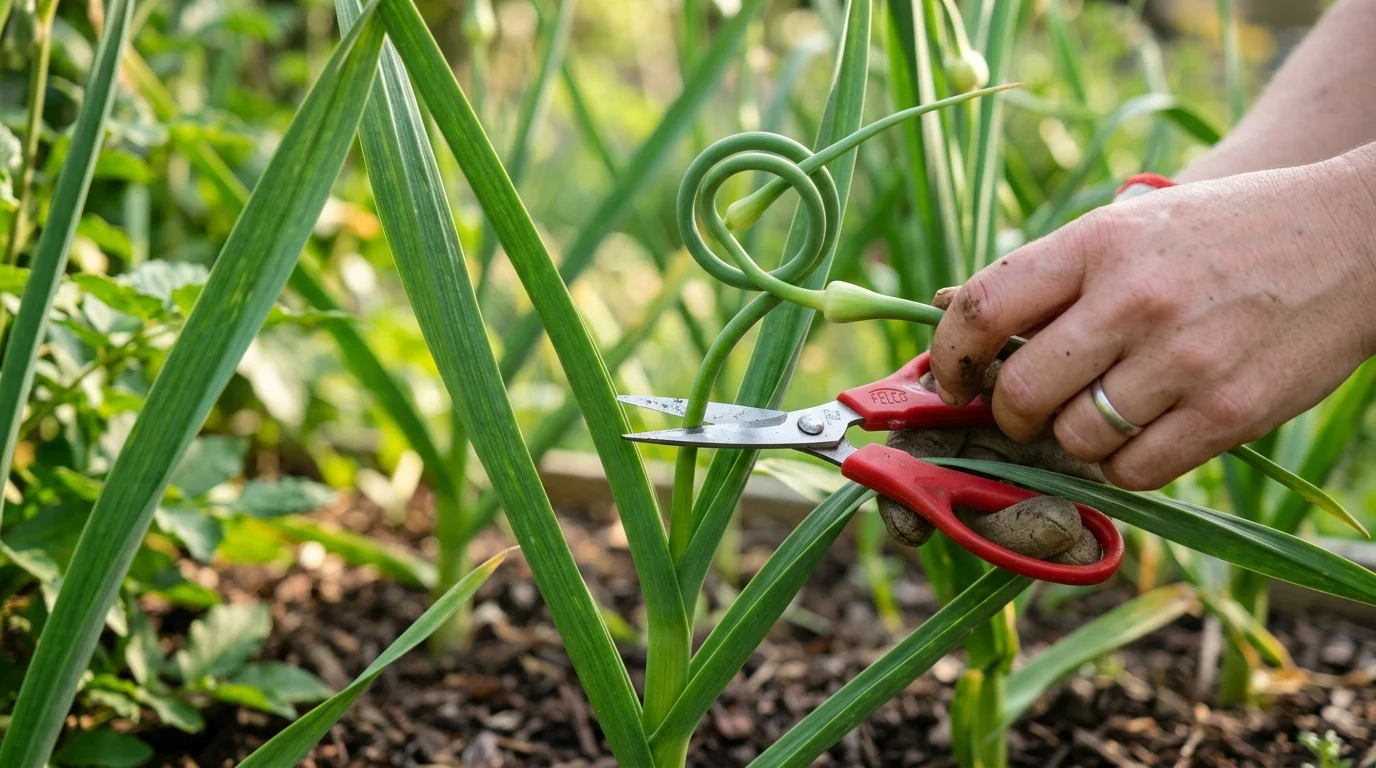
Reading Harvest Signals and Digging at the Right Moment
Harvest timing makes or breaks a garlic crop. Pull too early and the cloves are undersized with thin wrappers that split during curing. Pull too late and the outer wrapper has begun to break down in the moist soil, leaving you with bulbs that do not store well and are prone to disease at the clove level. In Wisconsin, most hardneck garlic is ready to harvest between mid-July and early August depending on variety and the specific planting location.
The most reliable harvest indicator is counting the remaining green leaves on the plant. When roughly half the leaves have turned brown and dried down while the other half remain green and upright, the bulb below is at peak development. For most hardneck varieties, that means 5 to 6 green leaves remaining at harvest time. Each green leaf corresponds to one intact wrapper layer, and you want at least 3 to 4 wrapper layers on every harvested bulb for good storage life.
Do a test dig before committing the whole bed to harvest. Pull two or three bulbs from different areas of the planting and cut them in half crosswise. Fully mature garlic shows clearly defined, fully separated cloves that fill the wrapper completely. If the cloves appear fused or the overall bulb seems small, give the bed another week and test again.
Use a garden fork to loosen soil around each bulb before lifting to avoid breaking the neck, which is the section just above the bulb where the stalk meets the wrapper. A broken neck dramatically shortens storage life because the entry point for fungal organisms is now open. Loosen the soil about 4 inches from the base of the plant and lift gently. Shake off excess soil but do not wash the bulbs before curing.
Curing Garlic in Wisconsin’s Summer Humidity
Curing is the drying process that prepares freshly harvested garlic for long-term storage. Properly cured garlic can keep for four to eight months depending on variety and storage conditions. Improperly cured garlic goes soft, develops mold at the neck, and loses flavor within weeks. In Wisconsin, curing requires a bit more attention than in drier states because summer humidity can slow the process and create conditions that favor fungal development.
Move freshly harvested garlic immediately to a shaded, well-ventilated space. Direct sun bleaches the wrapper and can cause heat damage to the cloves just below it. A pole barn with open sides, a covered porch with good cross-ventilation, or a garage with fans running all work well. Hang the bulbs in loose bundles of 8 to 10 plants with stalks intact, or lay them in a single layer on elevated wire mesh racks that allow air to circulate from below.
In humid years, running a box fan directed across the drying racks speeds curing significantly and reduces the risk of botrytis neck rot developing during the drying period. Garlic is fully cured when the neck, the section just above the bulb, feels completely dry and papery rather than soft, and when the outer wrapper rustles and crinkles when you handle the bulb. That process takes three to five weeks under good airflow conditions in Wisconsin.
After curing, trim the roots to about half an inch and cut the stalk to 1 inch above the bulb. Store cured garlic in a cool, dark location with good airflow and humidity below 60 percent. A basement with a dehumidifier, a cool pantry, or a root cellar all work well. Avoid the refrigerator because cold temperatures at refrigerator range trigger premature sprouting in most hardneck varieties.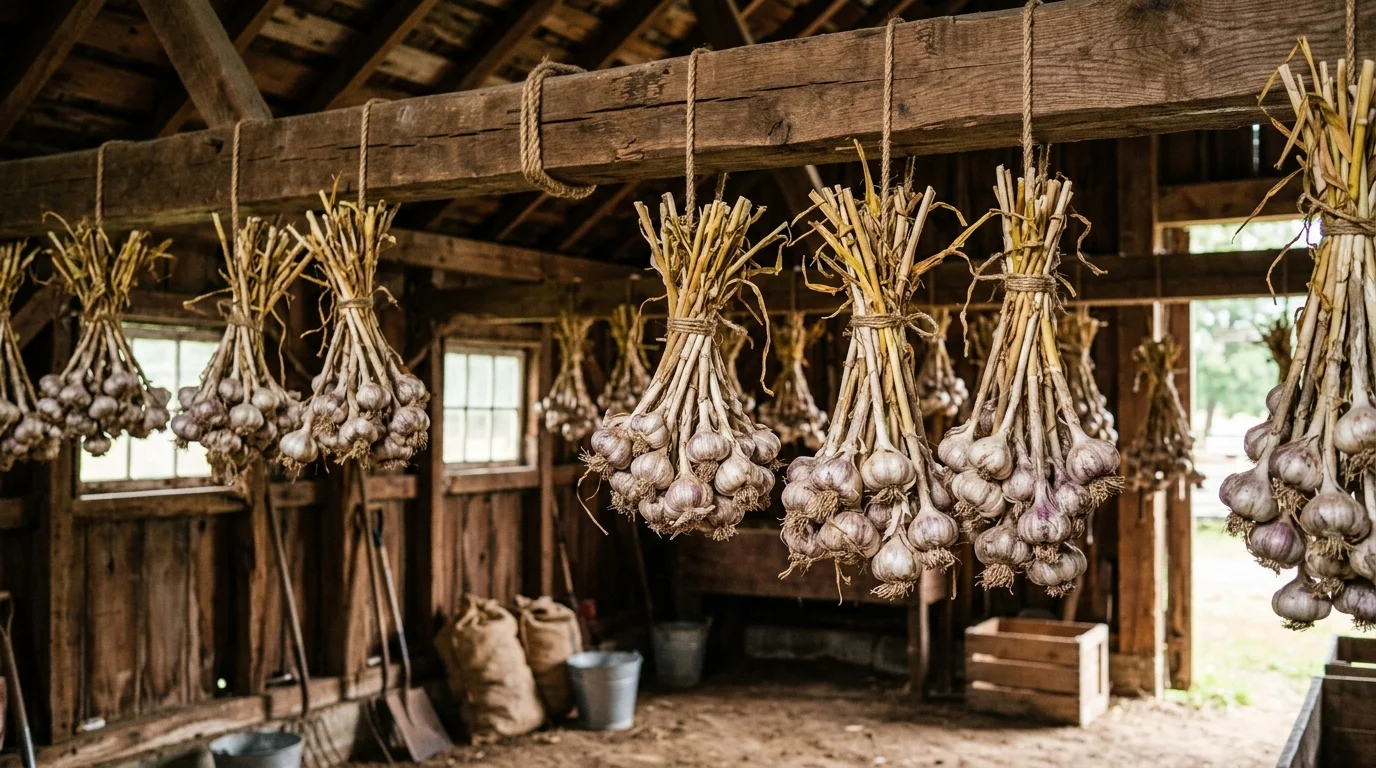
Pest and Disease Pressure Specific to Wisconsin Garlic Growers
White rot caused by the fungus Sclerotium cepivorum is the most serious long-term threat to Wisconsin garlic production. This pathogen forms small black resting structures called sclerotia that can persist in soil for 20 years or more, making infected beds effectively unusable for alliums indefinitely. Infected plants show yellowing that starts at the leaf tips, stunted growth, and a white cottony fungal mass at the base of the bulb. There is no chemical or biological treatment that eliminates white rot from soil once it is established. Prevention through crop rotation, buying certified clean seed garlic, and immediately removing any suspicious plants along with surrounding soil is the only reliable management strategy.
Onion thrips are Wisconsin’s primary insect pest for garlic. These tiny insects, barely visible to the naked eye, feed on leaf tissue and cause a characteristic silvery streaking pattern. Heavy populations in warm, dry years can reduce leaf area significantly and impact bulb development. Insecticidal soap or neem oil applied in early morning or evening when pollinators are less active provides good control without broad environmental impact. Keeping beds free of weedy plant material around the perimeter reduces thrip overwintering habitat.
Leek moth is an emerging pest in Wisconsin’s garlic-growing areas, particularly in the eastern part of the state. The larvae bore into garlic leaves and can penetrate the central stalk, causing dieback and entry points for secondary fungal infections. Row covers applied in late spring, after scape removal, provide physical exclusion from egg-laying adults. Monitoring with pheromone traps helps time interventions accurately.
Growers who incorporate cover cropping between garlic seasons consistently report reduced pest and disease pressure over time. Growing alfalfa as a cover crop between garlic rotations builds organic matter, suppresses weeds, and supports the beneficial soil biology that keeps pathogen populations in check.
Saving Your Own Seed Garlic and Building a Wisconsin-Adapted Strain
One of the most practical and satisfying aspects of garlic growing is the ability to save your own seed stock year after year. Unlike hybrid vegetables that require purchasing new seed each season, open-pollinated garlic grown from saved cloves adapts progressively to your specific microclimate, soil type, and regional pest pressures. Wisconsin garlic growers who have saved seed consistently for five or more seasons often describe noticeable improvements in bulb size, disease resistance, and flavor intensity compared to commercially sourced seed garlic.
Select the 10 to 15 percent largest, most symmetrical bulbs from each year’s harvest to set aside for replanting. Look for tight, complete wrappers with no signs of mold, softness, or damage at the root plate. Store these seed bulbs separately from your eating garlic to prevent accidental use before planting season. Keep them in the same cool, well-ventilated conditions as eating garlic until fall.
Over multiple seasons of selection, you are essentially breeding a locally adapted population from within a named variety. The genetic variation within garlic varieties is subtle but real, and consistent selection pressure toward the traits that matter most in your garden, large size, clean skins, good flavor, produces measurable improvement within three to five growing cycles. Many Wisconsin market gardeners who supply local restaurants and food co-ops have built distinct regional seed lines this way.
Keep a simple written log each season noting planting date, variety names, scape removal date, harvest date, bulb count, and any observations about quality or disease. That record becomes a practical management tool that removes guesswork from timing decisions in subsequent seasons. Gardeners who also grow other seed crops alongside garlic, like those interested in understanding how seed viability and storage works, often find that the same discipline applied to garlic seed selection strengthens their overall approach to food gardening.
The Economic Case for Growing Garlic in Wisconsin
Garlic is among the highest-value crops measured by return per square foot of growing space, and Wisconsin’s direct-market opportunities make that value even more accessible to small producers. Fresh hardneck garlic at Wisconsin farmers markets regularly sells between $2 and $5 per bulb depending on variety and size, with specialty strains from locally adapted seed lines commanding the upper end of that range. A well-managed 200-square-foot bed can produce 150 to 180 bulbs, representing meaningful income from a very small land area.
Wisconsin’s food culture has created strong and growing demand for locally produced garlic from restaurants, food co-ops, and direct consumers who understand the flavor difference between fresh hardneck garlic and the months-old softneck garlic imported from China that fills most supermarket bins. The United States imports more than 65 percent of its annual garlic supply according to USDA trade data, creating a clear gap that local Wisconsin production can fill at a premium.
Beyond market income, home production eliminates ongoing grocery costs and ensures access to better-tasting, more nutritious garlic year-round. A cured hardneck crop harvested in July can last through the following February or March under good storage conditions, covering most of the winter months when local produce options narrow considerably. Pairing garlic production with other high-density crops like growing tomatoes in raised beds maximizes the productivity of limited garden space and extends the harvest season well into fall.
The input costs for garlic production are low after the first season. Seed garlic is the primary first-year investment, typically running between $10 and $20 per pound for quality hardneck varieties. From the second season onward, saved seed from your own harvest eliminates that cost entirely, and your primary expenses drop to soil amendments, straw mulch, and water. Few crops deliver this kind of long-term return on a modest initial investment.
What Most Wisconsin Garlic Guides Get Wrong
The most common misconception about Wisconsin garlic is that the state’s winters are too severe for reliable production. This assumption likely comes from generalizing cold-climate gardening challenges to a crop that is specifically adapted to exactly those conditions. Hardneck garlic evolved in continental climates with harsh winters. It does not merely tolerate Wisconsin cold. It requires it to perform properly.
A second widespread error is underestimating mulch depth. Many online guides recommend 2 to 3 inches of mulch, which is sufficient in moderate climates but inadequate for zone 4 conditions in northern Wisconsin where soil can freeze to 18 inches or more. Four to six inches of straw mulch is the correct range for most of the state, and 6 inches or more is appropriate in the northernmost growing areas. Thin mulch in a zone 4 winter is not protective enough to prevent frost heaving and temperature damage to shallow-planted cloves.
A third myth is that Wisconsin’s slightly acidic soils are fine for garlic without testing or adjustment. Garlic grown below pH 6.0 shows reduced availability of phosphorus, calcium, and magnesium, all nutrients that directly influence bulb development and wrapper quality. Many Wisconsin soils in forested areas or under long-term acidic cover crop management test below that threshold. A basic soil test eliminates all guesswork and costs less than a bag of seed garlic.
Finally, some guides suggest that any garlic variety works equally well across Wisconsin’s growing zones. Variety selection matters enormously above zone 5. Rocambole varieties that perform beautifully in Madison can struggle in Rhinelander without extra mulch protection. Porcelain varieties are generally safer for the northern tier of the state because they are more cold-tolerant and their thicker wrapper provides better physical protection against freeze damage during the long Wisconsin winter. Growers interested in other drought-tolerant or cold-adaptive plant projects sometimes find useful perspective in resources about growing plants from seed in challenging conditions, since the core principle of matching variety to environment applies across very different crops.