
Clay soil is the single most common reason lawns fail to thrive. It compacts under foot traffic, repels water when dry, and drowns roots when wet. But here is the thing most lawn guides skip over entirely: clay soil is not your enemy. It is actually one of the most nutrient-rich soil types on earth. The problem is structure, not fertility. Fix the structure and grass will grow in clay better than it ever would in poor sandy ground.
This guide walks through the exact steps to prepare clay soil, choose the right grass seed, and maintain a lawn that stays green and healthy year after year. Whether you are starting from bare ground or trying to rescue a patchy, struggling lawn, the same principles apply.
Why Grass Struggles in Clay Soil and What Is Actually Happening Underground
Clay particles are the smallest particles in any soil type, roughly 1,000 times smaller than sand particles. When packed together, they leave almost no space between them. Roots need air pockets to breathe, and water needs channels to drain away after rain. In compacted clay, both of those things disappear. Roots suffocate. Water sits on the surface or pools just below it, creating anaerobic conditions where harmful bacteria thrive and beneficial soil life dies off.
When clay dries out, the situation reverses. The tiny particles bond tightly and the soil hardens into something close to concrete. Seeds sitting on the surface cannot push through. Even established grass roots struggle to extend through dried clay, which stunts above-ground growth and leads to the thin, patchy lawns so common on clay-heavy properties.
Understanding this dual problem, too wet when wet and too hard when dry, is the key to solving it. Every intervention you make in clay soil should target one of these two failure modes. Drainage improvements address the wet problem. Organic matter additions and aeration address the dry and compacted problem.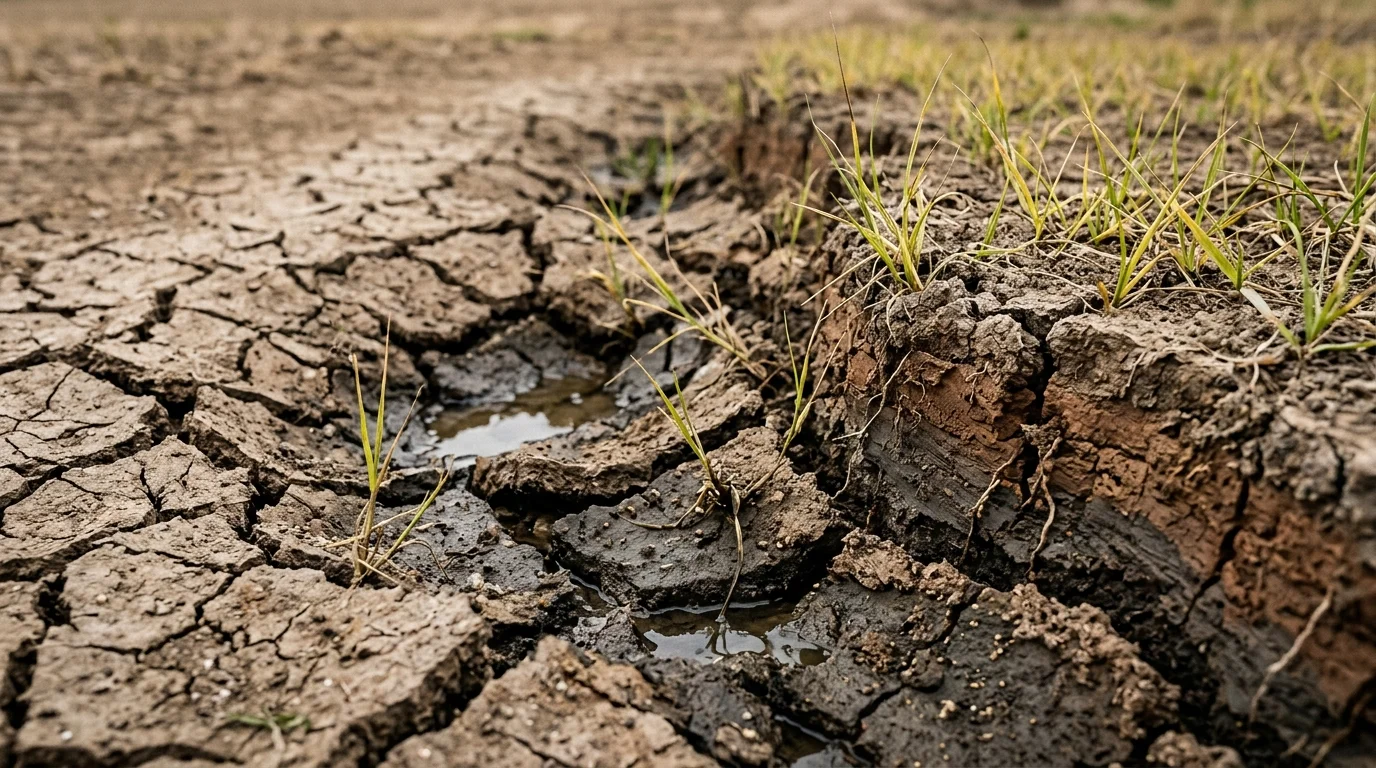
Testing Your Soil Before You Do Anything Else
Before spending money on seed, amendments, or equipment, take 10 minutes to confirm what you are actually working with. Grab a handful of moist soil from your lawn area and squeeze it into a ball. Open your hand. If the ball holds its shape and feels slick and smooth, you have high clay content. Now poke the ball with your finger. If it stays intact rather than crumbling, your clay content is significant enough to need active intervention.
A more precise test is the jar method. Fill a clear jar one-third with soil, top it up with water, shake it vigorously, and leave it for 24 hours. Sand settles first within a few minutes, silt settles next within an hour, and clay stays suspended longest and forms the top layer when it finally does settle. If the clay layer makes up more than 40 percent of the total settled material, you have heavy clay and will need to amend more aggressively before overseeding or establishing new grass.
A basic soil pH test is also worth doing at this stage. Clay soils commonly run slightly alkaline, with pH values between 7.0 and 8.0. Most lawn grasses prefer a pH between 6.0 and 7.0. If your soil is above 7.5, adding sulfur or using acidifying fertilisers will improve nutrient availability alongside your structural amendments.
Breaking Up Clay Soil the Right Way Before Planting Grass
Surface raking alone will not solve a clay problem. You need to work amendments into the top 15 to 20 centimetres of soil, which is the critical zone where grass roots live. For a new lawn on bare clay, rotary tilling is the most effective approach. Set the tiller to work at full depth and make two passes in different directions to break up the clay structure thoroughly.
For an existing lawn you want to improve without full renovation, core aeration is the right starting point. A core aerator pulls out plugs of soil, typically 6 to 10 centimetres deep, and leaves them on the surface. These holes allow air, water, and amendments to penetrate the root zone. For heavily compacted clay, aerate twice a year, once in early spring and again in early autumn, for at least two consecutive years before you will see meaningful structural improvement in the deeper soil layers.
Aeration alone is not enough on severe clay. After aerating, apply amendments immediately and work them into the holes. This is the most direct way to change soil structure in the zone that matters most for grass establishment and root development.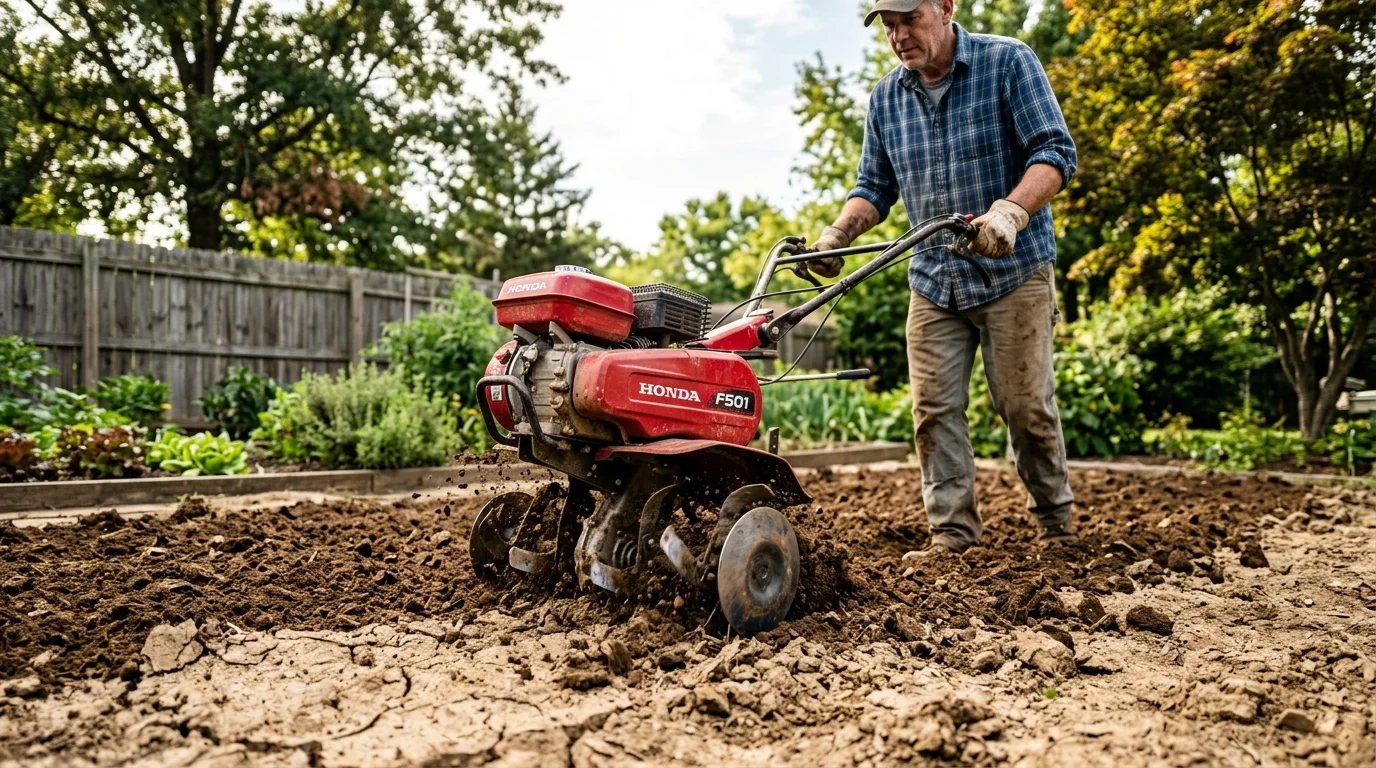
The Best Soil Amendments for Clay Lawns and How Much to Use
Organic matter is the single most effective amendment for clay soil. When decomposed organic material mixes with clay particles, it physically separates them and creates the pore spaces that roots and water need. Compost is the best organic amendment for lawns. Apply a 5 to 8 centimetre layer across the entire area you are treating and till or rake it in thoroughly. On a 100 square metre lawn, this means bringing in roughly 500 to 800 litres of compost, which sounds like a lot but produces lasting structural changes that synthetic amendments cannot replicate.
Gypite, which is calcium sulfate, is a widely used clay-breaking amendment that works differently from organic matter. It does not add nutrients or biological life to the soil, but it causes clay particles to cluster together into larger aggregates, a process called flocculation. This creates larger pore spaces without changing the soil’s pH. Apply gypsum at a rate of 1 to 2 kilograms per square metre on heavy clay and water it in well. Results are visible within a few months as water starts infiltrating the surface more quickly.
Sand is often recommended for clay soil, but this advice comes with an important warning. Adding too little sand to clay creates something close to concrete. To actually improve drainage, sand must make up at least 50 percent of the total volume of the amended layer. Unless you are prepared to add that quantity, skip sand entirely and stick with compost and gypsum, which produce better results with smaller quantities.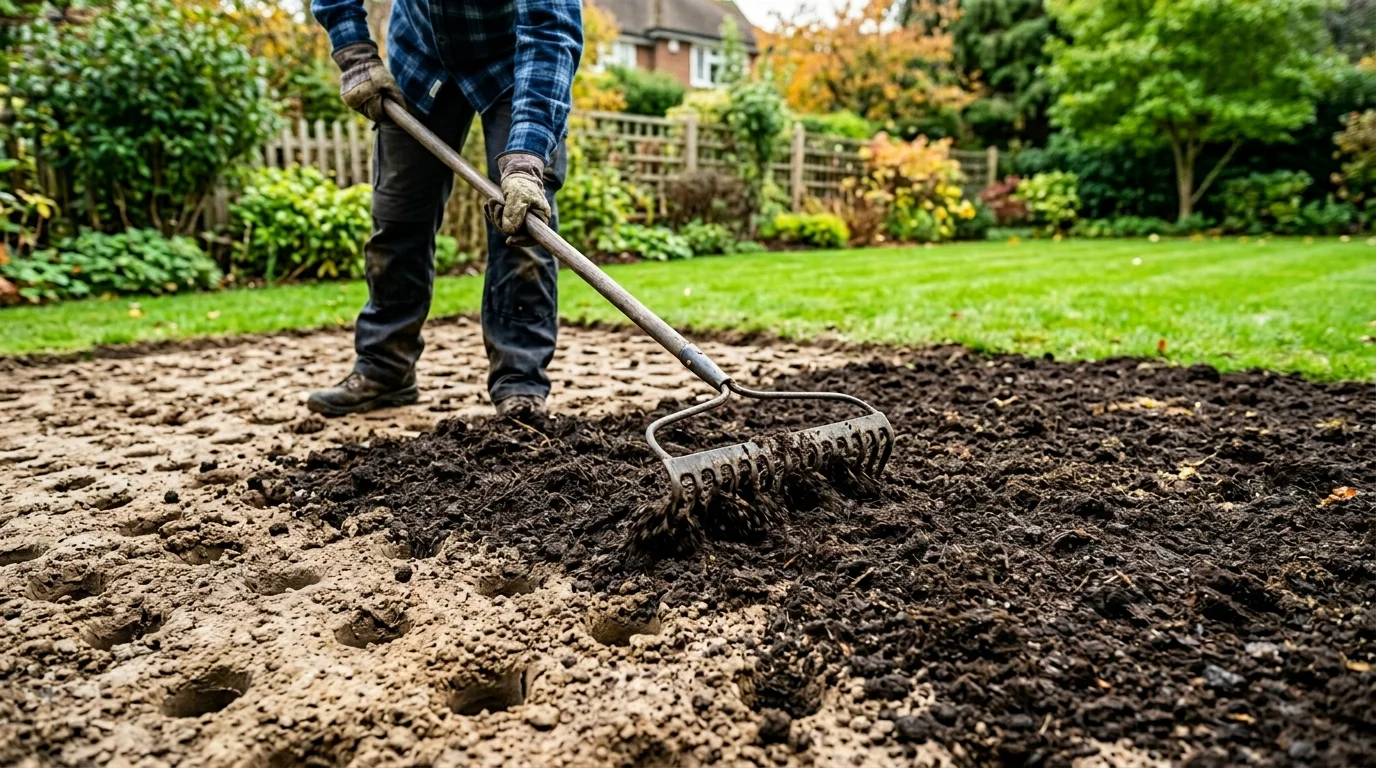
Choosing the Right Grass Seed for Clay Soil
Not all grass types handle clay equally well. Some varieties have shallow, fibrous root systems that give up quickly when encountering hard or waterlogged conditions. Others push deep taproots and tolerate compaction and temporary waterlogging far better. Matching your seed to your conditions is just as important as amending the soil itself.
Tall fescue is widely regarded as the best grass for clay soils in cool-season climates. Its roots can extend 90 centimetres or deeper, well past the compacted upper clay layer, and it tolerates both moderate waterlogging and dry periods better than bluegrass or ryegrass. Modern tall fescue varieties like Kentucky 31 and Titan RX were specifically selected for stress tolerance and have performed well in clay-heavy lawn trials across the US Midwest and Northeast.
In warm-season climates, Bermuda grass and zoysia grass are the top choices for clay. Bermuda grass spreads aggressively via above-ground runners called stolons and below-ground stems called rhizomes, which means it can colonise gaps in a clay lawn quickly. Zoysia grass establishes more slowly but produces an exceptionally dense turf that smothers weeds and resists compaction once established. Both tolerate the wet-dry extremes that clay soils regularly produce.
Grass Varieties to Avoid on Heavy Clay
Bentgrass and fine fescues are poor choices for clay lawns. Bentgrass requires exceptional drainage and compacts easily under normal foot traffic on clay surfaces. Fine fescues are shade-tolerant but have shallow root systems that struggle when clay hardens between watering cycles. Perennial ryegrass germinates fast and looks good quickly, but its relatively shallow roots mean it is the first grass to thin out and die during a dry spell on clay ground.
How to Seed a Clay Lawn and Get High Germination Rates
Timing your seeding correctly makes a significant difference on clay. Cool-season grasses should be seeded in late summer to early autumn when soil temperatures are between 10 and 18 degrees Celsius. At this temperature, seed germinates quickly, root systems establish before winter, and the grass enters its first growing season with a strong foundation. Spring seeding on clay is riskier because summer heat often arrives before roots can establish deep enough to handle dry clay conditions.
Prepare the seedbed immediately before seeding so the surface does not have time to crust over. On amended clay, a light rake-over is enough to create a fine, crumbly surface. Spread seed using a drop spreader rather than a broadcast spreader for more precise, even coverage. After spreading, drag a piece of chain-link fence or a lawn roller over the area to press seed into contact with the soil. Good seed-to-soil contact is one of the most overlooked factors in germination success.
Water the seeded area lightly twice daily until germination, keeping the top centimetre of soil consistently moist. On clay, be careful not to overwater. The surface can look dry while the layer just below remains saturated. Push a finger into the soil before each watering to check actual moisture levels rather than watering on a fixed schedule.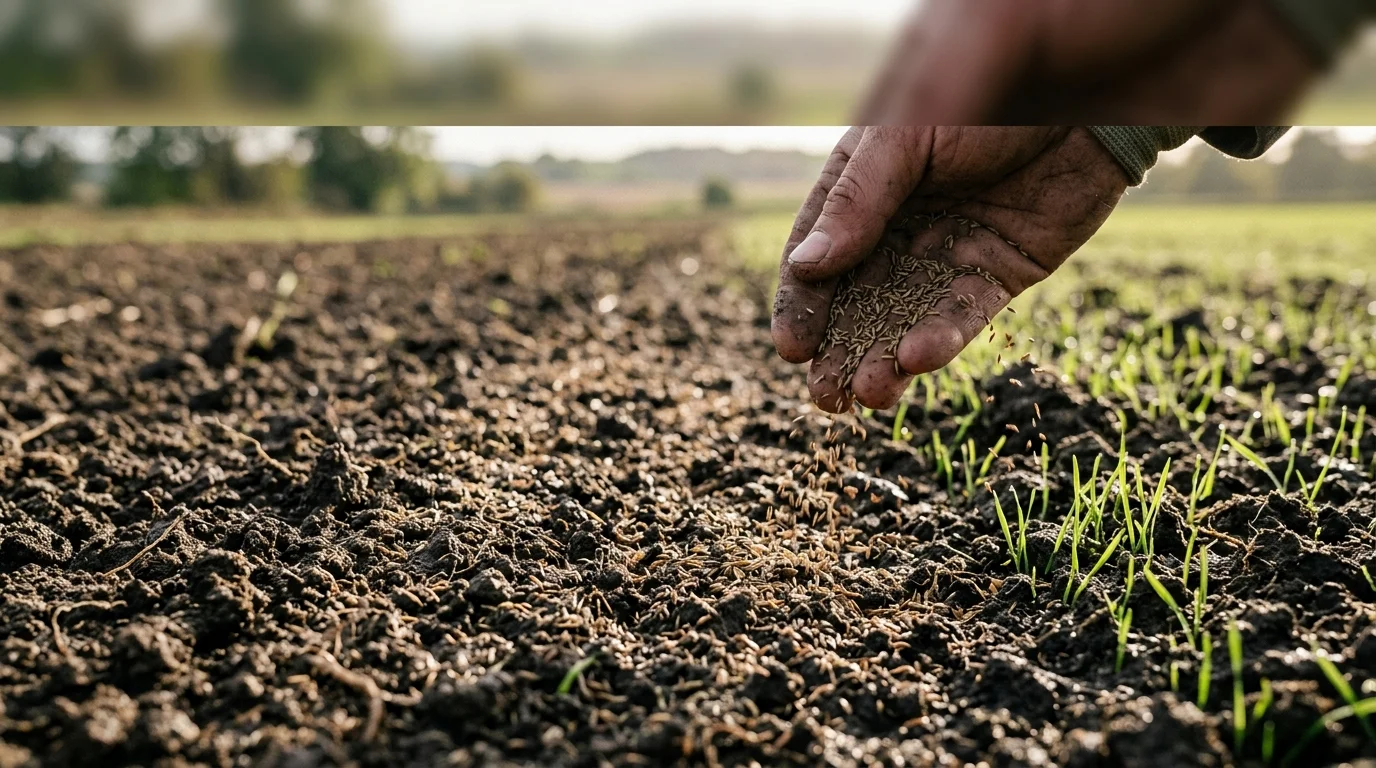
Overseeding an Existing Clay Lawn Without Starting Over
If your lawn already has some grass but is thin, patchy, or struggling, overseeding after aeration is the most practical repair strategy. Aerate the entire lawn area, rake in a thin layer of compost to topdress the surface, then spread seed over the aerated holes and compost layer. The holes created by aeration give seed a protected, moist environment to germinate in, which produces better establishment than simply spreading seed over a compacted surface.
Overseeding works best when done in early autumn for cool-season grasses. The existing grass is not competing as aggressively at that time of year, and the soil is still warm enough for fast germination. Avoid overseeding in summer on clay lawns because high temperatures combined with clay’s tendency to bake hard between waterings will kill most seedlings before they can establish.
After overseeding, hold off mowing until the new seedlings reach 8 to 10 centimetres tall. Mowing too early on a clay lawn compacts the soil around fragile new roots and can physically uproot seedlings that have not yet anchored fully.
Expert Insight Note
Most homeowners treat clay soil as a one-time problem to solve, but the real challenge is maintaining soil structure over the long term. Earthworm activity is one of the most powerful ongoing forces for keeping clay open and aerated, yet most clay lawns are almost completely devoid of earthworms because the soil is too compacted and too low in organic matter to support them. Research from Rothamsted Research in the UK has shown that soils with active earthworm populations can have up to 10 times more water infiltration capacity than comparable soils without them. Once you have improved your clay lawn’s structure with compost and aeration, focus on keeping organic matter levels up through annual topdressing. This maintains earthworm populations and means you spend less time aerating and more time actually enjoying the lawn.
Watering a Grass Lawn on Clay Soil Without Making Things Worse
Watering clay lawns incorrectly is one of the fastest ways to undo all the structural work you have done. The biggest mistake is frequent shallow watering. This keeps only the top few centimetres of soil moist, which is exactly where clay is most prone to compaction and crusting. Grass roots follow water, so shallow watering produces shallow roots that are vulnerable to drought and heat stress.
Water deeply and infrequently instead. Apply enough water to penetrate at least 15 centimetres into the soil, and then wait until the top 5 centimetres are dry before watering again. For clay soils, this typically means watering once or twice a week during summer rather than daily. Use a soil probe or a long screwdriver to check soil moisture at depth before each watering session.
Apply water slowly. Clay can only absorb water at a rate of about 2 to 5 millimetres per hour when compacted. Sprinklers that deliver water faster than the soil can absorb it will cause surface runoff, which carries away topsoil and seeds without providing any benefit to the root zone. If you see water running off your lawn surface, you are watering too fast. Switch to shorter, more frequent cycles within each watering session, allowing absorption time between each cycle.
Fertilising Clay Lawns Without Causing Salt Buildup
Clay soil holds onto nutrients well, which is actually one of its advantages over sandy soil. The negative charge on clay particles attracts and retains positively charged nutrient ions like calcium, magnesium, and potassium. This means clay lawns generally need less frequent fertilisation than sandy lawns. Overfertilising clay, particularly with synthetic nitrogen, contributes to salt accumulation in the soil, which draws water out of grass roots through osmosis and causes the browning and thinning sometimes mistaken for drought stress.
Use slow-release nitrogen fertilisers on clay lawns rather than fast-release synthetic products. Slow-release formulations deliver nutrients gradually as the coating breaks down, which matches the slower uptake rate of grass roots in clay and reduces the risk of salt buildup. Apply fertiliser in early autumn for cool-season grasses and in late spring for warm-season varieties. A soil test every two to three years will tell you exactly which nutrients your clay soil is lacking so you are not adding things it already has in abundance.
Organic fertilisers such as composted chicken manure or blood and bone are excellent for clay lawns because they improve biological activity alongside feeding the grass. Soil microbes process organic fertilisers and release nutrients slowly, which feeds both the grass and the earthworm populations that keep clay structure open over time.
Lawn Aeration Schedules That Actually Change Clay Soil Over Time
A single aeration session on a clay lawn is better than nothing, but it will not transform the soil. Clay soil improvement through aeration is a multi-year process. In the first year, aerate twice, once in spring and once in autumn, and topdress with compost immediately after each session. In year two, the same schedule applies. By the third year, most gardeners report noticeably improved drainage, softer soil underfoot, and significantly better grass coverage, because the combined effect of annual aeration and compost addition has begun to genuinely change the soil profile rather than just the surface.
The type of aerator matters. Spike aerators, which push into the soil without removing plugs, can actually worsen compaction by pushing clay particles aside and compressing them. Always use a hollow-tine or core aerator that physically removes plugs of soil. Leave the pulled plugs on the surface rather than collecting them. They will break down within a few weeks and the crumbled material mixes back into the lawn, contributing a small amount of organic material to the surface layer each time.
For deeply compacted clay on properties with heavy vehicle or foot traffic history, a single-pass deep aeration using a machine that penetrates 20 to 30 centimetres can break through the compaction layer that standard core aerators cannot reach. This technique, sometimes called deep-tine aeration, is used on sports fields and golf courses to restore badly damaged clay profiles and is increasingly available through lawn care contractors for residential properties.
The Real Cost of Ignoring Clay Soil Problems and Why Most Lawn Fixes Fail
Most lawn products, including weed killers, fertilisers, and overseeding mixes, are designed for average garden soil. Applied to unimproved clay, they produce temporary results at best. Homeowners spend significant money on these products year after year without addressing the underlying structural problem. Research from the Penn State Extension soil health program found that turf grown on properly amended clay outperformed turf grown on unamended clay in drought resistance, disease resistance, and overall coverage by margins of 40 percent or more over a three-year period.
The cost of properly amending a 100 square metre clay lawn, including compost, gypsum, aeration, and quality seed, typically runs between 300 and 600 dollars for a full first-year treatment. That sounds significant, but compare it to the cumulative cost of annual fertilisers, weed treatments, and reseeding for a lawn that never improves. Most homeowners who go through the full amendment process report spending less on lawn maintenance in subsequent years, not more, because a structurally healthy soil requires far less intervention to stay productive.
Beyond economics, a lawn that sits on unimproved clay contributes to local stormwater problems. Compacted clay sheds rainwater rather than absorbing it, increasing surface runoff into drains and waterways. Improving your clay lawn is not just good for your grass. It genuinely reduces the burden on local drainage systems during heavy rain events.