
Colorado is one of the best states in the country for growing garlic, and most people do not know it yet. The cold winters, high altitude, and low humidity create conditions that garlic absolutely loves. If you have been wondering how to grow garlic in Colorado and actually get big, flavorful bulbs, the answer starts with understanding what makes this crop tick in a mountain climate.
Garlic in Colorado is typically planted in the fall, overwintered in frozen ground, and harvested the following summer. That cycle works because garlic needs a cold dormancy period, called vernalization, to develop properly. Without that cold spell, the bulb does not split into cloves and you end up with a round, undivided blob instead of the layered bulb you want.
This guide walks through every step from variety selection to harvest and curing, with specific timing for Colorado’s front range, mountain communities, and high-elevation zones. Whether you are growing in Denver, Durango, or Glenwood Springs, the core principles apply and the adjustments are minor.
Why Colorado’s Climate Is Secretly Perfect for Garlic
Most gardeners assume Colorado is a tough place to grow food because of the late frosts, blazing summer sun, and unpredictable spring weather. For garlic, those same conditions are not obstacles. They are advantages. The cold nights trigger deep vernalization, the dry air reduces fungal pressure, and the intense Colorado sun speeds up bulb curing after harvest.
Garlic is a cold-hardy allium that evolved in Central Asia, a region with harsh winters and dry summers. The Colorado high plains and mountain valleys mimic that environment closely. Areas like the San Luis Valley, which already produces commercial potato crops under extreme conditions, are also capable of producing outstanding garlic with minimal inputs.
The biggest risk in Colorado is not cold but sudden temperature swings in early spring. A stretch of warm days in March can push garlic into early shoot growth, and then a hard freeze in April can damage tender new growth. Mulching properly in fall largely prevents this problem by insulating the soil and slowing temperature fluctuations.
Elevation matters too. Gardeners above 7,000 feet work with a compressed growing season, so timing both planting and harvest shifts by two to three weeks compared to lower-elevation zones. The principles stay the same but the calendar shifts earlier in fall for planting and later in summer for full bulb development.
Choosing the Right Garlic Variety for Colorado Conditions
Not all garlic is the same. There are two main categories: hardneck and softneck. For Colorado, hardneck varieties are almost always the better choice. They are adapted to cold climates, produce a flowering stalk called a scape that you can harvest and eat, and develop more complex flavors when grown in high-altitude conditions.
Rocambole is one of the most popular hardneck types among Colorado growers. Varieties like German Red, Chesnok Red, and Spanish Roja do exceptionally well at elevations between 5,000 and 8,000 feet. They produce large cloves with rich, slightly spicy flavor profiles and they peel easily after curing.
Porcelain hardnecks such as Music and Georgian Crystal are also strong performers in Colorado. They tend to have fewer but larger cloves per bulb and a longer storage life than Rocamboles. For growers who want to store garlic through winter without it sprouting, Porcelain types are worth considering.
Softneck garlic, the kind you typically see braided and sold at farmers markets, stores longer but is less cold-tolerant and produces smaller cloves. It can work in lower elevation parts of Colorado, particularly along the front range, but it does not thrive at altitude and the flavor is generally less interesting than hardneck types grown in mountain conditions.
Buy seed garlic, meaning garlic specifically grown and sold for planting, rather than garlic from a grocery store. Commercial garlic is often treated to suppress sprouting and may carry diseases that can persist in your soil for years. Certified seed garlic from a reputable supplier gives you clean, disease-free stock and known variety performance.
When and How to Plant Garlic in Colorado
Timing is the most important factor in Colorado garlic growing. Plant too early and the cloves push too much top growth before winter, which can get winter-killed. Plant too late and the cloves do not establish enough root mass before the ground freezes solid, which leads to small bulbs the following summer.
The general planting window for most of Colorado is mid-September through mid-October. Front range gardeners in Denver, Boulder, and Colorado Springs can often plant as late as the first week of October. Mountain gardeners above 7,000 feet should aim for mid-September or even early September to give roots enough time to establish before freeze-up.
Prepare the bed by loosening the soil to at least 8 inches deep. Garlic develops underground and needs loose, well-draining soil to form large bulbs. Compacted or clay-heavy soil produces small, deformed bulbs. Work in 2 to 3 inches of aged compost before planting to improve both texture and fertility.
Break your seed garlic into individual cloves just before planting. Do not separate them weeks in advance as the exposed clove face dries out and slows establishment. Plant each clove with the flat root end down and the pointed tip facing up, 2 inches deep and 6 inches apart in rows spaced 12 inches apart. The depth is important in Colorado because shallow-planted cloves are more vulnerable to repeated freeze-thaw cycles through winter.
After planting, water the bed thoroughly once to settle the soil around the cloves. Then apply 4 to 6 inches of straw mulch over the entire bed. That mulch is one of the most critical steps for Colorado gardeners. It moderates soil temperature, prevents the surface from heaving during freeze-thaw cycles, and retains moisture through the dry winter months.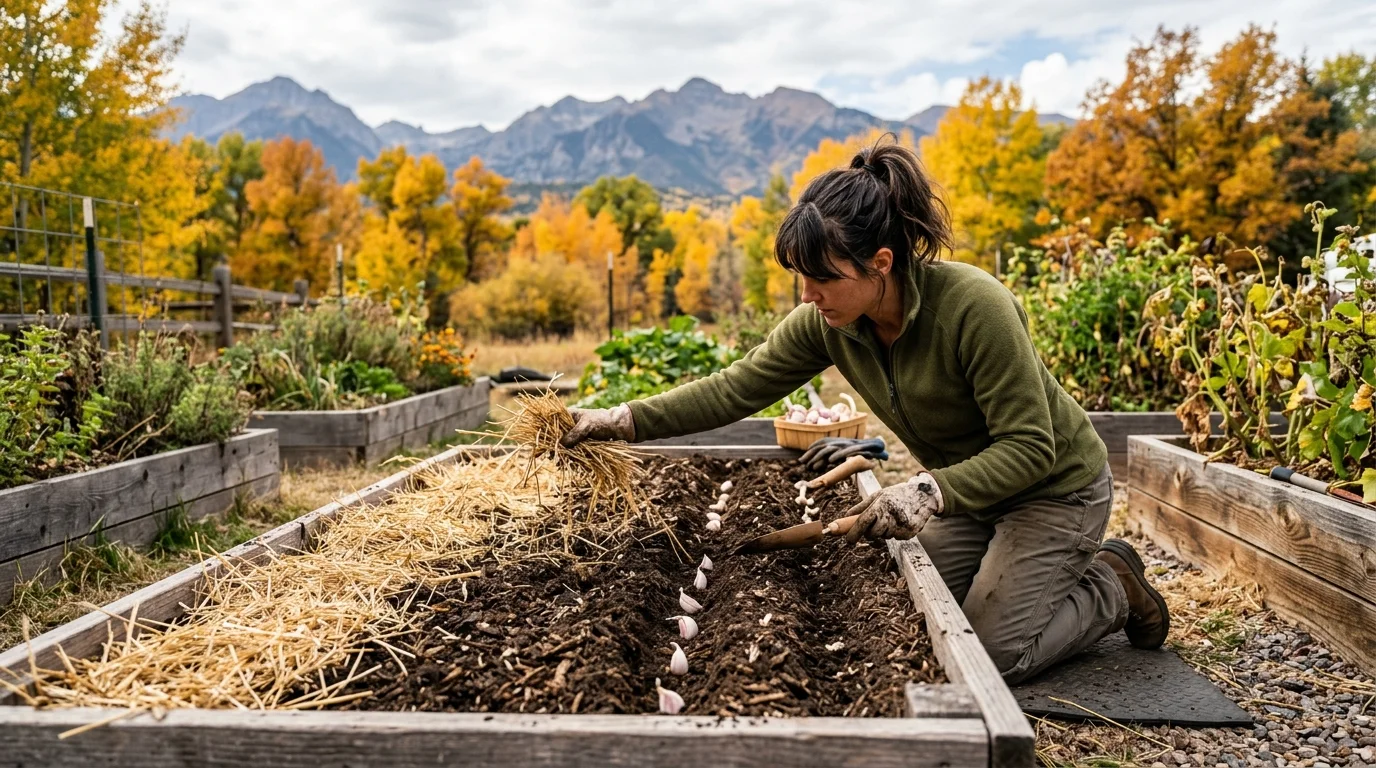
Feeding and Watering Through the Growing Season
Garlic is a moderate feeder that responds well to nitrogen during its active growth period in spring. When you see green shoots emerging through the mulch in March or April, that is your signal to begin fertilizing. A balanced organic fertilizer or a topdressing of aged compost worked gently into the soil surface gives the plants what they need to build strong foliage, which directly feeds bulb development below ground.
Avoid high-nitrogen fertilizers after late May. Pushing too much nitrogen late in the season encourages leafy top growth at the expense of bulb sizing. By early June, the plant’s energy should be redirecting toward the bulb, not the leaves. At that point, a light application of a low-nitrogen fertilizer higher in phosphorus and potassium supports bulb development without overstimulating foliage.
Colorado’s semi-arid climate means you will need to irrigate. Garlic has shallow roots and cannot pull moisture from deep in the soil profile the way other crops can. Aim for consistent soil moisture from the time growth resumes in spring through mid-June. The rule of thumb is 1 inch of water per week, either from rain or irrigation. After mid-June, begin tapering water to encourage the outer wrapper leaves to dry and tighten around the bulb, which improves storage quality.
Stop watering entirely two weeks before your expected harvest date. Wet soil at harvest leads to bulbs with loose, damp skins that are prone to mold during curing. Dry conditions in the final two weeks firm up the wrapper and make the bulb much easier to cure and store.
Harvesting Garlic Scapes and Why Timing Matters
Hardneck garlic produces a scape, a curling green flowering stalk that emerges from the center of the plant in late May or early June at most Colorado elevations. Removing the scape as soon as it makes one full curl redirects the plant’s energy from seed production into bulb sizing. Studies from university extension programs have shown that removing scapes can increase bulb weight by 20 to 30 percent compared to leaving them on.
Scapes are also delicious. They taste like mild garlic and can be sauteed, grilled, made into pesto, or pickled. Many Colorado farmers market vendors sell scapes as a premium item in early summer, weeks before the main garlic harvest. For home growers, they are an early bonus harvest from the same planting.
Snap or cut the scape as close to the point where it emerges from the leaves as possible. Do not pull it out because that can damage the central stalk. Within a week or two of scape removal, the plant puts noticeable energy into the bulb below ground, and you can sometimes see the soil around the base of the plant begin to crack slightly as the bulb expands.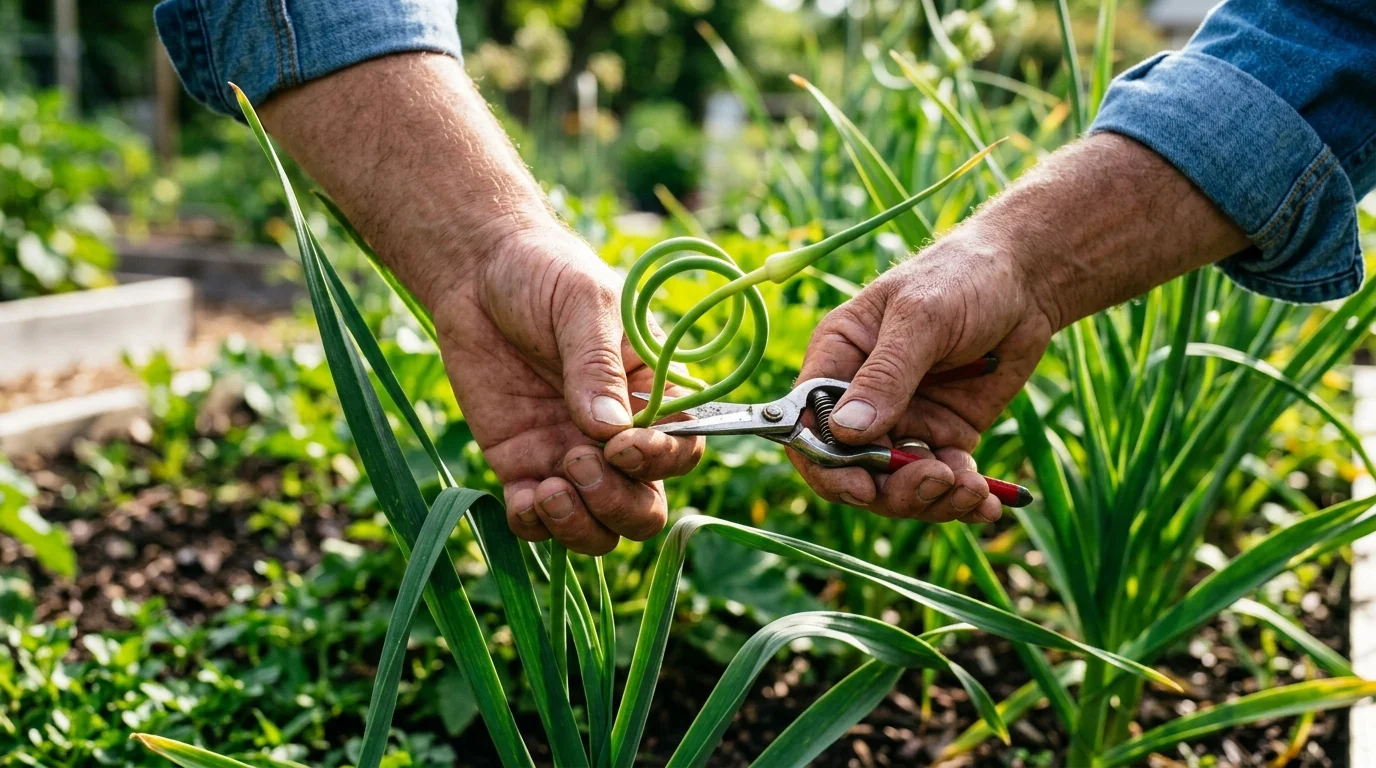
Reading the Signs That Garlic Is Ready to Harvest
Harvesting at the right time separates a good garlic crop from a great one. Pull too early and the cloves are small and the wrapper is thin. Pull too late and the wrapper has begun to break down in the soil, reducing storage life significantly. In Colorado, most hardneck garlic is ready to harvest between late June and late July depending on elevation and variety.
The standard cue is counting the remaining green leaves on the plant. Each green leaf corresponds to one wrapper layer on the bulb. When roughly half the leaves have turned brown and the other half remain green, the bulb is at peak development. That usually means 5 to 6 green leaves remaining for most hardneck varieties.
Do a test pull when you think the timing is close. Dig one or two bulbs from different spots in the bed and cut them in half crosswise. You should see clearly defined, fully separated cloves filling the wrapper completely. If the cloves still look joined or the wrapper is very tight with no separation, give the bed another week.
Use a garden fork rather than pulling by the stalk to avoid breaking the neck, which damages the bulb and shortens storage life. Loosen the soil around each bulb before lifting. Shake off excess dirt gently but do not wash the bulbs, as water on the wrapper at this stage introduces moisture that works against curing.
Expert Insight Note
One pattern that Colorado garlic growers often miss is the relationship between soil pH and allicin development. Allicin is the sulfur compound responsible for garlic’s sharp flavor and many of its antimicrobial properties. Colorado soils tend toward alkalinity, often testing above pH 7.5 in both the front range and mountain regions. At high pH, sulfur availability drops sharply because sulfate ions become less soluble and less accessible to plant roots. Garlic grown in alkaline soil without pH correction often produces bulbs that taste flat or mild compared to what the variety should deliver. Testing your soil and adjusting pH toward the 6.0 to 7.0 range with elemental sulfur or acidic organic matter before planting is one of the most underused techniques for improving both flavor intensity and bulb size in Colorado. According to the US Environmental Protection Agency, soil amendment practices directly affect nutrient bioavailability and long-term soil health, making pre-plant soil testing a foundational step in any successful garden program.
Curing Garlic Properly in Colorado’s Dry Mountain Air
Curing is the process of drying freshly harvested garlic so it stores well for months without sprouting or rotting. Colorado’s low humidity is a genuine advantage here. The same dry air that challenges vegetable gardeners in summer is perfect for curing garlic quickly and evenly.
After harvest, move the bulbs immediately to a shaded, well-ventilated location. Direct sun will bleach the wrapper and can cause sunscald on the cloves. A covered porch, a shed with open sides, or a garage with good airflow all work well. Hang the bulbs in loose bundles of 10 to 12 plants with the stalks intact, or lay them in a single layer on wire mesh racks that allow air to circulate from below.
Curing takes three to five weeks under typical Colorado summer conditions. You will know curing is complete when the neck of the plant, the section just above the bulb, feels dry and papery rather than soft or fleshy, and when the outer wrapper rustles when you handle the bulb. At that point, trim the roots to about half an inch and cut the stalk down to 1 inch above the bulb for bulb storage, or leave stalks intact if you plan to braid softneck varieties.
Store cured garlic in a cool, dark location with good airflow and low humidity. A basement corner, a root cellar, or a well-ventilated pantry works well. Avoid storing garlic in the refrigerator because cold temperatures trigger sprouting. Properly cured hardneck garlic stored at 55 to 65 degrees Fahrenheit will keep for four to six months in good condition.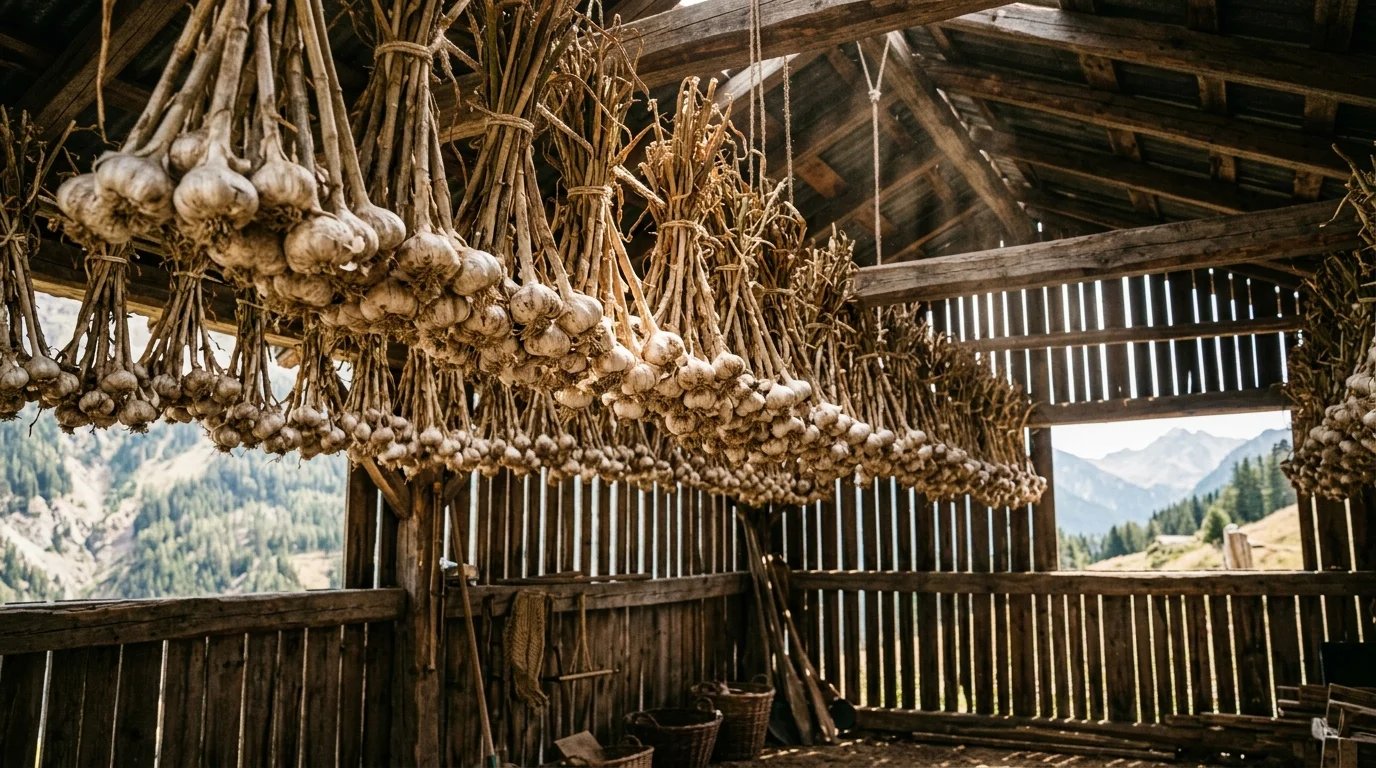
Common Garlic Problems in Colorado and How to Fix Them
White rot is the most serious disease threat to Colorado garlic. It is a soilborne fungal disease caused by Sclerotium cepivorum that can persist in soil for decades. Infected plants show yellowing leaves and a white, cottony fungal mass at the base of the bulb. There is no cure once soil is infected. Prevention through crop rotation, buying certified disease-free seed garlic, and never replanting garlic in an infected bed is the only reliable strategy.
Onion thrips are the primary insect pest affecting garlic in Colorado. These tiny insects feed on leaves and cause a characteristic silvery streaking pattern. They thrive in hot, dry weather, which Colorado provides in abundance through July. A direct spray of insecticidal soap or neem oil applied in the evening when temperatures are lower provides control without harming beneficial insects. Keeping the area around garlic beds free of weedy debris reduces thrip populations between seasons.
Nutrient deficiency shows up most often as yellowing that begins at the leaf tips and works inward. In Colorado’s alkaline soils, iron chlorosis is a common culprit. Iron becomes unavailable above pH 7.0 and plants show interveinal yellowing, where the tissue between leaf veins turns yellow while the veins stay green. Foliar iron applications or soil acidification corrects the issue, but correcting pH before planting is a more lasting solution.
Garlic that produces rounds rather than segmented bulbs almost always results from planting too late, inadequate cold vernalization, or planting cloves from a bulb that was previously grown in a warm climate without cold exposure. Starting fresh with quality seed garlic and hitting the correct planting window eliminates this problem in most cases. For gardeners interested in growing other crops alongside garlic, exploring companion planting with tomatoes can help maximize small garden spaces productively.
Saving Seed Garlic and Planning for Next Year
One of the most rewarding parts of growing garlic is that you can save your own seed stock year after year. Select the largest, healthiest bulbs from your harvest for replanting rather than eating them. Over multiple seasons, your saved seed adapts to your specific microclimate, soil, and elevation. Colorado-acclimated garlic grown from locally saved seed consistently outperforms fresh-bought seed in both bulb size and flavor development by the third or fourth season.
When selecting seed bulbs for saving, choose bulbs with firm, tight wrappers and no signs of disease or damage. Store them separately from your eating garlic so they do not accidentally get used up before fall planting. Keep them in the same conditions as eating garlic, cool and dark with good airflow, until you are ready to break them apart and plant.
Keep a simple planting journal noting variety names, planting dates, scape removal dates, harvest dates, and any observations about size or flavor. That record becomes more valuable each season because it shows you exactly how each variety performs in your specific location. Gardeners who grow cover crops like alfalfa between garlic seasons report better soil structure and improved drainage, both of which contribute directly to larger bulb development.
The Economic and Agricultural Value of Colorado-Grown Garlic
Garlic is one of the highest-value crops a small-scale grower can produce per square foot of garden space. At farmers markets across Colorado, fresh hardneck garlic regularly sells for $2 to $4 per bulb, and specialty varieties with exceptional flavor can command even higher prices. A 100-square-foot bed planted with seed garlic can realistically yield 80 to 100 bulbs, representing significant market value from a very small footprint.
Colorado’s growing craft food scene has created strong demand for locally grown, artisan garlic. Restaurants in Denver, Boulder, and Aspen actively seek Colorado-grown garlic from small producers because the flavor profile of high-altitude, hardneck varieties is measurably different from the commercial California or Chinese garlic that dominates supermarket shelves. That difference in flavor intensity and freshness is something buyers pay a premium for.
From a food security perspective, growing garlic at home reduces dependence on imported supply chains. The United States imports more than 65 percent of its garlic supply, primarily from China, according to USDA trade data. Home and small-farm production is a direct alternative that keeps money in local economies and ensures fresher, more nutritious produce. Gardeners who grow their own food supply often branch out into other high-density crops, and understanding how to grow sunflowers for seeds is a complementary crop that thrives under similar Colorado conditions.
The low input cost of garlic production makes the economics compelling for both home growers and market gardeners. Once you establish a seed stock from your own harvest, your primary costs drop to soil amendments, mulch, and water. The return on that investment, both in culinary quality and potential market income, is difficult to match with most other crops.
What Most Garlic Guides Get Wrong About Colorado Growing
The biggest misconception about growing garlic in Colorado is that the climate is too harsh or too unpredictable for reliable production. That assumption comes from applying temperate-zone gardening rules to a semi-arid mountain environment. Garlic does not follow the same rules as tomatoes or peppers. It thrives under conditions that stress other crops, and Colorado delivers exactly those conditions.
A second common mistake is treating mulch as optional. In most parts of the country, garlic survives winter without mulch because temperature swings are moderate. In Colorado, freeze-thaw cycling from October through April can push newly planted cloves out of the ground entirely, a process called frost heaving. That mulch layer is not decorative. It is structural protection for your crop through a long, variable winter.
Another myth is that Colorado soil is too poor or alkaline to grow quality garlic. The alkalinity is real but fixable with a simple soil test and targeted amendments. Elemental sulfur, composted pine bark, and acidic organic matter all bring pH down toward the optimal range for garlic. Many gardeners who dismissed Colorado soil as a barrier grew exceptional garlic the season after they started amending based on actual soil data rather than assumption.
Finally, some guides suggest hardneck garlic is too temperamental for beginning gardeners. The opposite tends to be true in mountain climates. Hardneck varieties are better adapted to Colorado conditions than softnecks, and they signal their needs more clearly through visible scape production and predictable leaf-count cues for harvest timing. They also reward attentive gardeners with flavor complexity that makes the extra care feel worthwhile. Those interested in growing other seeds in challenging conditions may find that the patience developed growing garlic translates well to projects like growing drought-adapted plants from seed in Colorado’s dry climate.