
Growing a fig tree from a cutting is one of the most rewarding things you can do in your garden. You take a simple branch, plant it correctly, and within a few months you have a rooted tree ready to fruit. The best part? Fig cuttings root at an exceptionally high rate compared to most fruit trees, often exceeding 80 percent success when the timing and method are right.
This guide covers every step of the process, from choosing the right wood to knowing when your cutting has rooted and is ready to transplant. Whether you are working with hardwood cuttings in winter or semi-hardwood in late summer, the principles stay the same.
 Research from the University of California Cooperative Extension found that dormant hardwood fig cuttings rooted successfully in over 85 percent of trials without any rooting hormone applied. That number climbs even higher when rooting hormone is used and the medium is kept consistently moist but not waterlogged. Compare that to trying to root an apple or pear cutting, which rarely succeeds at all without specialized techniques.
The milky white sap you see when you cut a fig branch is latex. Some gardeners worry this sap will block rooting, but in practice it seals the wound quickly and actually reduces the risk of fungal infection entering the cut surface during the rooting period.
Research from the University of California Cooperative Extension found that dormant hardwood fig cuttings rooted successfully in over 85 percent of trials without any rooting hormone applied. That number climbs even higher when rooting hormone is used and the medium is kept consistently moist but not waterlogged. Compare that to trying to root an apple or pear cutting, which rarely succeeds at all without specialized techniques.
The milky white sap you see when you cut a fig branch is latex. Some gardeners worry this sap will block rooting, but in practice it seals the wound quickly and actually reduces the risk of fungal infection entering the cut surface during the rooting period.
 Fill a 10 to 15 centimeter pot with your chosen medium, water it until it is evenly moist, and use a pencil or stick to make a planting hole before inserting the cutting. Pushing the cutting directly into the medium without a pilot hole can scrape off the rooting hormone you just applied.
Why Fig Trees Are Unusually Easy to Propagate
Most fruit trees require grafting to produce true-to-type plants. Figs are different. The Ficus carica species produces shoots that are packed with dormant root initials, meaning the cells already have the biological programming to form roots when placed in a moist growing medium. This is not common in the fruit tree world.
Research from the University of California Cooperative Extension found that dormant hardwood fig cuttings rooted successfully in over 85 percent of trials without any rooting hormone applied. That number climbs even higher when rooting hormone is used and the medium is kept consistently moist but not waterlogged. Compare that to trying to root an apple or pear cutting, which rarely succeeds at all without specialized techniques.
The milky white sap you see when you cut a fig branch is latex. Some gardeners worry this sap will block rooting, but in practice it seals the wound quickly and actually reduces the risk of fungal infection entering the cut surface during the rooting period.
When to Take Fig Cuttings for the Best Results
Timing is the single biggest factor in whether your cuttings succeed or fail. The two best windows are late winter to early spring, and late summer into early fall. Each window uses a different type of cutting wood. Late winter cuttings, taken when the tree is fully dormant and before any bud swelling begins, use hardwood. This is pencil-thick wood from the previous season’s growth. The tree is not actively moving water and nutrients at this point, which means the cutting can focus all its energy on forming roots rather than pushing out leaves it cannot yet support. Late summer cuttings use semi-hardwood, meaning wood that has finished elongating for the season but has not yet gone fully woody. These cuttings root faster than hardwood but require more careful moisture management because the leaves are still attached and will pull water out of the cutting before roots can form. For most home gardeners, the winter hardwood method is easier to manage and more forgiving of beginner mistakes.How to Take a Cutting from a Fig Tree the Right Way
Start with a sharp, clean pair of pruning shears or a pruning knife. Dirty or dull blades crush plant tissue and introduce disease at the cut point. Wipe your blades with isopropyl alcohol before you start. Select a stem that is roughly pencil-thick, somewhere between 6 and 12 millimeters in diameter. Thinner wood does not carry enough stored energy to sustain rooting. Thicker wood can work but is slower to root. Cut your stem into sections that are 20 to 30 centimeters long, or about 8 to 12 inches. Each section must have at least 3 to 4 nodes, which are the bumps on the stem where leaves and buds emerge. Make the bottom cut just below a node at a slight angle so water runs off rather than pooling. Make the top cut straight across, about 1 centimeter above the highest node. This top cut will form a callus and will not root, so it does not need to be angled. If you are storing cuttings before planting, dip the top cut in candle wax or grafting wax to prevent moisture loss.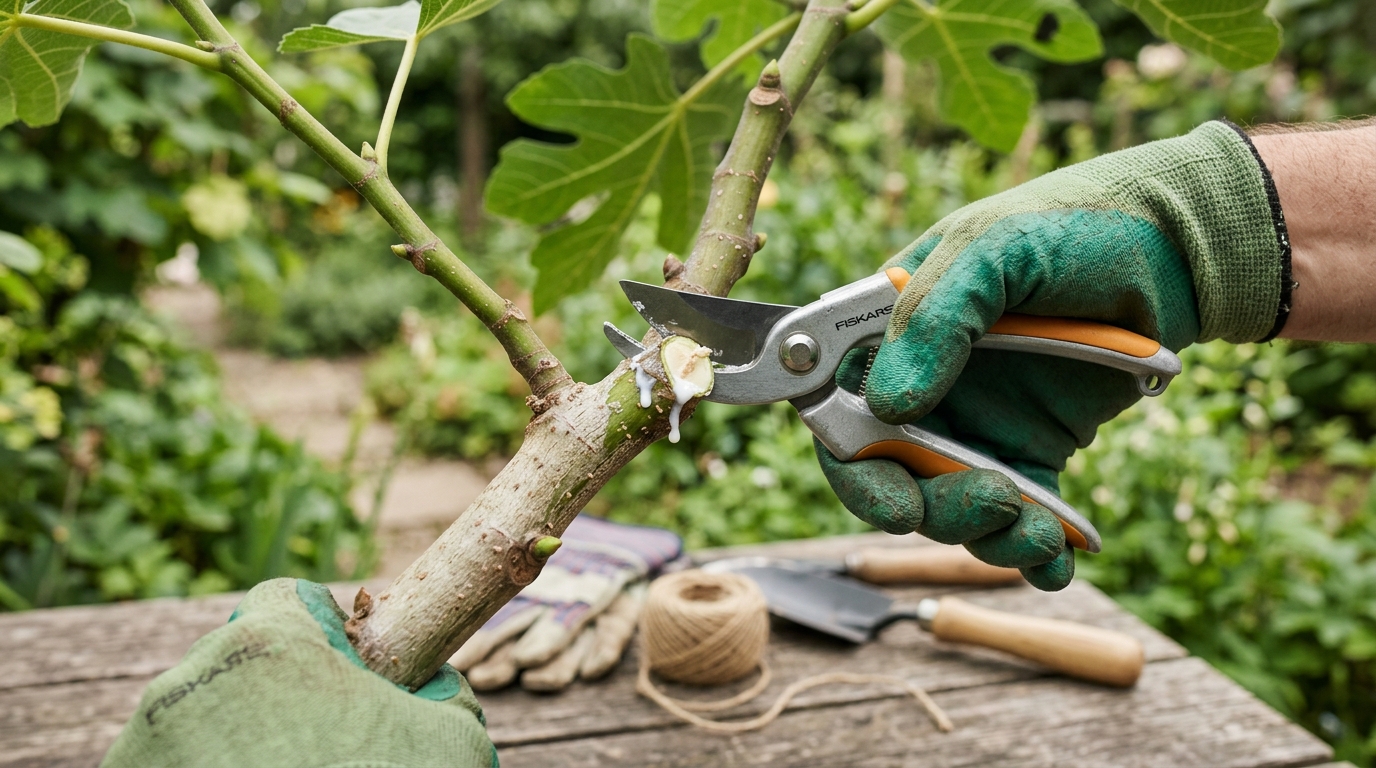
How to Prepare the Bottom of Each Cutting
Wounding the bottom 3 to 4 centimeters of your cutting significantly increases rooting success. Use a clean knife to lightly scrape away the outer bark on two opposite sides of the cutting base, exposing the pale green layer underneath. This wounded area has higher concentrations of rooting-active cells and will put out more roots faster. After wounding, apply a rooting hormone powder or gel to the bottom 3 centimeters. IBA, which stands for indole-3-butyric acid, is the active ingredient in most commercial rooting powders. Tap off any excess powder so the coating is light and even. Too much rooting hormone can actually inhibit root formation rather than help it.The Best Rooting Medium for Fig Cuttings
Fig cuttings need a medium that holds moisture without staying soggy. Roots need oxygen just as much as they need water, and a waterlogged medium will rot the cutting base before roots ever form. A 50/50 mix of perlite and peat moss hits the right balance. Pure perlite also works well and is the preferred choice of many professional propagators because it drains freely while retaining just enough moisture at the particle surface. Avoid using garden soil or heavy potting mixes in your rooting containers. These compact too easily, block air movement around the stem, and often carry fungal pathogens that attack stressed cuttings. Once your cutting has rooted and is ready to transplant, you can move it into a richer growing medium.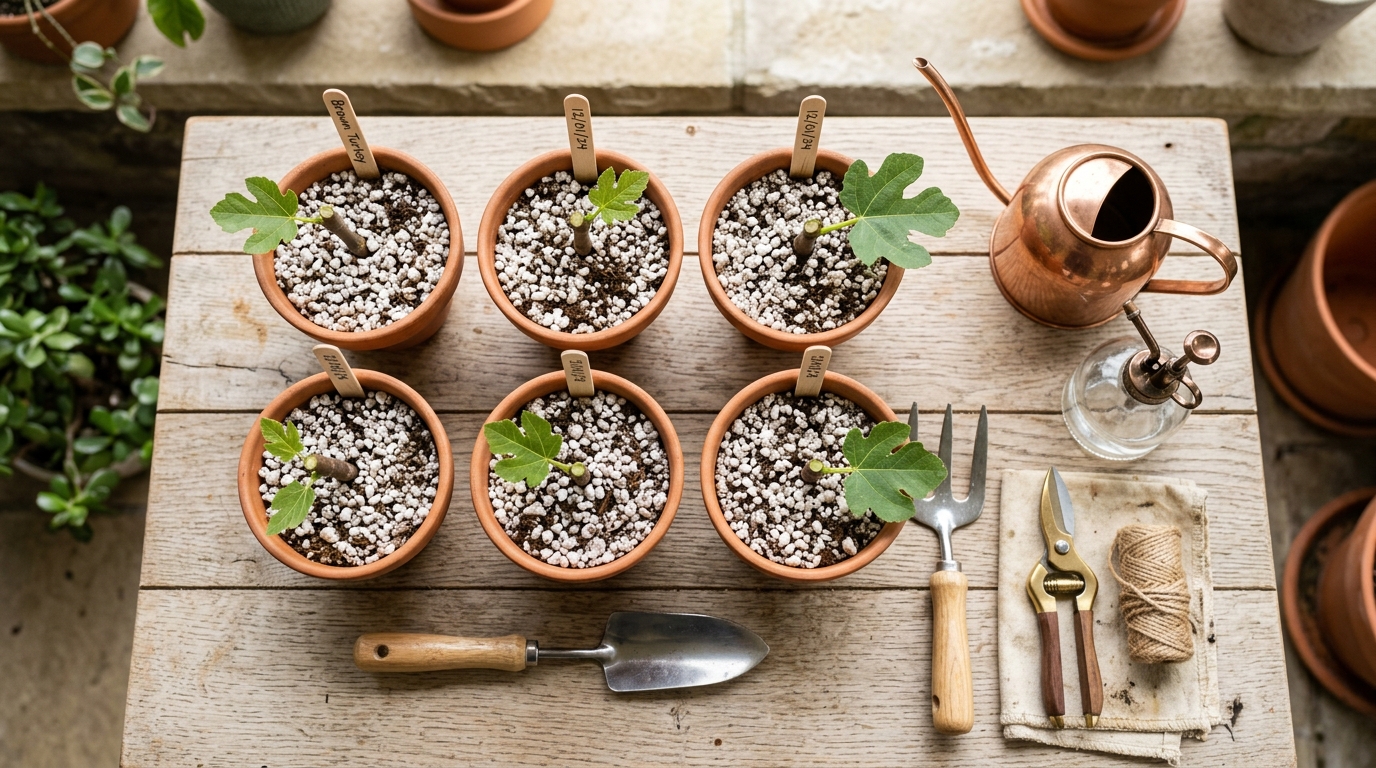 Fill a 10 to 15 centimeter pot with your chosen medium, water it until it is evenly moist, and use a pencil or stick to make a planting hole before inserting the cutting. Pushing the cutting directly into the medium without a pilot hole can scrape off the rooting hormone you just applied.
Rooting Conditions That Make or Break Your Success Rate
Bottom heat is one of the most underused tools in home propagation. Fig cuttings root significantly faster when the rooting medium is kept between 21 and 27 degrees Celsius, roughly 70 to 80 degrees Fahrenheit. A seedling heat mat placed under your pots will maintain this temperature range without heating the air above, which is exactly what you want. Warm roots, cool tops. Cover your pots with a clear plastic bag or place them inside a small humidity tent to reduce moisture loss from the cutting. If you are working with hardwood cuttings that have no leaves, humidity is less critical. For semi-hardwood cuttings with leaves still attached, maintaining high humidity around the cutting is non-negotiable until roots form. Place your cuttings in bright indirect light. Direct sun will overheat an unrooted cutting and cause it to lose water faster than it can absorb any. A north or east-facing windowsill is ideal indoors. Outdoors, a spot under shade cloth works well.Will Fig Cuttings Root in Water and Should You Try It
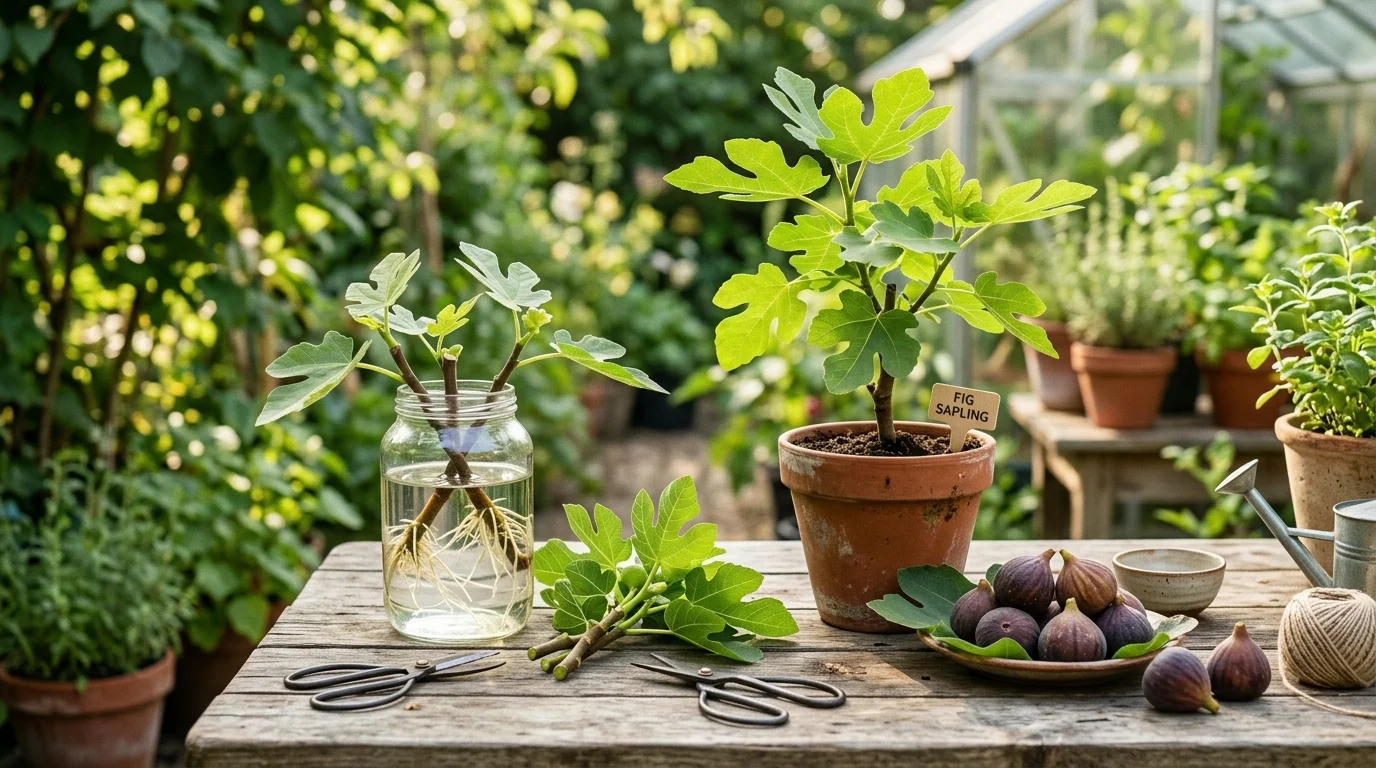
Water rooting is a popular technique for many houseplants, and figs will indeed produce roots when placed in a jar of water. However, water-rooted cuttings develop a different root structure than medium-rooted ones. Water roots are often more brittle and can struggle to adapt when transplanted into soil because the root cells grow in an environment with no air pockets and unlimited moisture, which is nothing like what they will encounter in the ground. If you do root your cuttings in water, transplant them gradually by adding small amounts of potting medium to the water over several days, slowly transitioning the roots to a soil environment. This reduces transplant shock significantly. For most gardeners who want fig trees that establish and fruit quickly, propagating directly in a perlite or peat-based medium produces stronger, more adaptable root systems.How Long Fig Cuttings Take to Root and Signs It Is Working
Under good conditions with bottom heat, hardwood fig cuttings typically show signs of rooting within 4 to 6 weeks. Without bottom heat, the process can take 8 to 12 weeks. Semi-hardwood cuttings root faster, often within 3 to 4 weeks in warm conditions. The first sign something is working is usually bud swelling, followed by small leaf emergence. Do not confuse leaf push with rooting. A cutting can push leaves using stored energy in the stem wood before any roots have formed. The definitive test is a gentle tug on the cutting after 6 weeks. If it resists being pulled out of the medium, roots are anchoring it. If it pulls out easily, give it more time. You can also check root development by carefully sliding the cutting and medium block out of a clear plastic pot and inspecting the sides. White, healthy roots will be visible at the edges when the cutting is ready to pot up.
Expert Insight Note
One mistake experienced propagators rarely talk about is over-potting rooted fig cuttings too quickly. A cutting that has just formed its first roots should go into a pot no larger than 10 to 12 centimeters. Placing a newly rooted cutting into a large container leaves too much wet medium surrounding a small root system, which creates anaerobic zones that suffocate roots and invite Phytophthora root rot. Move up in pot size gradually, potting on only when the roots have colonized the current container. This single practice can be the difference between a fig cutting that fruits in its second year and one that struggles for three years before establishing.
How to Store Fig Cuttings if You Cannot Plant Them Right Away
Sometimes you take cuttings in winter but are not ready to root them for several weeks. Fig cuttings store well when handled correctly. Bundle your cuttings together with the bottom ends aligned, wrap them in slightly damp newspaper, and seal the bundle inside a plastic bag. Store the bag in a refrigerator at 2 to 4 degrees Celsius, which is standard fridge temperature. Stored this way, cuttings will remain viable for up to 8 weeks. Check the bundle every two weeks. The newspaper should be slightly damp but not wet. If you see any mold developing on the cut surfaces, remove the affected cuttings immediately, trim back to clean wood, and dust lightly with a fungicide powder before rewrapping. According to Royal Horticultural Society guidelines on woody plant propagation, maintaining cold storage temperatures is one of the most reliable ways to preserve cutting viability over extended periods.Potting Up and Transitioning Your Rooted Cuttings Outdoors
Once your cutting has a strong root network filling a small pot, it is time to move it into a proper growing mix. A good all-purpose potting mix with added perlite for drainage works well at this stage. Fill a 15 to 20 centimeter container with your mix, plant the rooted cutting at the same depth it sat in the rooting medium, and water it in well. Keep the newly potted cutting in a protected location for 2 to 3 weeks before moving it outdoors. This transition period lets the root system adjust to the new medium without the added stress of outdoor conditions. When you do move it outside, choose an overcast day rather than a bright sunny one to reduce moisture stress during the first few days of adjustment. Fig trees grown in containers need consistent watering until they are planted in the ground or have established in a large permanent pot. Figs can also thrive long-term in containers, much like growing Campari tomatoes in pots, where managing soil moisture and feeding are the keys to consistent fruiting.