
Blue oyster mushrooms are not just a food crop. They are one of the most ecologically active fungi on earth, capable of dismantling lignin, the structural compound in woody plant tissue that almost nothing else in nature can efficiently break down. When you grow Pleurotus ostreatus var. columbinus, you are not following a recipe. You are managing a living biological system with its own chemistry, environmental triggers, and competitive ecology. Most cultivation guides reduce this to a checklist of temperature ranges and humidity percentages. That approach produces mediocre results and leaves growers confused when things go wrong.
This guide works differently. It starts with the biology, moves through the substrate science, explains the environmental controls with precision, addresses contamination at the mechanistic level, and ends with what the peer-reviewed research actually says about the nutritional and ecological value of this fungus. If you want to grow blue oysters reliably, at any scale, understanding why each step works is more valuable than memorizing what each step is.
Why Blue Oysters Behave Differently From Other Varieties
Pleurotus ostreatus var. columbinus is the cold-preferring strain within the oyster mushroom genus, and that thermal preference is not a minor detail. It is the central biological fact that governs every practical decision in cultivation. Blue oyster mycelium colonizes substrate most efficiently between 21 and 24 degrees Celsius, but it will not initiate fruiting, the transition from vegetative mycelium to mushroom formation, without a temperature drop. That cold shock requirement separates blue oysters from pink (Pleurotus djamor) and golden (Pleurotus citrinopileatus) varieties, which fruit readily at warm and stable temperatures. Getting blue oysters to fruit consistently means understanding and engineering that thermal shift deliberately.
The lifecycle begins with spore germination, but commercial and home cultivation almost universally starts from mycelium-colonized grain spawn rather than spores, because spore-to-mycelium development is slow and contamination-vulnerable. Grain spawn introduces a dense network of established mycelium directly into the substrate. From inoculation, the mycelium grows outward through the substrate in a process called colonization, secreting digestive enzymes ahead of its hyphal tips to break down and absorb organic material. When colonization is complete and environmental signals indicate seasonal transition, the mycelium aggregates into primordia, tiny pin-like structures that develop into mature fruiting bodies.
The blue cap color that distinguishes this variety comes from pigment compounds that are more stable at lower temperatures. At warm fruiting temperatures, the caps often turn pale gray or white, losing the distinctive steel-blue appearance. This is a visual sign that fruiting temperature is running too high, and it corresponds to measurable changes in texture and flavor as well. Fruit at the correct cool temperature range, and the caps hold their color, density, and the mild, slightly anise-like flavor that makes this variety commercially desirable.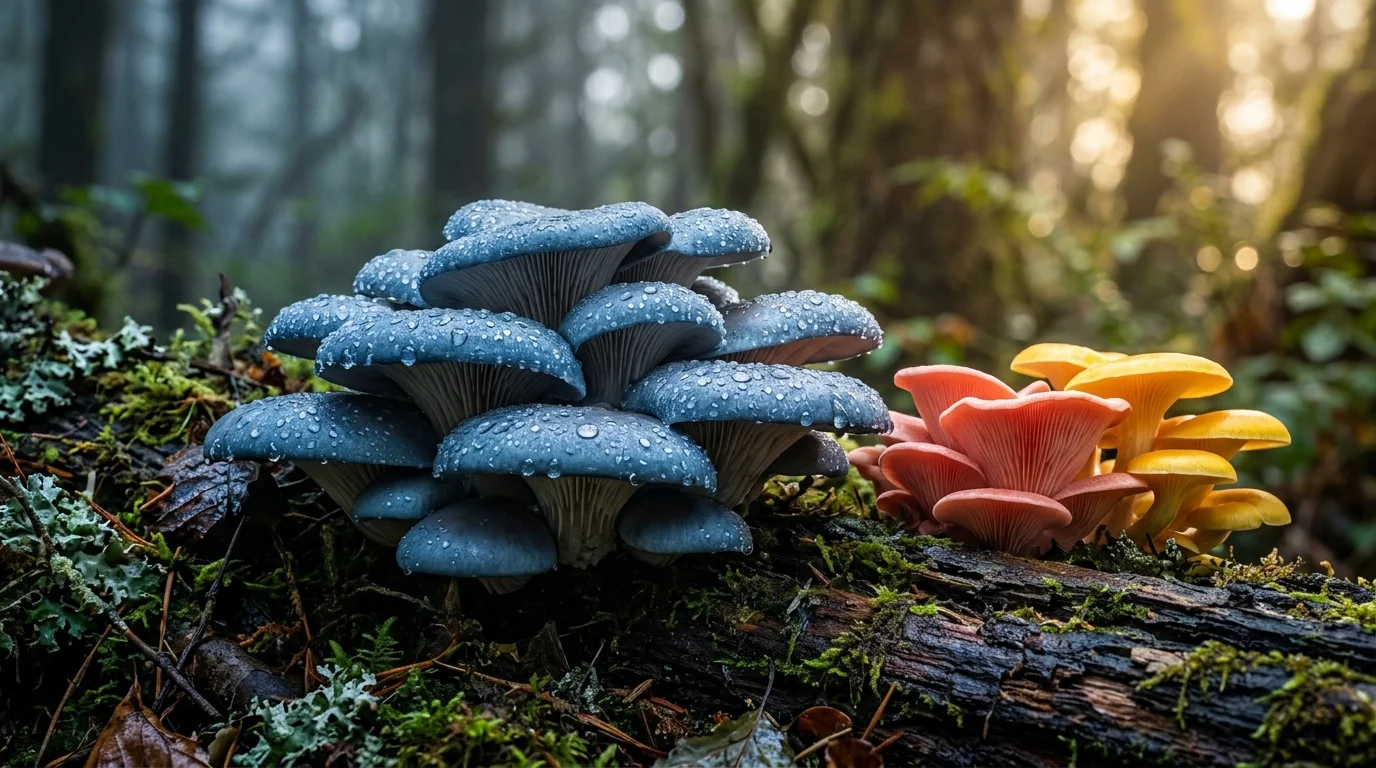
What Blue Oysters Actually Eat and Why Substrate Choice Matters
The substrate you choose determines colonization speed, fruiting yield, contamination risk, and the nutritional profile of the final mushroom. Most guides say hardwood sawdust works best and stop there. The actual science is more specific and more useful.
Lignin Degradation and Substrate Nutrition
Blue oyster mushrooms are white-rot fungi, a classification that describes their enzymatic capability rather than their appearance. White-rot fungi produce a suite of oxidative enzymes including laccase, manganese peroxidase, and lignin peroxidase that collectively break down lignin, the phenolic polymer that gives wood its structural rigidity and resistance to decomposition. This enzymatic system is why Pleurotus species can colonize and fruit on woody agricultural waste that heterotrophic bacteria and most other fungi cannot efficiently metabolize. The same biological principle that governs how beneficial bacteria break down organic matter in pond systems applies here at a fungal level, where enzymatic activity drives decomposition and nutrient cycling.
The carbon-to-nitrogen ratio of the substrate is the most important chemical variable in substrate selection. Hardwood sawdust carries a C:N ratio of approximately 400:1, which is extremely carbon-rich and nitrogen-poor. Blue oyster mycelium can colonize this substrate but colonization is slow without supplementation. Wheat straw sits at approximately 100:1, making it more balanced and typically faster to colonize. Supplementing any substrate with wheat bran, rice bran, or soy hulls at 10 to 20 percent by dry weight drops the C:N ratio toward the optimal range of 30:1 to 60:1, significantly accelerating colonization speed. The trade-off is that a more nutritious substrate is also a more attractive environment for competing organisms, which is why supplemented blocks require pasteurization or sterilization to eliminate competing microbial populations before inoculation.
Agricultural Waste as Premium Substrate
The cross-niche significance of blue oyster cultivation is rarely discussed in grow guides, but it is one of the most practically and environmentally important aspects of this fungus. Pleurotus ostreatus can fruit productively on wheat straw, rice straw, cotton seed hulls, coffee grounds, sugarcane bagasse, corn stalks, and banana leaves. These are all agricultural byproducts generated in enormous quantities and typically managed as waste through burning, landfilling, or low-value composting.
Peer-reviewed yield studies comparing substrate types show biological efficiency rates, defined as the weight of fresh mushroom produced divided by the dry weight of substrate used, of 50 to 150 percent depending on substrate and management. A 2021 study published in the journal Bioresource Technology reported biological efficiency rates for Pleurotus ostreatus on sugarcane bagasse supplemented with rice bran of 112 percent across three flushes, comparable to results achieved on premium hardwood formulations. This means a grower in a rice-producing region can build a highly productive cultivation system entirely from locally generated agricultural waste, with zero reliance on imported forestry products. This waste-to-food conversion model mirrors the sustainability logic behind growing alfalfa for hay, where the goal is maximum biological output from minimum resource input.
Environmental Control From Colonization to Fruiting
Environmental precision is where most home growers lose yield and where most guides provide the least useful information. Vague guidance like “keep it humid and cool” is not actionable. The specific parameters that govern blue oyster growth are well established in cultivation science and worth knowing exactly.
During colonization, maintain substrate temperature between 21 and 24 degrees Celsius and ambient relative humidity at 85 to 95 percent. At these conditions, a fully supplemented hardwood block typically reaches complete colonization in 10 to 18 days. Colonization is visually complete when white mycelium covers the entire exterior of the block and no dark or uncolonized substrate remains visible through transparent grow bags.
To initiate fruiting, the colonized block requires a cold shock. Move it to an environment at 10 to 15 degrees Celsius for 12 to 24 hours. This simulates the temperature drop that signals seasonal transition from summer to autumn in the fungus’s natural habitat. After cold shock, transfer the block to fruiting conditions: temperature maintained between 10 and 18 degrees Celsius, relative humidity at 90 to 95 percent, and fresh air exchange running at a minimum of 4 to 8 complete air changes per hour.
The fresh air exchange requirement is where most home growers underestimate the system. Blue oyster mycelium and fruiting bodies produce carbon dioxide as a metabolic byproduct. In a sealed or poorly ventilated space, CO₂ concentrations build above 800 parts per million, at which point the fruiting bodies grow long, thin stems and small, poorly developed caps in a morphological stress response that directs energy into stem elongation toward a perceived air source. This symptom is almost universally misdiagnosed as a humidity problem and treated with more misting, which does nothing to address the underlying gas exchange deficit. Proper fruiting also requires 12 hours of indirect or diffuse light per day, not for photosynthesis, which fungi do not perform, but as an orientation signal that tells the developing fruiting bodies which direction is up.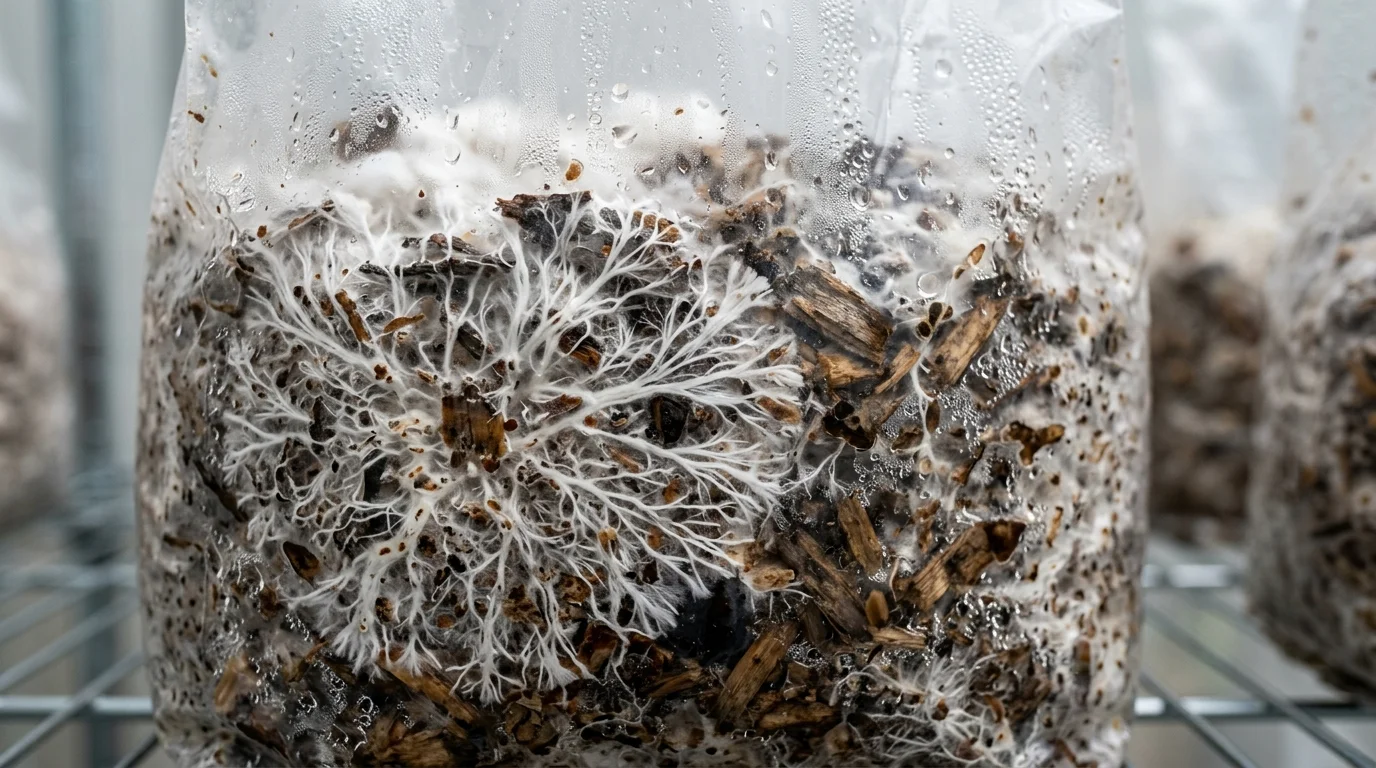
The Science of Contamination and What Actually Causes It
Contamination is the primary reason cultivation attempts fail, and it is almost never random. Every contamination event traces back to one of three root causes: inadequate sterilization or pasteurization of the substrate, a breach of aseptic technique during inoculation, or substrate moisture content outside the correct range. Understanding contamination organisms at the species level allows a grower to diagnose which root cause produced a specific failure and correct it before the next batch.
Why Trichoderma Targets Blue Oyster Blocks Specifically
Trichoderma species, which present as green or blue-green mold on mushroom cultivation substrate, are the most damaging and most common contaminants in Pleurotus cultivation. Their prevalence is not coincidental. Trichoderma thrives in exactly the same temperature, humidity, and substrate chemistry conditions that support blue oyster mycelium. It is an aggressive competitor that has co-evolved in woodland ecosystems alongside wood-decomposing fungi and has developed specific mechanisms for outcompeting them.
Trichoderma produces volatile organic compounds and secondary metabolites, including peptaibols and polyketides, that inhibit Pleurotus mycelium growth. When Trichoderma establishes itself in a block before blue oyster mycelium has achieved competitive dominance, the oyster mycelium’s colonization slows and often halts entirely. Surface contamination, where green patches appear only on the exterior of an otherwise white block, can sometimes be managed by removing the contaminated zone and maintaining aggressive ventilation. Deep contamination, where green discoloration appears throughout the interior of the block on cutting, means the entire block must be removed and discarded outside the growing area to prevent sporulation and spread.
Preventing Trichoderma contamination reliably requires grain spawn that has been kept refrigerated and used before its viable window closes, substrate that has reached a core temperature of at least 82 degrees Celsius for pasteurization or 121 degrees Celsius for sterilization, inoculation performed in a still-air box or laminar flow hood rather than open air, and substrate field capacity moisture of 60 to 65 percent before sterilization rather than wetter formulations that create anaerobic microenvironments favorable to contamination.
Expert Insight Note
The single most underestimated variable in blue oyster cultivation, even among experienced small-scale producers, is fresh air exchange relative to humidity. When fruiting bodies develop elongated stems with underdeveloped caps, growers almost universally respond by increasing misting frequency. This makes the problem worse, not better. The actual cause is CO₂ accumulation above 800 parts per million in the fruiting chamber, which triggers a stress morphology in the developing fruit bodies that mimics the appearance of low humidity. The diagnostic test is simple: if increasing misting produces no improvement in cap development within 24 hours, the problem is gas exchange, not moisture. Adding a small fan set to run for 60 seconds every 15 to 20 minutes, directed at a wall rather than at the blocks to avoid direct airflow desiccation, will resolve abnormal morphology within one fruiting cycle. This single adjustment produces a larger improvement in commercial yield quality than any other single environmental intervention available to small-scale producers.
What the Research Actually Confirms About Nutrition and Medicinal Value
Blue oyster mushrooms have attracted significant research attention for their bioactive compound profile, and the findings are genuinely impressive when read directly from the clinical literature rather than wellness marketing summaries.
Beta-glucans are the most extensively studied compounds in Pleurotus species. These are polysaccharides, complex carbohydrate structures, found in the cell walls of the fungus at concentrations averaging 25 to 35 percent of dry weight depending on substrate and harvest timing. Beta-glucans activate pattern recognition receptors on macrophages and natural killer cells in the mammalian immune system, stimulating an innate immune response without producing inflammation. A 2020 meta-analysis published in Nutrients covering 34 clinical studies confirmed statistically significant immunomodulatory activity from Pleurotus beta-glucan supplementation across multiple immune markers. The clinical evidence for immune support from this compound is among the strongest in the functional food literature.
Pleurotus species also contain lovastatin, a naturally occurring compound that inhibits HMG-CoA reductase, the enzyme responsible for cholesterol synthesis in the liver. The same mechanism is used by synthetic pharmaceutical statins. Concentrations in blue oyster mushrooms are modest compared to pharmaceutical doses, but regular dietary consumption has shown measurable effects on LDL cholesterol in human dietary intervention studies. According to research accessible through the National Institutes of Health PubMed database, regular Pleurotus consumption was associated with statistically significant reductions in total cholesterol and LDL levels in a 2021 randomized controlled trial conducted in Poland over eight weeks of dietary supplementation.
Ergothioneine deserves specific attention because it is rarely mentioned in popular mushroom nutrition discussions despite being scientifically significant. It is a sulfur-containing amino acid with potent antioxidant and cytoprotective properties that humans cannot synthesize and must obtain from dietary sources. Mushrooms, and Pleurotus species in particular, are the highest known dietary source of ergothioneine by a wide margin, containing concentrations 10 to 40 times higher than most plant foods. Research interest in ergothioneine has accelerated since 2018 when a study in the journal FASEB proposed it may function as a “longevity vitamin” based on population-level data linking dietary ergothioneine intake to reduced neurodegenerative and cardiovascular disease risk.
On protein content, blue oysters deliver approximately 25 to 35 percent crude protein on a dry weight basis, with an amino acid profile that compares favorably to legumes and includes all essential amino acids. Fresh mushrooms are approximately 90 percent water, so fresh weight protein figures are lower, but dried or concentrated preparations provide a nutritionally meaningful protein source with substantially lower environmental cost than animal protein. For context on how seed-based and plant-based foods store and retain their nutritional value over time, the science explored around whether chia seeds expire reflects similar questions about bioactive compound stability in natural food products.
Why Blue Oyster Cultivation Is a Circular Economy Tool
The environmental significance of blue oyster mushroom cultivation extends well beyond its role as a sustainable food source. When examined through the lens of circular economy principles, it represents one of the most efficient biological conversion processes available in small-scale agriculture.
Spent substrate, the mycelium-colonized block after fruiting has completed, is not waste. Post-harvest blocks contain dense fungal biomass that has already initiated the enzymatic breakdown of lignocellulosic material, making it a superior soil amendment compared to uncomposted agricultural residues. Field trials incorporating spent Pleurotus substrate into vegetable growing systems have documented increases in soil microbial diversity, measurable suppression of soilborne pathogens including Fusarium and Pythium species, and improved aggregate stability in sandy soils. The same ligninolytic enzymes that made the substrate bioavailable to the fungus continue operating at reduced rates in soil, contributing to humus formation and long-term carbon sequestration in the fungal biomass fraction.
The protein efficiency comparison with conventional animal agriculture is substantial. Blue oyster mushrooms produce approximately 1 kilogram of protein from 5 to 10 kilograms of dry agricultural waste substrate. Conventional beef production requires approximately 7 kilograms of feed grain per kilogram of protein produced, and that feed grain was itself grown on arable land with significant water and fertilizer input. Mushroom cultivation requires no arable land, operates on byproduct streams that would otherwise require disposal, and uses a water footprint estimated at 10 to 20 liters per kilogram of fresh mushroom compared to 15,400 liters per kilogram of beef protein. This efficiency gap is comparable in scale to the resource advantage documented for growing sunflowers at field scale, where yield-per-input ratios consistently outperform row crops under similar land and water constraints.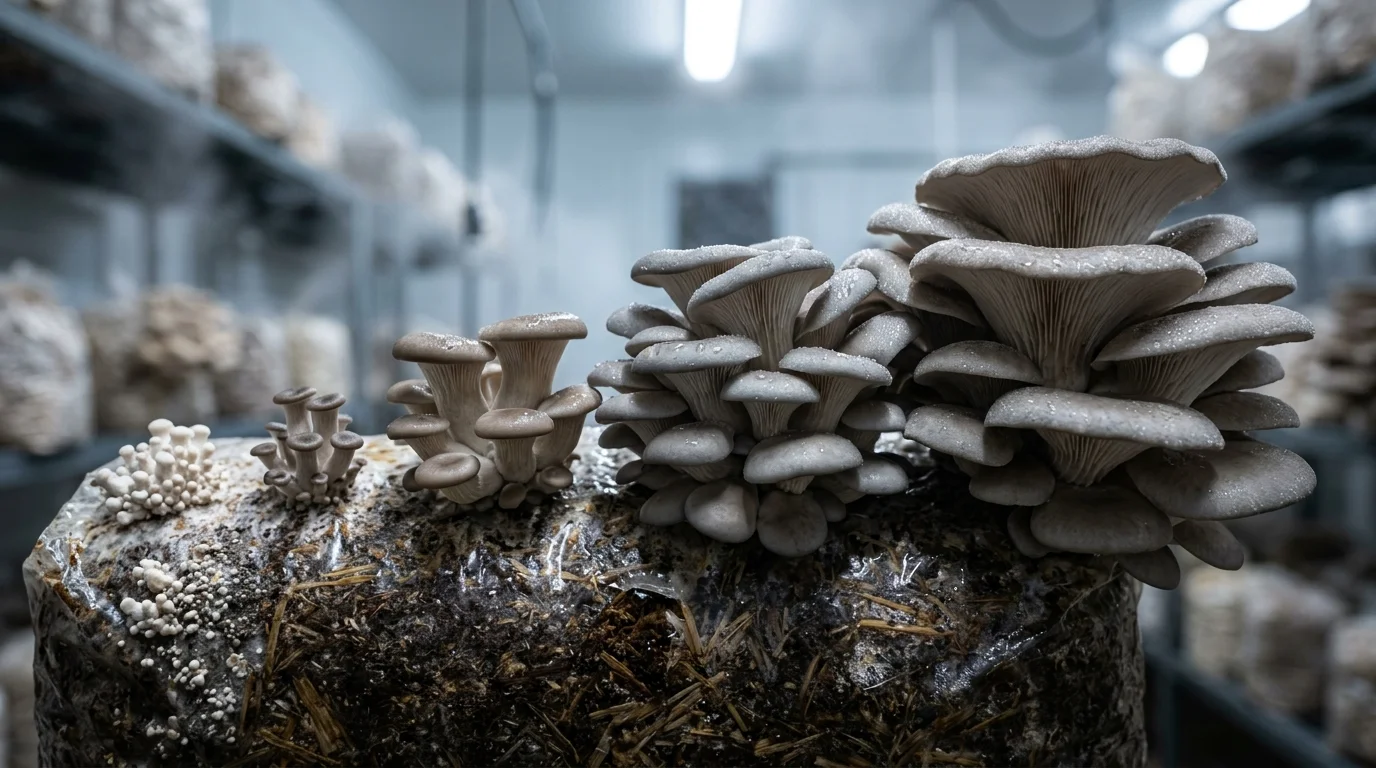
The carbon dimension adds further environmental relevance. Mycelium incorporated into soil as a spent substrate amendment increases the fungal-to-bacterial biomass ratio in soil microbial communities. Fungal biomass carbon has a longer mean residence time in soil organic matter than bacterial biomass carbon, meaning mushroom cultivation followed by spent substrate soil amendment produces a measurable, if modest, carbon sequestration contribution that extends beyond the growing system itself.