No, standard
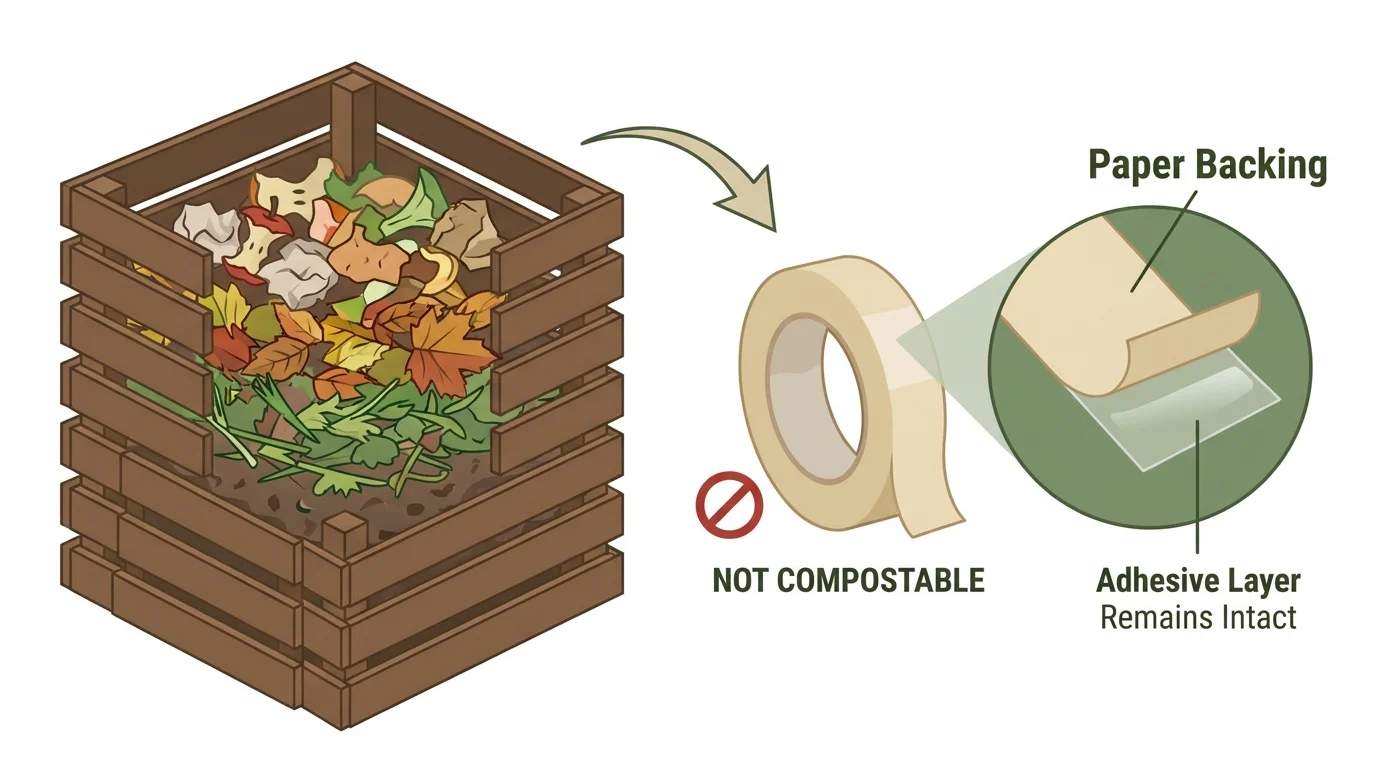
masking tape is not biodegradable, and it is not accepted in home or municipal composting. Although the tan crepe-paper backing looks like ordinary paper, masking tape is a layered product: a paper backing, a pressure-sensitive adhesive, and a thin release coating. The adhesive and coating do not reliably break down under natural or composting conditions, and they contaminate the paper if you try to recycle it. So while masking tape looks compostable, the finished product is not.
The nuance worth knowing is that biodegradability depends almost entirely on the adhesive, not the paper. A tape with a natural-rubber adhesive on an uncoated paper backing is far closer to biodegradable than one with a synthetic-rubber or acrylic adhesive. But even the “bio-based” masking tapes on the market today are not certified compostable, and none should be added to a compost pile or recycling bin as a default.
| Adhesive Type | Biodegradable? | Where It’s Commonly Used |
|---|
| Natural rubber | Closer to biodegradable, not certified | General-purpose and painter’s tapes |
| Synthetic rubber | No | Economical general-purpose tapes |
| Acrylic (water-based) | No | Longer-hold, UV-resistant painter’s tapes |
The One Layer That Decides Everything: It Is Not the Paper
Most people assume masking tape is “basically paper” and stop thinking about it there. That assumption is the source of almost every wrong answer you’ll find online about whether it can be composted or recycled. The paper is never the problem. The adhesive bonded to it is.
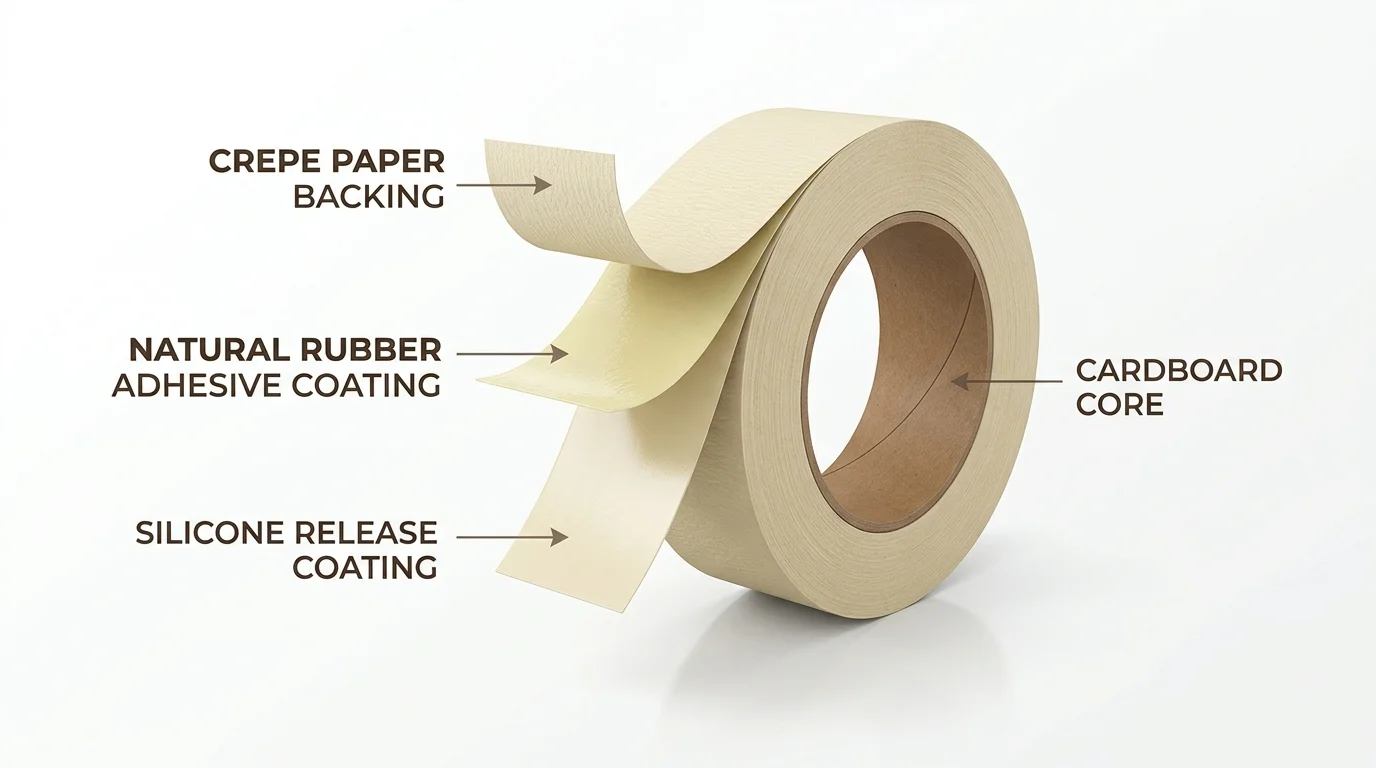
Masking tape is built from three layers:
- Backing: crepe paper, a lightweight, crinkled paper (typically around 32 to 80 grams per square meter) that stretches and tears by hand.
- Release coating: a thin layer on one side so the roll unwinds cleanly.
- Adhesive: a pressure-sensitive layer on the other side, and the single variable that determines everything about end-of-life disposal.
The adhesive comes in three main types: natural rubber (tapped from rubber trees, used in many general-purpose and painter’s tapes), synthetic rubber (common in economical general-purpose tapes), and acrylic, often water-based (used in longer-hold and UV-resistant painter’s tapes). Crepe paper by itself is a plant-based, carbon-rich material that would compost without issue on its own. It’s the adhesive and coating layered onto it that changes the outcome.
What “Biodegradable” Legally Requires, and Why Masking Tape Fails the Test
The word “biodegradable” has a specific regulatory meaning, and it’s stricter than most shoppers assume. According to the U.S. Federal Trade Commission’s
Green Guides, marketers may make an unqualified degradable claim only if they can prove the entire product will completely break down and return to nature within a reasonably short period of time after customary disposal, and for solid waste products that period is one year. The FTC also warns that items sent to landfills, incinerators, or recycling facilities will not degrade within a year, so unqualified biodegradable claims should not be made for them.
Masking tape fails this test because of its adhesive, not its paper. Peer-reviewed polymer literature notes that natural rubber, cis-1,4-polyisoprene, is readily biodegradable, while synthetic polymers with saturated carbon backbones, including polyacrylates and synthetic polyisoprene, do not facilitate microbial or oxidative attack in the same way. In plain terms, a natural-rubber adhesive can break down, whereas synthetic-rubber and acrylic adhesives largely do not. Because most consumers cannot tell which adhesive their roll uses just by looking at it, the safe default assumption is that masking tape is not biodegradable, regardless of what the packaging implies.
The Compost Test: What Actually Happens if You Toss It in the Bin
Standard masking tape should not go in a backyard bin or a municipal composting facility, and here is what actually happens if it ends up there.
Home composting relies on microorganisms, moisture, and oxygen to turn organic matter into a stable soil amendment. The paper backing would compost on its own, but the adhesive and release coating are not designed to. They persist, leave sticky residue throughout the pile, and introduce synthetic material into your finished compost.
Industrial
composting is more aggressive, but it runs to a defined pass/fail standard. Certified compostable products must meet specifications such as
ASTM D6400, ASTM D6868, or EN 13432, which require:
- Disintegration within 84 days, with less than 10% residue remaining after 12 weeks
- At least 90% biodegradation, meaning organic carbon converted to CO2, within 180 days under controlled industrial conditions
- No resulting eco-toxicity in the finished compost
Standard masking tape has never been tested or certified against these standards, so composting facilities treat it as a contaminant, not a feedstock, and screen it out. The FTC’s own guidance reinforces this: compostable claims must be qualified if a product cannot be composted safely at home, or if municipal facilities are not available to a substantial majority of consumers. Tape carrying no compostability certification should not be labeled or treated as compostable.

Why Paper Recyclers Reject Tape (Even Though It Looks Like Paper)
Masking tape is not accepted in standard curbside paper recycling, and as a rule it should not be added to your paper or cardboard bin. The reason has a specific industry name.
In paper recycling, pressure-sensitive adhesives create what the industry calls “stickies.” Tacky contaminants including tapes, labels, and hot melt glues bleed into the pulp, deposit on felts, wires, and rollers, and disrupt the paper machine while leaving specks and defects in the recycled sheet. Recovered paper fiber can typically be recycled only
five to seven times before its quality drops, and adhesive contamination pushes a batch toward outright rejection.
Two practical exceptions worth knowing:
- The cardboard core the tape is wound on is plain paperboard and is recyclable with paper and cardboard, no special handling needed.
- Small amounts of tape stuck to a box are usually screened out automatically during recycling, so you do not need to obsessively peel every fleck. Large amounts should be removed, since heavily taped cardboard can be rejected wholesale.
Some individual tape products are certified “recycling-friendly” under
INGEDE Method 12, the International Association of the Deinking Industry test, meaning their adhesive does not disturb the paper-recycling process. tesa names its own packing tapes tesa 60412 and tesa 60418 as certified recycling-friendly to this method, notably not its masking tapes. This certification applies only to specific named products, and almost always to packing tapes rather than masking tapes.
Masking Tape, Washi Tape, and Plastic Tape: Three Products, Three Different Answers
The material comparison matters here, but less than marketing usually implies.
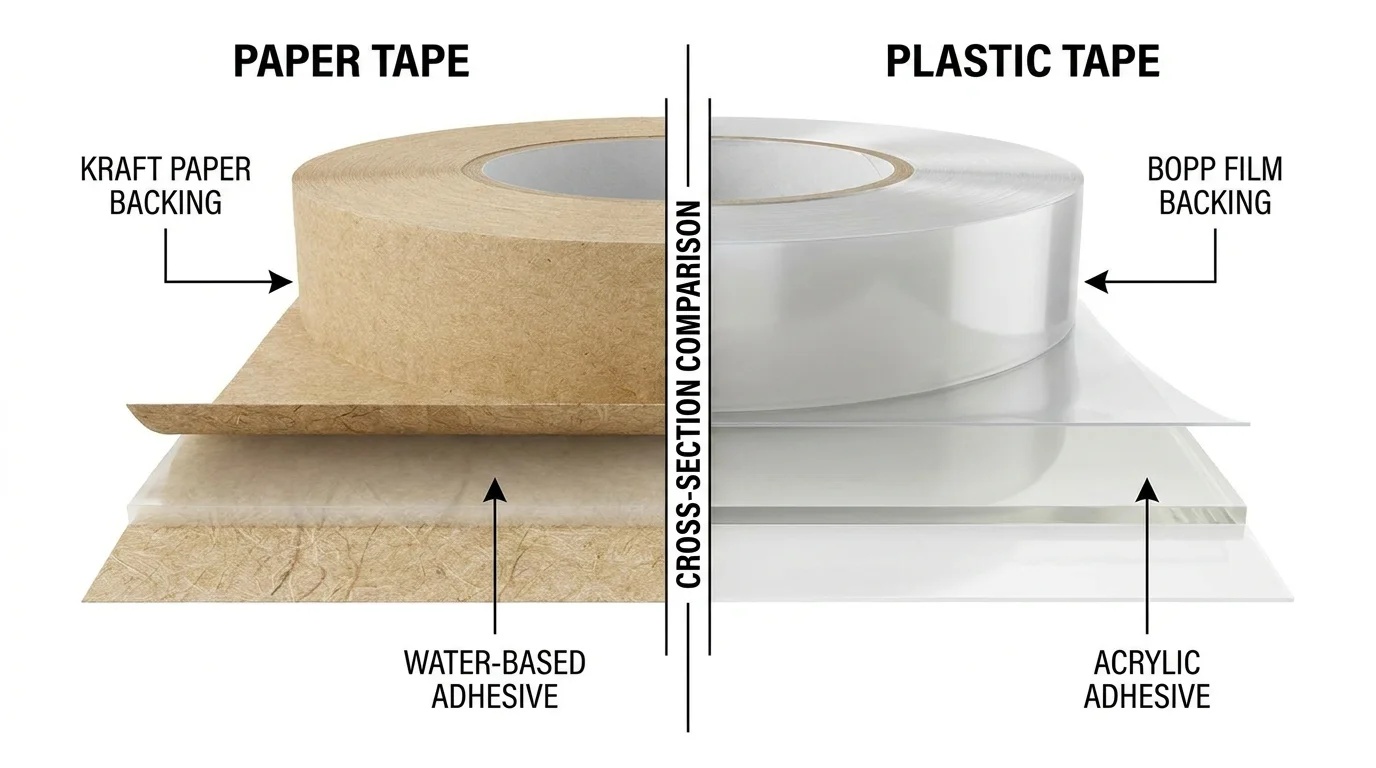
A paper-backed tape with a natural adhesive is genuinely more benign at end of life than a plastic-film tape such as clear packing tape or duct tape, because the backing is plant-based and the adhesive may be natural rubber. Plastic-backed tapes shed microplastics and are effectively non-recyclable and non-compostable in ordinary systems.
But “paper” does not automatically mean “compostable.” The adhesive still governs the outcome, which is why washi tape, a decorative paper masking tape often made from natural plant fibers such as mulberry, hemp, or bamboo with a rubber adhesive, is frequently described as biodegradable while regular masking tape is not. Even washi tape isn’t universally safe to compost, though: foil, glitter, or plastic-coated washi versions are not compostable, so the same “check the adhesive and coating” rule applies across all three tape types.
The Right Way to Throw It Away
Landfill (general waste) is the honest default for used masking tape with adhesive on it. It is not recyclable or compostable in ordinary systems, and pretending otherwise just contaminates a batch of recycling or compost somewhere down the line.
- Recycle the cardboard core separately with paper and cardboard.
- Do not compost the tape itself, even if the backing feels papery to the touch.
- Reduce and reuse first: buy only what you need, save offcuts for labeling or hanging items, and skip tape entirely for jobs that don’t need adhesive.
- Do not burn tape, which can release harmful combustion byproducts.
Is There Actually a Compostable Masking Tape Yet?
Here is the honest, verified answer: as of this article, there is no masking tape or painter’s tape on the market that carries a recognized compostability certification (
TÜV Austria OK Compost,
BPI, EN 13432, ASTM D6400, or ASTM D6868). The certified compostable adhesive tapes that do exist, such as Better Packaging Co’s comPOST Tape (certified to EN 13432, ASTM D6400-04, and ISO 17088), are transparent packing and box-sealing tapes, not masking tapes.
What “eco” masking tapes actually offer today is bio-based content and cleaner sourcing, not certified compostability:
- tesa ecoLogo and tesa 4319 masking tapes use a natural-rubber adhesive. tesa states the 4319 contains as much as 67% bio-based materials (without liner), measured to EN 16785, a bio-based content standard, not a compostability standard. tesa is candid that it does not yet offer compostable tapes in its current portfolio, though the goal remains an R&D priority, with a target of 70% bio-based or recycled materials by 2030.
- 3M Scotch / ScotchBlue markets masking and painter’s tapes made partly from renewable content, with solvent-free adhesives and, in Europe, PEFC-certified paper and plastic-free packaging. None are marketed as compostable.
If you want the greenest realistic option today, look for a paper-backed tape with a natural-rubber, solvent-free adhesive, high bio-based content, and responsibly sourced (FSC or PEFC) paper, then still treat it as landfill waste at end of life unless the packaging explicitly carries a compostability certification. For packing and box-sealing tape specifically (not masking tape), genuinely certified compostable and paper/water-activated tapes do exist and can go into recycling or compost along with the box.
Frequently Asked Questions
Is there a certified compostable masking tape?
Not currently. No masking or painter’s tape carries an OK Compost, BPI, EN 13432, or ASTM D6400/D6868 certification. “Eco” masking tapes offer bio-based content and natural-rubber adhesives, but the certified compostable tapes on the market are packing tapes, not masking tapes.
Is painter’s tape biodegradable?
No. Painter’s tape is a type of masking tape with a lower-tack, clean-release adhesive, often acrylic. Like other masking tapes, its adhesive prevents it from qualifying as biodegradable or compostable.
Can masking tape go in the recycling bin with cardboard?
Small amounts stuck to a box are usually screened out automatically and don’t need to be removed. But the tape itself should not be intentionally added to paper recycling, since its adhesive creates “stickies” that contaminate the pulp. The cardboard core the tape is wound on, however, is plain paperboard and can be recycled normally.
Is washi tape more biodegradable than regular masking tape?
Often, yes, plain washi tape is typically made from natural plant fibers like mulberry, hemp, or bamboo paired with a rubber adhesive, which is why it’s frequently described as biodegradable. That doesn’t apply to foil, glitter, or plastic-coated washi tape variants, which follow the same adhesive-and-coating rule as any other tape.
What’s the greenest way to dispose of used masking tape?
Put used tape in general household trash rather than recycling or compost, since neither system is built to handle its adhesive. Recycle the cardboard core separately, and reduce overall consumption by buying only what you need and reusing offcuts where possible.