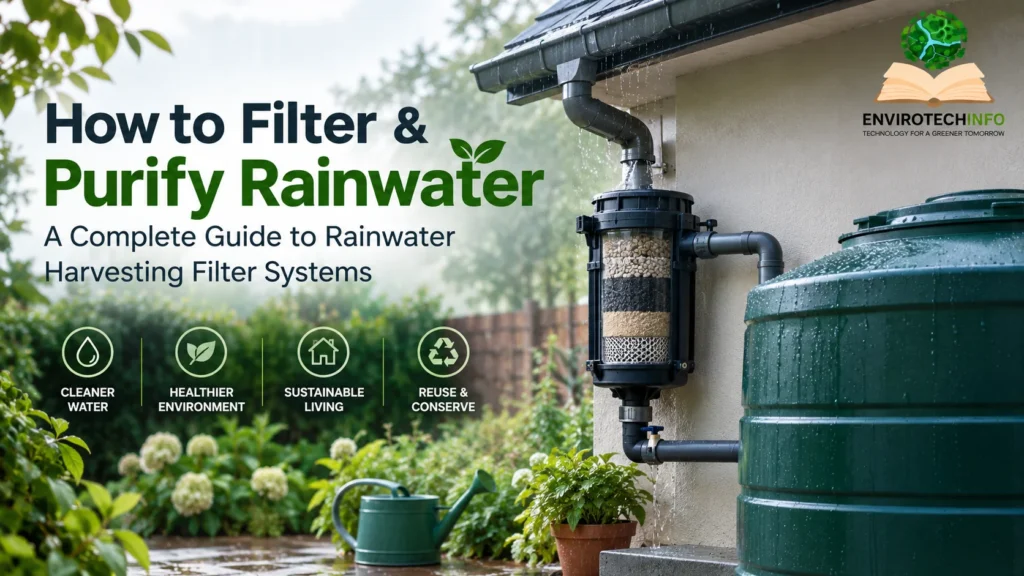

Rainwater falls remarkably clean, but by the time it slides off your roof, runs through a gutter, and settles in a tank, it can carry bird droppings, roof-leached metals, atmospheric dust, and even “forever chemicals.” Learning how to filter and purify rainwater is what turns runoff into a genuinely usable — and in many homes, drinkable — water supply. This guide breaks down every major rainwater filtration and purification method, walks through how a complete rooftop rainwater harvesting filter system works end to end, and summarizes what the world’s leading health authorities actually recommend about rainwater collection and safety.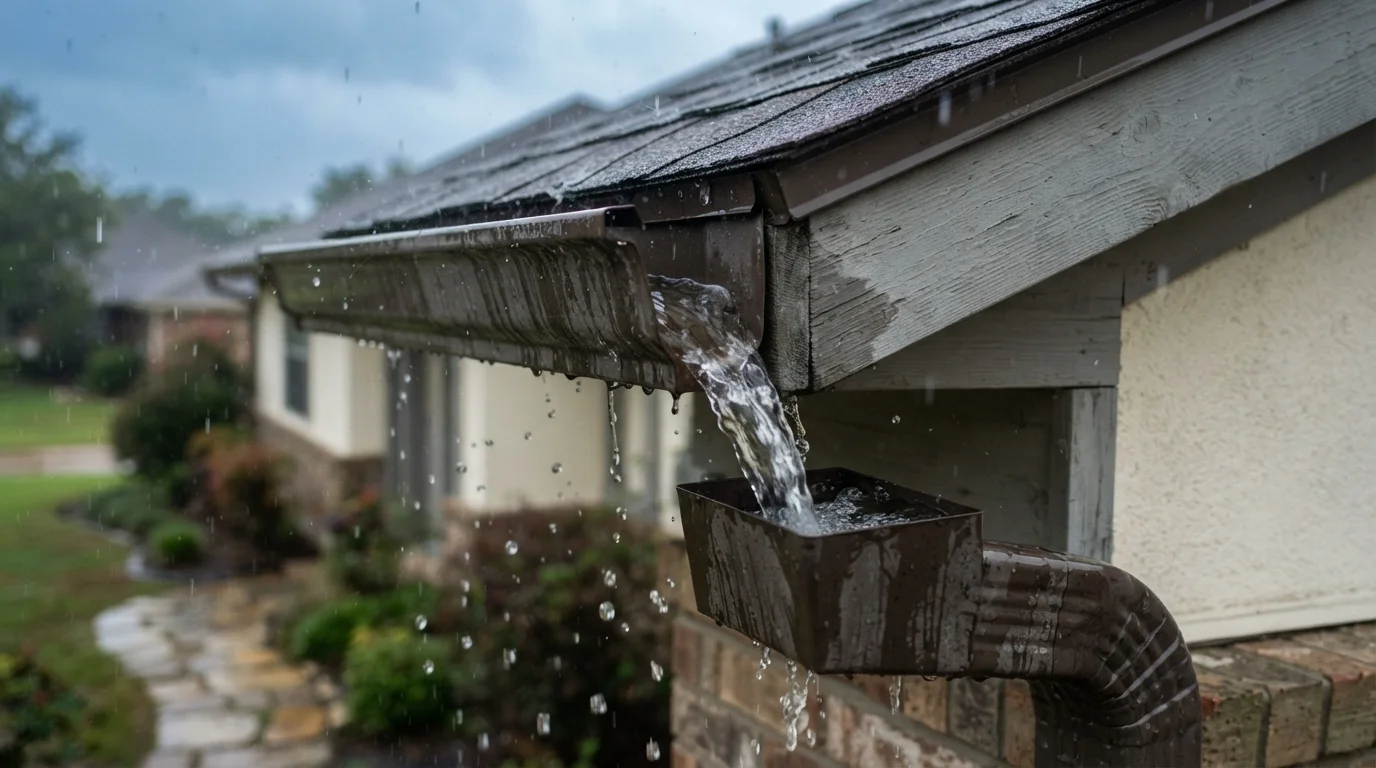
Why Rainwater Needs Filtration in the First Place
Rainwater harvesting is a large and fast-growing practice. According to Fortune Business Insights, the global rainwater harvesting market was valued at USD 12.68 billion in 2025 and is projected to reach USD 26.11 billion by 2034, growing at a CAGR of 8.36%. In Australia, the Australian Bureau of Statistics reports that one in four (26%) of households use a rainwater tank, and that rainwater supplies 177 billion litres — about 9% of residential water nationally. Outside Australian urban areas, rainwater provides 63% of residential water.
Yet untreated rainwater is rarely safe to drink. A landmark 2022 Stockholm University study led by Ian Cousins (published in Environmental Science & Technology, DOI: 10.1021/acs.est.2c02765) found that rainwater everywhere on Earth — even in Antarctica and on the Tibetan Plateau — contains PFAS “forever chemicals” at levels exceeding the latest U.S. EPA drinking-water guidelines. The lowest recorded PFOA concentration, on the Tibetan Plateau, had a median of 55 pg/L — approximately 14 times higher than the EPA advisory. As Cousins put it, “Based on the latest U.S. guidelines for PFOA in drinking water, rainwater everywhere would be judged unsafe to drink.”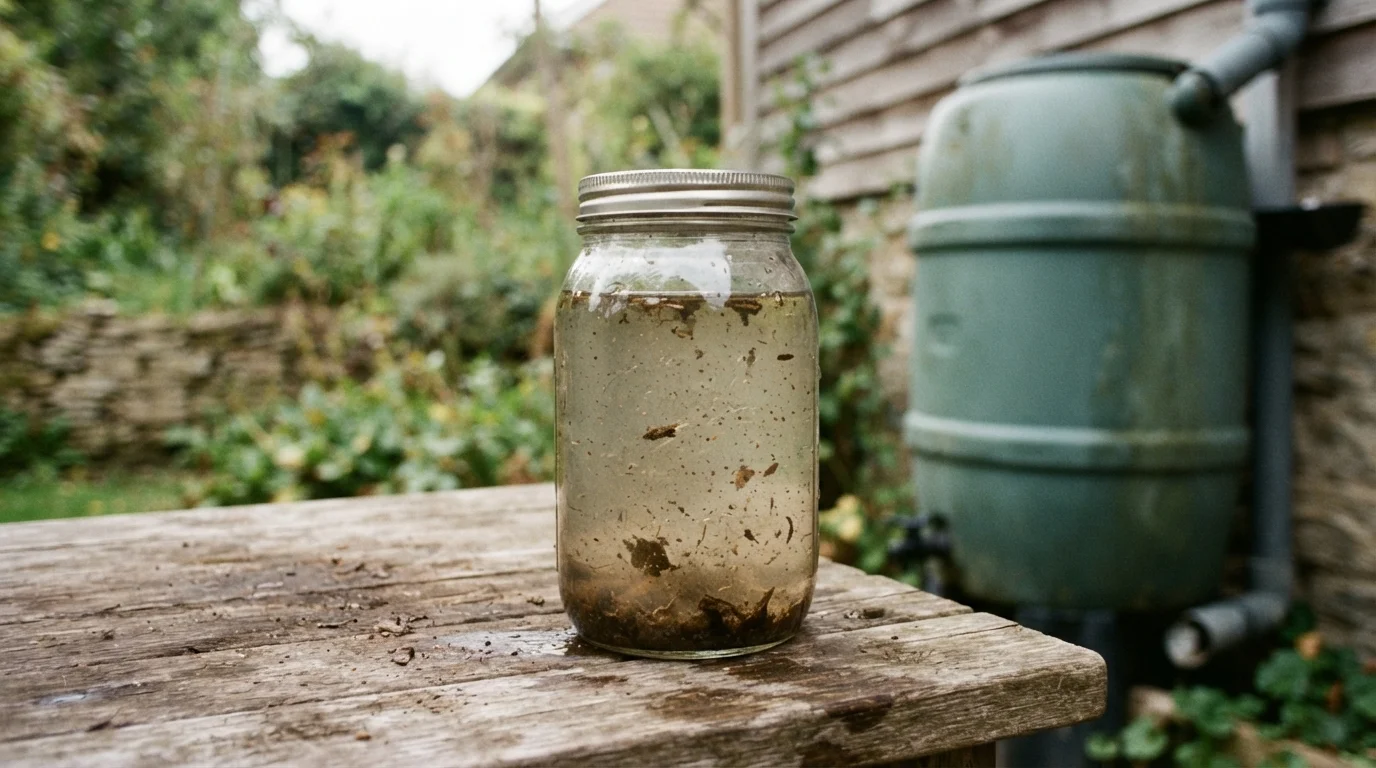
On top of atmospheric contaminants, roofs leach metals. Peer-reviewed research has found zinc, lead, and copper in roof-harvested rainwater, with galvanized steel roofs and lead flashing being particular culprits. A Western Sydney University study of 137 tanks in mining-affected New South Wales towns (published in Water, 2025) found that 90% of drinking-water samples exceeded lead guidelines (<10 µg/L), with 54% exceeding by 100 times. This is why filtration and disinfection are not optional extras — they are the core of a safe rainwater harvesting filter system.
Expert Insight Note
Boiling rainwater kills germs but does nothing to remove chemical contaminants like PFAS, lead, or pesticides. The CDC is explicit that boiling — and even adding chlorine or iodine — will not protect against dissolved chemicals, and some parasites like Cryptosporidium are chlorine-tolerant. A multi-barrier approach that combines physical filtration with disinfection is the only reliable path to safe drinking water from rain.
Types of Rainwater Filtration & Purification Methods
A good rainwater harvesting filter system layers several technologies, because no single method removes every contaminant. Rainwater filtration systems for home use fall broadly into pre-filtration (at the gutter or downpipe) and point-of-use purification (before drinking).
Mesh Screens & Leaf Filters (Pre-Filtration)
Gutter guards, leaf screens, and downpipe mesh are the first barrier in rooftop rainwater harvesting filters, removing leaves, twigs, and coarse debris. They protect downstream components but do nothing for bacteria or chemicals.
First-Flush Diverters
A first-flush diverter discards the initial, dirtiest runoff — the water that washes accumulated dust, bird droppings, and pollen off the roof. Per Engineering LibreTexts, the area-based rule of thumb is roughly 1 litre of diverter capacity per square metre of connected roof area — with some Australian suppliers recommending up to 2 L/m² for heavily polluted catchments and as little as 0.5 L/m² for very clean sites — and contamination roughly halves for each additional millimetre of rainfall flushed away.
Vortex / Fine Filters (e.g., WISY Rainwater Filter)
The WISY rainwater filter is a widely used example of a self-cleaning vortex fine filter installed in the downpipe or underground. According to WISY AG, the WISY vortex filter uses the principle of adhesion: water “sticks” to a vertical stainless-steel mesh with a mesh size of just 0.28 mm (280 microns), pulling clean water through while leaves and debris are washed down to the drain. Per Rainwater Management Solutions, WISY filters are self-cleaning, need inspection only about twice a year, oxygenate the water as it passes through, and capture up to 95% of clean rainwater — the WFF 100 serving roofs up to about 2,100 sq ft and the WFF 150 up to 5,500 sq ft. Importantly, a vortex filter alone does not make rainwater potable; it is a pre-filtration step.
Sediment Filters
Cartridge sediment filters (often 5-micron) remove fine suspended particles that mesh screens miss. They protect UV lamps and RO membranes downstream and are essential before disinfection, since turbidity shields microbes from UV light.
Activated Carbon Filters
Activated carbon adsorbs chlorine, pesticides, volatile organic compounds (VOCs), and improves taste and odor. Carbon alone will not remove bacteria, viruses, or most heavy metals.
Sand & Biosand Filters
Slow sand and biosand filters (BSFs) are low-cost, gravity-fed options widely used in developing regions. A controlled study in Water found biosand filters reduce E. coli by 1.2–2.2 log (roughly 90–99%) and remove 88–99% of turbidity, while a 12-year field study in Haiti measured 1.1-log (about 92%) bacterial removal with filters still working after more than a decade. They significantly reduce bacteria, protozoa, and some viruses but usually need a disinfection step afterward.
Ceramic Filters
Ceramic filters, often silver-impregnated, are effective point-of-use rainwater water filters. Laboratory trials of a burnt clay ceramic water filter, reported in ACS Omega, demonstrated bacteria reduction of 5.36 log and virus reduction of 3.83 log after 600 L of use.
UV Purification
Ultraviolet (UV-C) disinfection inactivates bacteria, viruses, and protozoa by damaging their DNA without adding chemicals. A rainwater treatment study using a UV dose of 30 mJ/cm² achieved an average 4.60-log removal of E. coli, with 87.5% of samples showing no microbiological risk. UV requires clear (low-turbidity) water and does not remove chemicals or metals.
Reverse Osmosis (RO)
RO forces water through a semi-permeable membrane and, per HomeGuide, removes more than 90% of contaminants, including PFAS, lead, and dissolved salts. It is the recommended option where PFAS or heavy metals are a concern.
Chemical Disinfection & Ozonation
Chlorination (including chlorine dioxide tablets) and ozonation kill pathogens. Chlorine dioxide is preferred over iodine because it works against Cryptosporidium. Chemical disinfection must follow pre-filtration, because organic matter neutralizes chlorine before it can disinfect.
Ion Exchange
Ion exchange (water softening) swaps hardness ions and can target specific dissolved metals, though it is less commonly needed for rainwater, which is naturally soft.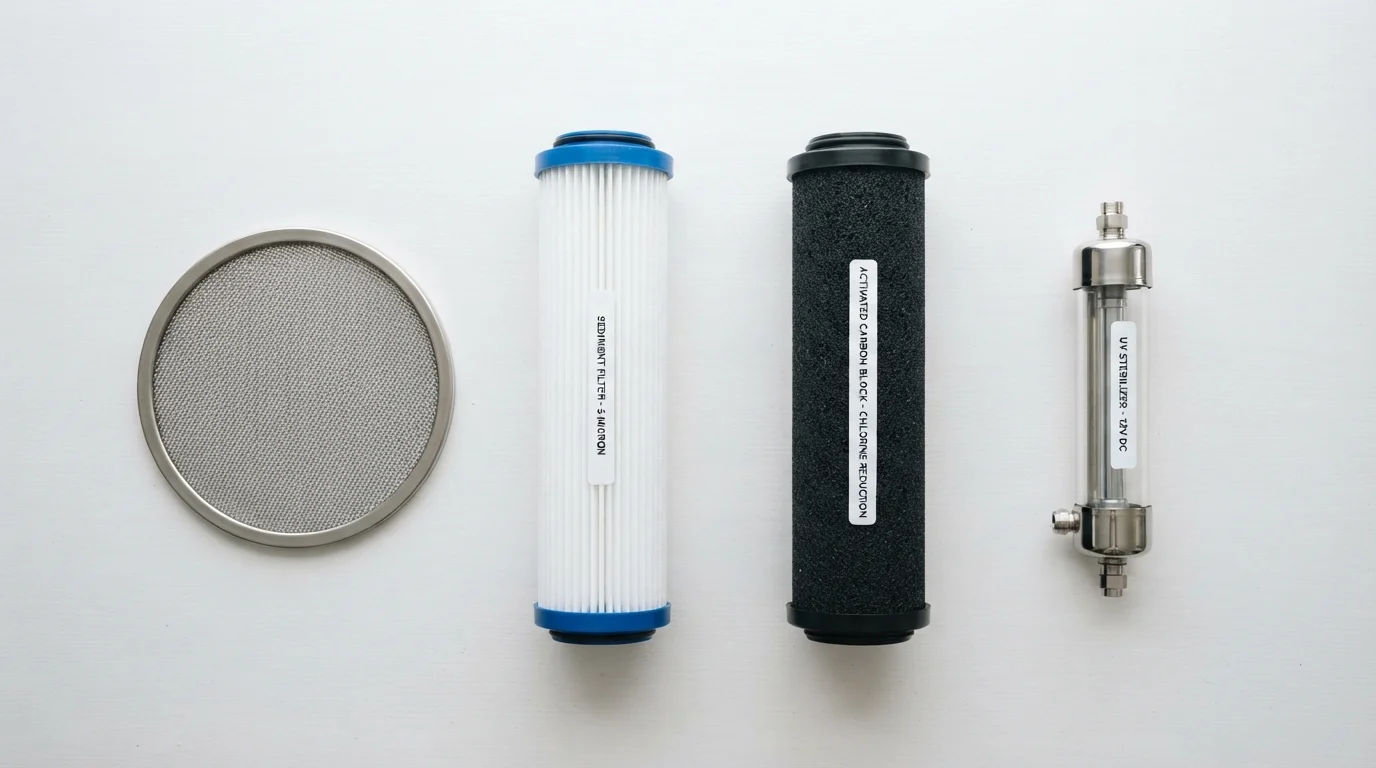
How a Rainwater Harvesting Filter System Works: Step by Step
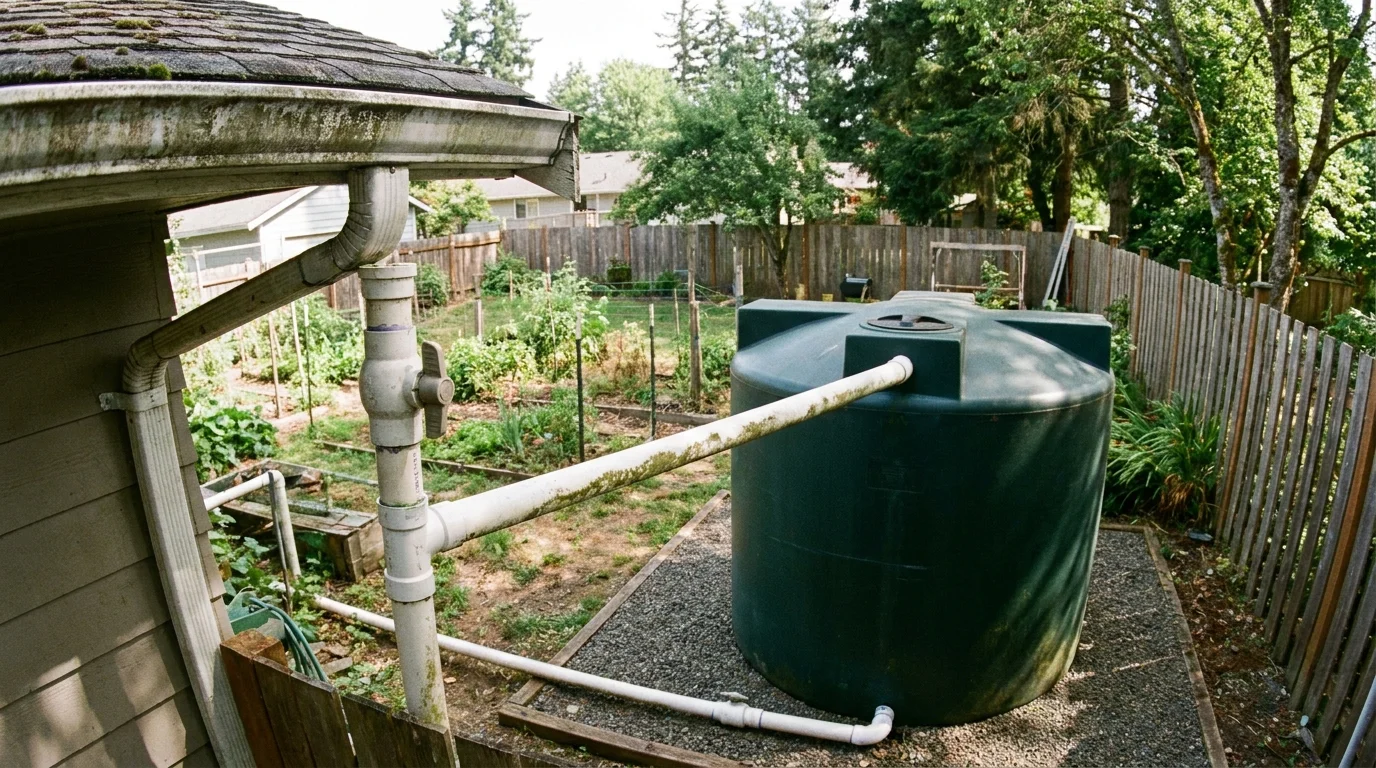
A complete rooftop rainwater harvesting filter system moves water through a sequence of barriers, much like a miniature version of how potable water is treated at a municipal plant.
- Roof catchment. Rain falls on the roof. Per the University of Florida IFAS Extension, “one inch of rainwater per 1,000 square feet of roof will result in about 600 gallons of collected water.” Roof material matters: metal roofs are cleanest, while asphalt shingles, wood shingles, and lead flashing can leach contaminants.
- Gutter mesh / leaf screens. Coarse debris is screened out at the gutter.
- First-flush diverter. The dirtiest initial runoff is diverted away from the tank.
- Vortex / fine pre-filter. A device like a WISY vortex filter removes particles down to 280 microns and oxygenates the water.
- Storage tank / cistern. Clean water is stored in a covered, opaque tank to prevent algae growth and mosquito breeding. A calmed inlet and floating extraction filter draw the cleanest water.
- Secondary filtration. Pumped water passes through sediment and activated carbon cartridges.
- Disinfection. UV, RO, or chemical disinfection provides the final microbial barrier before drinking.
- Point of use. Treated water is delivered to taps, appliances, or irrigation.

What Global Authorities Say About Rainwater Filtration & Purification
Guidance from major health and standards bodies converges on one message: rainwater can be a safe drinking-water source, but only with proper treatment and maintenance.
World Health Organization (WHO)
The WHO Guidelines for Drinking-water Quality state that well-designed rainwater harvesting systems with clean catchments, covered cisterns, and treatment as appropriate, supported by good hygiene at the point of use, “can offer drinking-water with very low health risk.” WHO notes rainwater is initially relatively free of impurities but deteriorates from wind-blown dirt, leaves, and faecal droppings, and recommends regular cleaning of catchment surfaces and gutters. Rainwater collection is counted as an “improved” drinking-water source by the WHO/UNICEF Joint Monitoring Programme (JMP).
U.S. Centers for Disease Control and Prevention (CDC)
The CDC states that “rainwater is not necessarily safe to drink without first removing germs and chemicals from it,” and advises: “If you drink, cook, or bathe with rainwater, test it regularly for germs and chemicals.” The CDC also recommends a first-flush diverter to improve water quality and, per its home water filter guidance, testing a rainwater collection system at least once each year.
U.S. Environmental Protection Agency (EPA)
The EPA promotes onsite non-potable water reuse — including roof-collected rainwater — for uses like toilet flushing, laundry, and irrigation. Through the National Blue Ribbon Commission for Onsite Non-potable Water Systems and its Quantitative Microbial Risk Assessment (QMRA) modeling, the EPA has defined pathogen-reduction targets for viruses, bacteria, and protozoa across different water sources and end uses.
Australian Government (enHealth / NHMRC)
Australia’s enHealth “Guidance on use of rainwater tanks” and the NHMRC Australian Drinking Water Guidelines treat rainwater as generally safe to drink from a well-maintained roof and tank system, but recommend disinfection (boiling, or continuous UV) for immunocompromised people. Per SA Health, continuous disinfection can be achieved with an installed UV light, with reverse osmosis advised where PFAS or heavy metals are a concern.
ISO and Other Standards
ISO 24521 provides guidance for the management of on-site domestic water and wastewater services. In North America, the CSA B805/ICC 805:2022 Rainwater Harvesting Standard gives design and installation guidance, and ASTM E2727 provides a standard practice for assessing rainwater quality. NSF/ANSI standards certify the filters themselves (detailed below).
NSF/ANSI Certification: How to Choose Rainwater Water Filters
When buying rainwater water filters, NSF/ANSI certification is the most credible independent proof of performance. Per NSF standards guidance, the key standards are:
- NSF/ANSI 42 — aesthetic effects (chlorine, taste, odor).
- NSF/ANSI 53 — health effects (lead, mercury, VOCs, cysts like Cryptosporidium and Giardia).
- NSF/ANSI 58 — reverse osmosis systems.
- NSF/ANSI 61 — drinking-water system components (ensures materials don’t leach contaminants).
Certification is standard-specific: a filter certified to NSF/ANSI 42 for chlorine says nothing about lead removal. Always check the specific claim and model on the public NSF listing, and beware “tested to NSF standards” language, which is not the same as being certified.
Common Contaminants in Untreated Rainwater
Rainwater picks up contaminants at every stage: atmospheric pollutants and PFAS as it falls; metals (zinc, lead, copper) and organic matter from the roof and gutters; and bacteria such as E. coli, Salmonella, and Cryptosporidium from bird and rodent droppings. As the CDC notes, roofing materials, gutters, piping, and storage materials can introduce chemicals like asbestos, lead, and copper. This is why the question of whether rainwater is potable matters so much — the raw material is rarely drinking-quality without treatment.
Cost, Maintenance & DIY vs Professional Installation
Rainwater filtration costs vary widely by ambition. Per HomeGuide, pre-storage downspout filtration materials run $30 to $300, while post-storage UV filtration runs $350 to $2,400. A whole-house UV system typically costs $300 to $800 installed, with the UV bulb needing annual replacement ($50 to $100) and the quartz sleeve replaced every 2–3 years. Under-sink RO systems cost roughly $300 to $950, and annual maintenance for a whole-house filter runs $15 to $250.
Maintenance schedules matter. Sediment and carbon cartridges are typically replaced every 3–12 months; UV bulbs annually; RO membranes every 2–5 years. Vortex pre-filters like WISY need inspection about twice a year. Gutters and catchment surfaces should be cleaned regularly, and tanks inspected and cleaned periodically. Simple pre-filtration and first-flush installs are DIY-friendly; UV, RO, and any potable connection generally warrant professional installation and often a plumbing permit.
Rainwater as a Primary Drinking Source: Global Case Studies
In the U.S. Virgin Islands, V.I. Code Title 29 § 308 requires new buildings to include rainwater catchment and cisterns — one-story homes must provide 10 gallons of cistern storage per square foot of roof (15 gallons for two or more stories) — and, per the Caribbean Green Technology Center, more than 90% of the population uses rainwater harvesting. In India, Tamil Nadu became the first state to make rooftop rainwater harvesting mandatory (scheme launched 2001, mandatory from 2003); the state government reported the model delivered a 50% rise in Chennai’s groundwater levels within five years, and today the vast majority of buildings in Tamil Nadu’s town panchayats have rainwater harvesting facilities. In rural Australia, rainwater tanks are widely used as a primary drinking-water source. These cases show rainwater harvesting scaling from individual households to territory-wide policy — always paired with the reminder that storage without treatment is not enough for potable use.