
Felt is biodegradable only if it is made from natural fibers. Wool felt and other animal-fiber felt genuinely biodegrade and can even be composted, while synthetic felt made from polyester or acrylic is essentially a plastic that does not biodegrade and instead breaks apart into microplastics. So “is felt biodegradable” has no single yes-or-no answer, you have to check the fiber content first.
Felt is a nonwoven textile produced by matting, condensing, and pressing fibers together rather than weaving or knitting them. It can be made from natural fibers such as wool or animal fur, or from petroleum-based acrylic or polyester, and blended fibers are common. That single distinction, protein versus plastic, decides whether a piece of felt returns to the soil or lingers for centuries.
What Is Felt Made Of, and Why Does It Matter?
Felt is one of the oldest textiles and one of the only fabrics made without weaving or knitting. Manufacturers interlock fibers using heat, moisture, and pressure: with wool, microscopic overlapping scales on the fibers raise and hook into one another when agitated, forming a dense, permanent mat. There are three broad categories:
- Natural-fiber felt: wool, fur, or other animal/plant fibers.
- Synthetic felt: polyester (PET), acrylic, nylon, or rayon.
- Blended felt: wool combined with synthetics for durability.
The pressed, bonded structure is not what determines biodegradability. The polymer is. Wool is a protein; polyester and acrylic are plastics derived from petroleum. Everything below follows from that fact.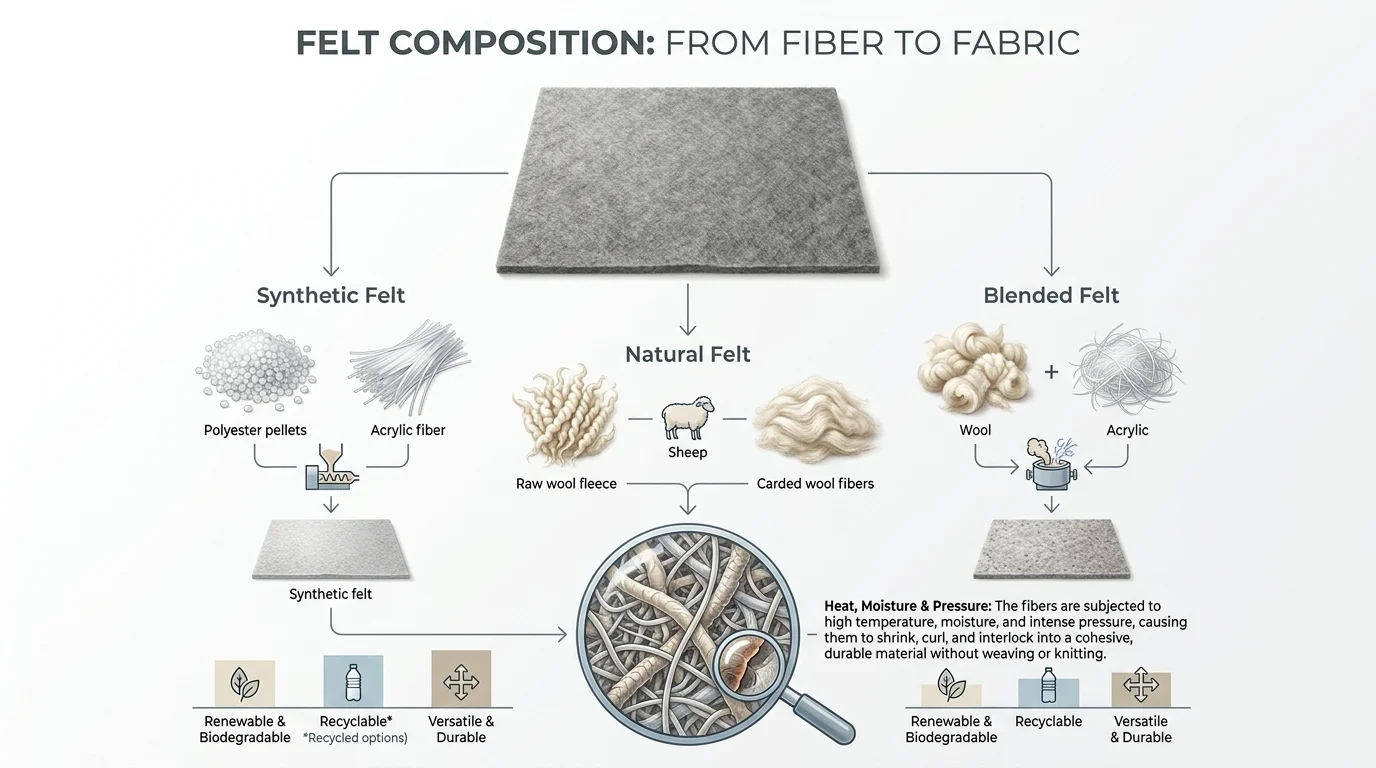
Is Wool Felt Biodegradable?
Yes. Wool is composed of keratin, the same natural protein found in human hair, and soil microorganisms recognize it as food. A peer-reviewed 2024 study, “Biodegradation behavior of wool and other textile fibers in aerobic composting conditions” (Collie, Brorens, Hassan and Fowler, International Journal of Environmental Science and Technology), tested six fabric types under controlled industrial composting per ISO 14855-1:2012 at 58°C over 181 days. Untreated wool biodegraded 48.4%, machine-washable (Hercosett-treated) wool biodegraded 67.6%, and cellulose-based viscose rayon biodegraded 83.2%, while polyester, nylon, and polypropylene showed no biodegradation at all. The study also confirmed that machine-washable wool did not create microplastic pollution as it broke down.
As wool biodegrades it enriches the soil, releasing nitrogen, sulphur, phosphorus, and potassium according to the International Wool Textile Organisation. Timelines vary widely with conditions: 100% Merino wool can biodegrade by about 95% after 15 weeks of soil burial, with the rate depending on soil, climate, and fiber characteristics. Wool also biodegrades in seawater, though the frequently quoted “about 20% in 90 days” marine figure comes from an industry fact sheet citing a 2019 conference presentation rather than a published journal result, so treat it as indicative, not definitive.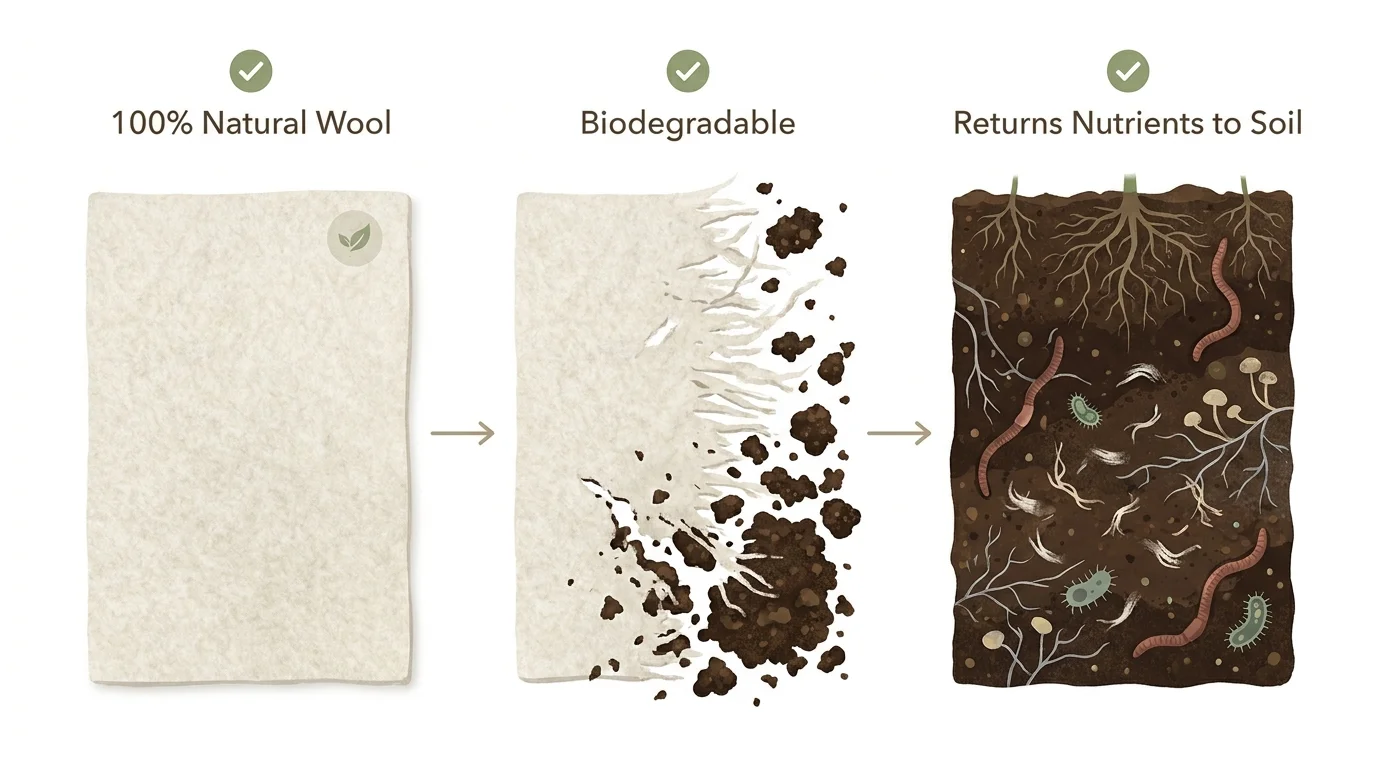
Is Wool Felt Compostable?
Generally yes, provided it is 100% wool with no synthetic backing, plastic coating, or heavy chemical treatment. Wool is carbon-rich (a “brown” in composting terms) and breaks down while returning nutrients to the pile. Some manufacturers explicitly sell 100% wool felt as home-compostable and safe to bury in the garden. To speed decomposition, cut felt into small pieces to give microbes more surface area, and skip any felt with unknown dyes or adhesives.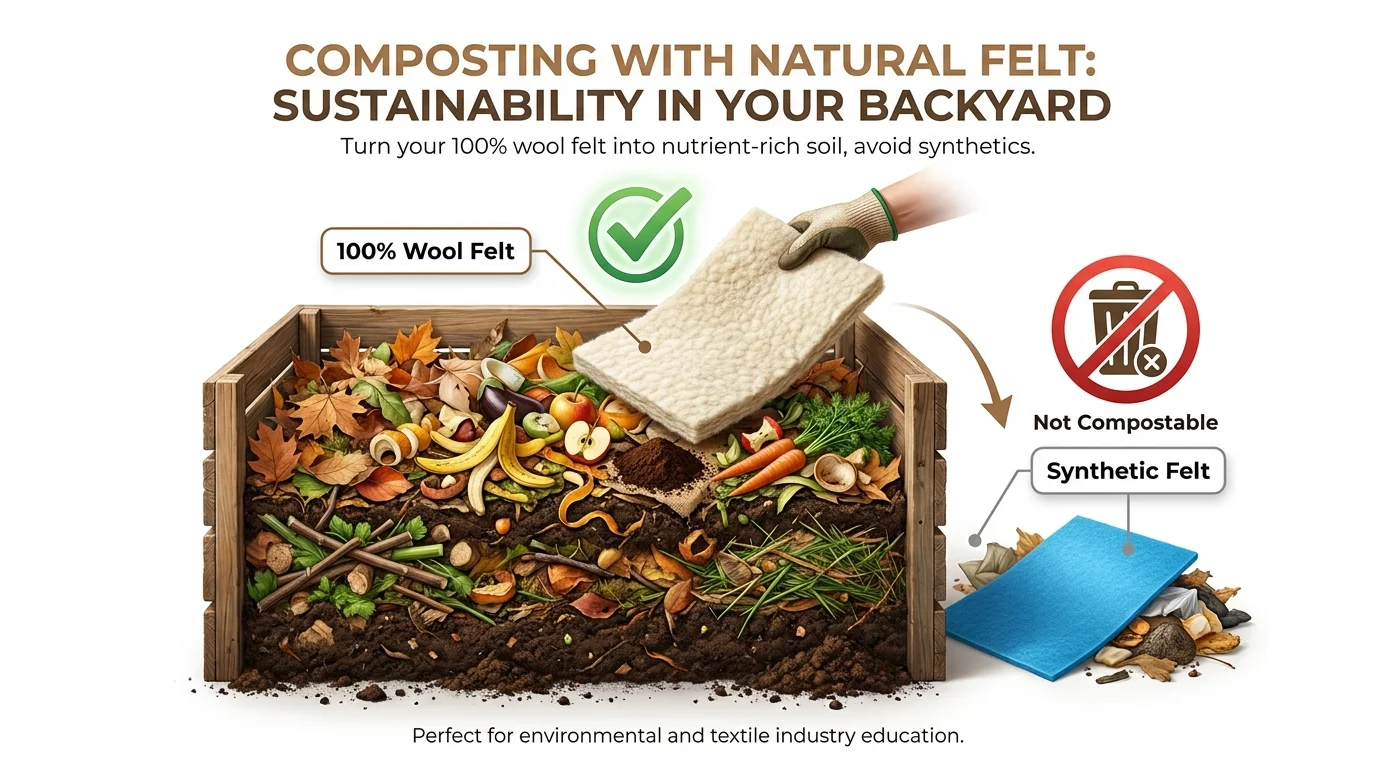
Is Synthetic (Polyester and Acrylic) Felt Biodegradable?
No. Polyester felt is made from PET, the same plastic used in drink bottles, and does not measurably degrade; in one peer-reviewed marine trial, PET showed no degradation over 428 days. Acrylic is likewise petroleum-based. In the composting study above, polyester actually registered slightly negative biodegradation (within measurement noise of zero), and nylon and polypropylene sat near 2%, meaning synthetic felt is effectively inert in compost.
Recycled “eco felt” made from RPET (recycled PET bottles) is a better use of existing plastic and diverts bottles from landfill, but it is still plastic. It is not biodegradable and can still shed microfibers, so “biodegradable felt” and “recycled felt” are not the same claim.
Do Synthetic Felts Shed Microplastics?
Yes. Peer-reviewed laundry research published in PLOS ONE found mechanically-treated polyester fabrics released about 161 mg of microfibers per kilogram per wash, roughly six times more than woven nylon at 27 mg/kg. Because polyester and acrylic fibers are plastic, those shed microfibers are microplastics that wastewater plants do not fully capture. Wool, by contrast, is biodegradable and does not contribute to microplastic pollution.
Can You Recycle Felt?
Felt is difficult for standard recycling systems. It is generally not accepted in curbside recycling, and because felt is nonwoven and frequently a wool-synthetic blend, mechanical recyclers cannot easily separate the constituent fibers of blended fabrics. As a result, most felt follows the general textile waste stream. In the United States, the EPA estimated that 11.3 million tons of textiles were landfilled in 2018, against a recycling rate of just 14.7%. The most reliable options for clean wool felt are home or industrial composting; for synthetic felt, reuse it as long as possible or check for a specialty textile take-back program.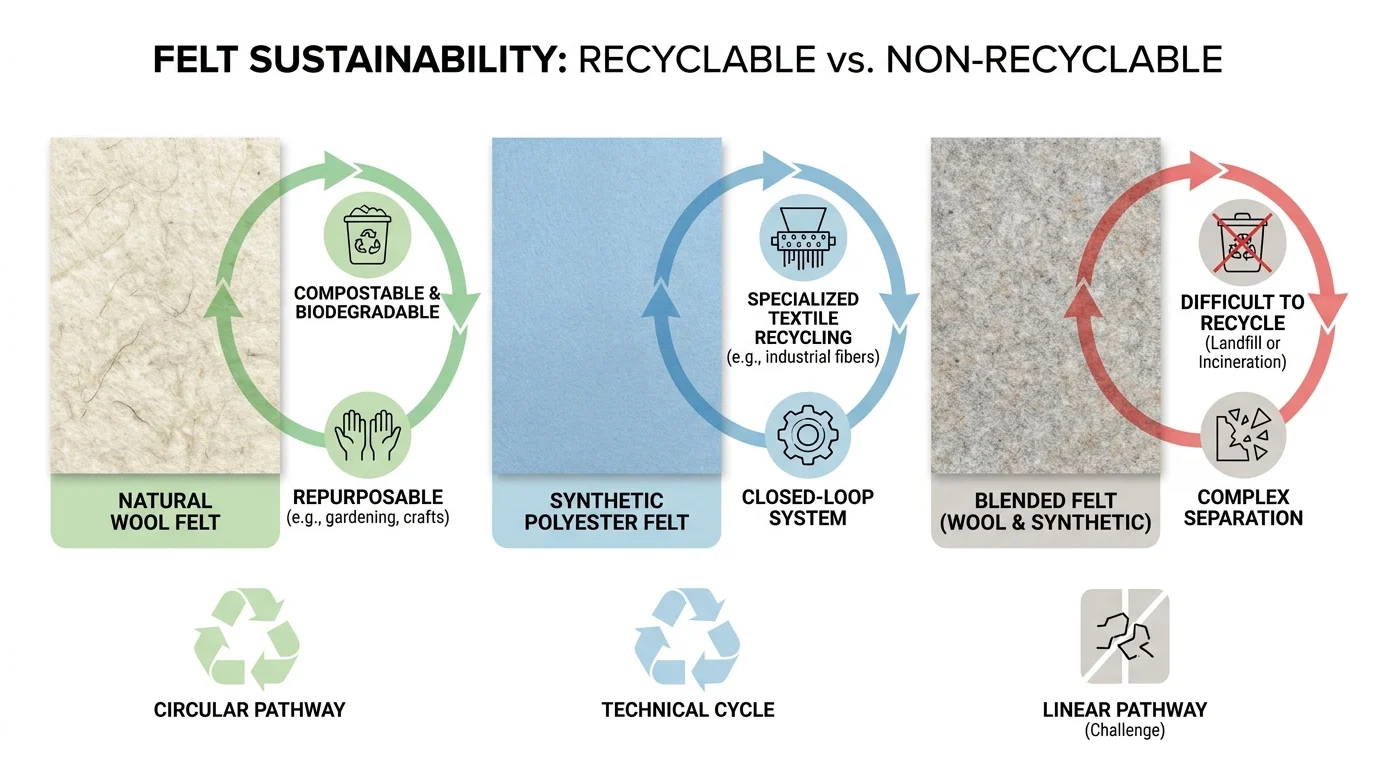
Is Roof Felt Biodegradable?
No. Traditional roofing felt (tar paper) is an asphalt-saturated organic or fiberglass felt meeting standards such as ASTM D226 and ASTM D4869. The bitumen saturation means it is neither compostable nor meaningfully biodegradable. Newer synthetic roofing underlayment is woven polypropylene, which is also a plastic and not biodegradable. Despite sharing the word “felt,” roof felt has nothing in common with compostable wool craft felt and should be handled as construction and demolition waste.
Are Felt Tip Pens Biodegradable?
Mostly no. A felt tip pen combines a plastic barrel (often polypropylene), a synthetic fiber nib, and ink, and it is generally not curbside recyclable. The most practical route is a specialty mail-in scheme such as TerraCycle’s Writing Instruments program, which accepts used pens and markers. Some brands now use recycled-plastic barrels, which lowers the footprint but does not make the pen biodegradable.
What the FTC Says About “Biodegradable” Felt Claims
If you are shopping for biodegradable felt products, read the label critically. Under the FTC Green Guides, an unqualified “biodegradable” claim requires proof that the entire item completely breaks down within a reasonably short period, defined as one year, after customary disposal. Items destined for landfills generally will not meet that bar, which is why blanket “biodegradable” labels on synthetic or blended felt are misleading. A trustworthy claim will specify the fiber (100% wool) and the condition (home or industrial compost).
Eco-Friendly Felt: What to Choose
For end-of-life sustainability, choose 100% wool felt. It is renewable (sheep are shorn annually), biodegradable, and compostable, and it does not shed microplastics. If you must use synthetic or blended felt, the greenest move is to keep it in service as long as possible, wash it rarely and gently to limit microfiber release, and avoid sending compostable wool to landfill where anaerobic conditions stall decomposition. Composting clean wool felt is meaningfully better than binning it.