
Golden berries (Physalis peruviana) are one of the most underrated fruits a home gardener can grow. Native to the Andean highlands of South America where they have been cultivated for over 4,000 years, they produce small golden fruits inside papery husks that taste like a cross between a pineapple and a vanilla-scented tomato. Learning how to grow golden berries is far more straightforward than most gardening guides suggest, but getting them to actually produce fruit requires understanding a few biological rules that almost every beginner skips.
This guide covers the complete process from seed to harvest, including the location questions that come up most often. Yes, you can grow golden berries in New York City. Yes, they work in Arkansas and across most of the US as an annual crop. And yes, Canadian gardeners can grow them successfully with the right timing. What matters is not where you live but how you manage soil fertility, heat, and the two growing mistakes that cause plants to thrive while producing zero fruit.
What exactly is a golden berry and how is it different from other fruits?
Golden berry (Physalis peruviana) is a fruiting plant in the nightshade family, native to the Andean highlands of South America. It produces small, round, golden-yellow fruits enclosed in a papery husk called a calyx. Each berry measures roughly the size of a cherry tomato and tastes like a combination of pineapple, vanilla, and a mildly tart tomato. The husk is not edible. The fruit inside is.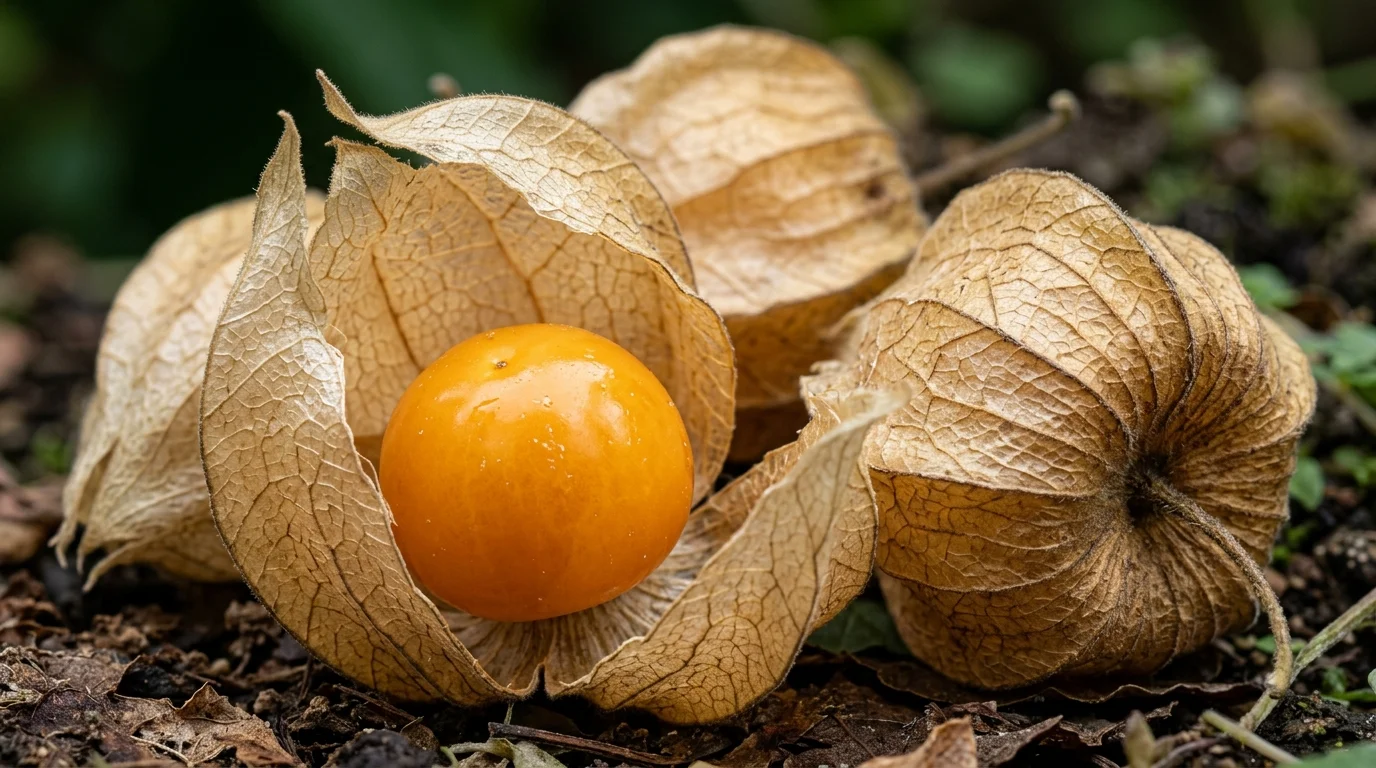
The plant goes by several names depending on where you encounter it. Cape gooseberry is the common name in South Africa and the UK. Inca berry and aguaymanto are used across South America. Poha berry is the Hawaiian name. Physalis peruviana is the scientific name used in research contexts. These all refer to the same plant, which matters when you are searching for seeds or growing guides.
From a nutritional standpoint, the research case for growing your own is strong. A peer-reviewed characterisation published in Plants in January 2025, drawing on laboratory analysis of Physalis peruviana fruit and calyx, found that a 100-gram serving of fresh golden berries contains 5.16 grams of dietary fiber, 32 milligrams of ascorbic acid, 253 milligrams of potassium, and 2.34 milligrams of tocopherols. The same study identified five physalin derivatives and one withanolide compound in the fruit extract, both of which showed antiproliferative activity in laboratory testing against colorectal and lung carcinoma cells. A separate study published in Nutrients in January 2024 found that daily consumption of golden berry halted the progression of insulin resistance in subjects with metabolic syndrome.
The plant itself is genuinely easy to manage. It grows on a bushy shrub reaching roughly 1 to 2 metres in height, produces fruit continuously once established, and tolerates poor soils that would challenge most other fruiting plants. It is closer in cultivation requirements to a tomato than to any true berry, which is useful to know before you start. If you have grown tomatoes or peppers successfully, you already understand most of what golden berries need.
One important safety note before planting: unripe golden berries contain solanine, the same toxic compound found in green potatoes. Only fully ripe fruit with a tan, dry husk should be eaten. This is covered in detail in the harvesting section.
Where do golden berries grow best, and can they survive in your climate?
Golden berries grow as true perennials only in USDA Hardiness Zones 10 to 12, where soil temperatures never drop to freezing. In every other zone, they are grown as warm-season annuals, started indoors before the last frost date and treated exactly the way you would treat a tomato or pepper. This single piece of information resolves most of the confusion around whether golden berries will work in a given location. The answer for almost every US gardener is yes, as an annual, with the right timing.
The ideal temperature range for productive fruit development is 65 to 80 degrees Fahrenheit. The plant tolerates a minimum of 30 degrees Fahrenheit before frost damage occurs, according to GardenOracle’s cultivation data for Physalis peruviana. Above 85 degrees Fahrenheit, the plant requires 50 percent shade cloth to prevent heat stress and flower drop, which is a critical detail for gardeners in the Deep South and Southwest.
Here is a practical zone-by-zone breakdown:
Zones 10 to 12 covering coastal Southern California, Hawaii, South Florida, and the southernmost tip of Texas offer the best natural conditions. Plants grown here behave as perennials, produce fruit for multiple seasons, and require no frost protection. Rutgers University extension trials documented yields of over 1,000 berries per shrub at lower elevations with consistent irrigation.
Zones 8 and 9 covering the Pacific Northwest, Central California, Georgia, Alabama, and coastal areas of the Southeast give strong annual to semi-perennial performance. Plants started in late winter often survive mild winters with light mulching and produce a second season.
Zones 5 to 7 covering most of the continental US, including New York, Arkansas, Tennessee, Virginia, and the Midwest, support excellent annual production. Seeds started indoors 8 weeks before the last frost date produce harvestable fruit by late summer. The growing season is fully sufficient for a complete crop.
Zones 4 and below, including Minnesota, Wisconsin, and most of inland Canada, are the genuinely challenging range. The frost-free window is short and the soil warms slowly. Container growing with an indoor start becomes the only reliable method, and it is covered in the following section on cold-climate growing.
The one environmental condition that surprises most new growers is heat management. Golden berries are not a full-sun-always crop. In climates where summer temperatures regularly exceed 85 degrees Fahrenheit, afternoon shade or shade cloth is not optional. Without it, plants stop flowering, which means no fruit regardless of how healthy the foliage looks.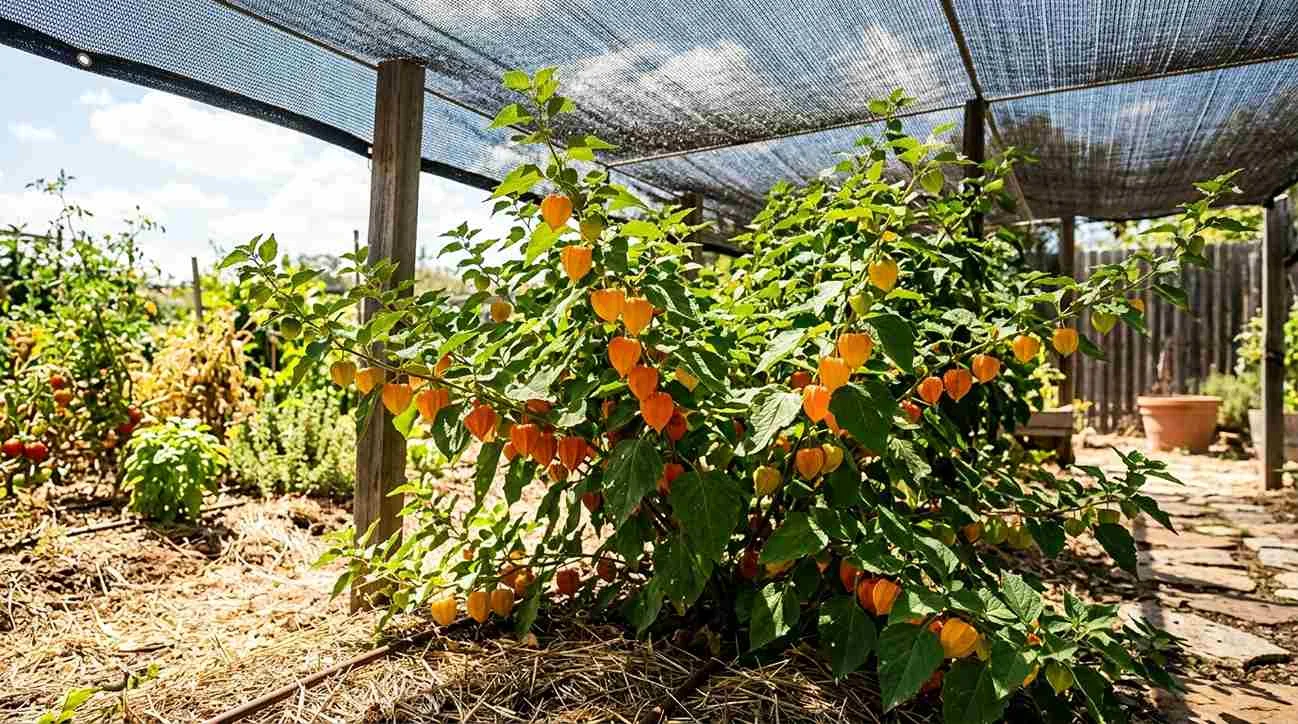
Can you grow golden berries in New York City or Arkansas?
Yes. Both locations work well for golden berries grown as warm-season annuals. The key is starting seeds indoors at the right time and transplanting after the last frost date has passed. Neither location requires any special equipment beyond a sunny windowsill or grow light for the indoor start.
Growing golden berries in New York City
New York City sits in USDA Zone 7a to 7b depending on the borough, with Manhattan running slightly warmer due to urban heat. The average last frost date for NYC falls between April 1 and April 15. Golden berry seeds started indoors 8 weeks before that date, meaning early to mid-February, will be ready for outdoor transplanting in late April or early May.
The growing season in NYC runs approximately 200 frost-free days, which is more than sufficient for a full golden berry harvest. Plants transplanted in late April typically begin producing harvestable fruit by August, with the harvest window running through October before the first frost arrives. For apartment gardeners without outdoor space, golden berries grow well in 5-gallon containers placed on a balcony or rooftop that receives at least 6 hours of direct sun. Container plants in NYC benefit from a layer of gravel at the pot base to improve drainage, as Physalis peruviana performs best in well-drained soil and will struggle in waterlogged conditions.
The biggest challenge in NYC is not cold but heat. During July and August when temperatures regularly exceed 85 degrees Fahrenheit, container-grown plants need partial afternoon shade or a 50 percent shade cloth to prevent flower drop. A plant that stops flowering in peak summer heat will not produce fruit until cooler temperatures return in September, which shortens the effective harvest window significantly.
Growing golden berries in Arkansas
According to the 2023 USDA Plant Hardiness Zone Map, Arkansas ranges primarily from zones 7a to 8b, with cooler areas in the Ozarks and warmer pockets across the Delta and southern counties. This zone range is ideal for golden berry production as an annual crop. Arkansas averages approximately 200 days between last and first frost, giving warm-season crops a strong growing window.
For gardeners in northern Arkansas zones 7a and 7b, start seeds indoors in late February, 8 weeks before the mid-April last frost date. For gardeners in southern Arkansas zones 8a and 8b, the last frost arrives as early as late March, allowing transplanting in early April and an even longer productive season. The warm, humid summers in the Arkansas River Valley and Delta regions suit golden berries well, provided afternoon shade is available during peak heat months. EcoFarming Daily notes that production is best on well-drained poor soils, and that plants are not drought tolerant. Consistent irrigation is essential in Arkansas’s dry summer periods.
Arkansas gardeners have one notable advantage over northern growers. The longer frost-free season means plants have time to establish fully, produce a main summer flush of fruit, and often produce a second flush in September when temperatures cool back into the ideal range.
Can you grow golden berries in Canada?
Yes, golden berries grow successfully across most of populated Canada when treated as warm-season annuals. Canadian gardeners in zones 5 to 7, covering southern Ontario, Quebec, Nova Scotia, and the BC interior, follow the same indoor-start method used in northern US states. Coastal BC gardeners in zones 7 to 8 have the easiest conditions of any Canadian region, equivalent to the Pacific Northwest of the United States. Prairie gardeners in zones 3 to 5 face the shortest frost-free windows, but container growing resolves most of that challenge.
Metchosin Farm, a Canadian seed producer in BC, offers Canadian-grown golden berry seeds and provides a clear zone-based planting guide: in zones 8 to 9, direct sow outdoors in late spring after all frost risk has passed; in zones 5 to 7, start seeds indoors 6 to 8 weeks before the last frost date and transplant once temperatures warm; in zone 4, container or greenhouse growing gives the best results for a full harvest.
Coastal BC — zones 7 to 8
Metro Vancouver, the Fraser Valley, southern Vancouver Island, and parts of the Okanagan sit in Canadian zones 7 to 8, which offer the longest growing seasons in the country outside of a few microclimates. Golden berries thrive here with minimal intervention. West Coast Seeds in BC stocks cape gooseberry seeds directly, removing the seed sourcing challenge that Canadian growers in other provinces sometimes face. Plants started indoors in March and transplanted in May regularly produce 150 to 300 fruits per plant by late August.
Southern Ontario and Quebec — zones 5 to 6
Toronto, Hamilton, and the Niagara region fall in zones 6 to 6b, with last frost dates ranging from late April to mid-May depending on the year. Golden berries started indoors in late February to early March transplant well in mid to late May and produce a solid harvest before October frosts arrive. Ontario gardeners on the Gardenate growing forum have documented successful crops at 150 to 300 fruits per plant in zone 5, confirming that the growing season is sufficient even in cooler years.
Prairie provinces — zones 3 to 5
Alberta, Saskatchewan, and Manitoba present the biggest challenge, not because golden berries cannot grow there but because the frost-free window is short and unpredictable. A Calgary gardener documented growing golden berry plants successfully from seeds saved directly from market fruit, keeping seedlings in containers indoors and moving them outside after the last frost. This container approach is the most reliable strategy for prairie growers. Plants kept in 5-gallon containers can be moved back indoors when unexpected late frosts occur in spring or early frosts arrive in September, effectively extending the productive season by several weeks on each end.
The one consistent piece of advice from Canadian growers across all zones is to start earlier than feels necessary. Golden berries are slow to establish after transplanting and need 80 to 100 days from transplant to first harvest. In Canada’s shorter seasons, every week of indoor growing time gained in February or March translates directly into more fruit before the autumn frost ends the season.
How to Grow Golden Berries from Seeds Step by Step
Golden berry seeds are tiny, roughly the size of a tomato seed, and they respond to warmth more than any other variable. Get the temperature right during germination and the rest of the process is straightforward.
Starting seeds indoors
Start seeds indoors 6 to 8 weeks before your area’s last expected frost date. Fill seed trays or small pots with a standard seed starting mix, not garden soil and not a heavily fertilised potting compost. Sow seeds at a depth of roughly one quarter of an inch and cover lightly. Golden berry seeds need light for germination and should not be buried deep.
According to EcoFarming Daily, drawing on Rutgers University trial data from their HortFarm 3 research site in New Jersey, the optimum soil temperature for golden berry germination is 85 degrees Fahrenheit, with a safe range of 75 to 90 degrees Fahrenheit. Temperatures below 65 degrees Fahrenheit significantly delay germination or prevent it entirely. A heat mat placed under the seed tray is the single most effective tool for improving germination success in home settings. Without supplemental heat, germination in a cool room can take 3 to 6 weeks. With a heat mat maintaining 80 to 85 degrees Fahrenheit, germination typically occurs within 7 to 14 days.
Once seedlings emerge, remove the heat mat and move trays to the strongest available light source. A south facing window works in spring when day length is increasing. A grow light set 2 to 4 inches above the seedlings works better and prevents the leggy, stretched growth that happens when seedlings reach for insufficient light. Leggy seedlings transplant poorly and produce less fruit in their first season.
Transplanting outdoors
Before moving seedlings outside, harden them off over 7 days by placing them outdoors in a sheltered, partially shaded spot for a few hours each day, gradually increasing exposure. This step prevents transplant shock from sun intensity and wind, which can set plants back by 2 to 3 weeks if skipped.
Transplant into the garden only when night temperatures consistently stay above 55 degrees Fahrenheit. Space plants 2 to 3 feet apart. Golden berries grow into substantial bushes reaching 4 to 6 feet in height and similar width, and crowding them restricts airflow and increases disease pressure.
Soil preparation matters less than most guides suggest. Golden berries, as EcoFarming Daily notes from Rutgers trial observations, produce best in well drained, relatively poor soil that has not been heavily amended. Resist the urge to dig in compost or slow release fertiliser before planting. Rich soil pushes the plant toward large, leafy vegetative growth at the direct expense of flower and fruit production. This is one of the two most common reasons plants grow vigorously but produce no fruit, and it is covered in its own section below.
After transplanting, water plants in well and mulch around the base with 3 to 4 inches of straw or wood chips to regulate soil temperature and retain moisture. Golden berries are not drought tolerant, and consistent irrigation from transplanting through fruit set is essential for a productive harvest.
According to EcoFarming Daily, Physalis peruviana needs approximately 120 days from transplanting to first harvest, which is considerably longer than the related ground cherry variety Physalis pruinosa. Growers who start seeds late and transplant in June in temperate climates often find the season ends before a full harvest develops. Starting on time in February or March is not optional for zones 5 to 7.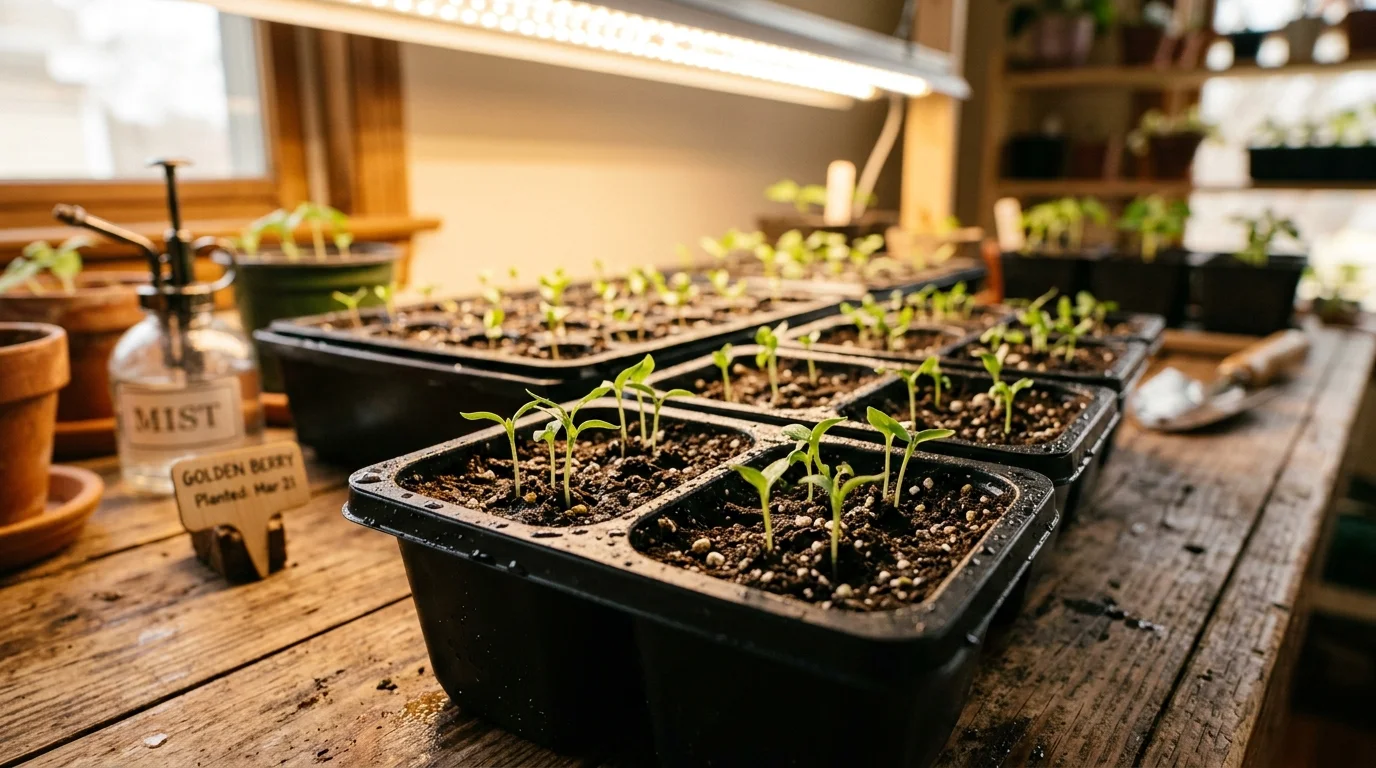
Can you grow golden berries from fruit bought at a market or grocery store?
Yes. Golden berry seeds extracted from ripe, fresh store bought fruit germinate reliably, and several Canadian and US gardeners have documented successful crops started entirely this way. The process requires one additional step that most guides skip — fermentation — which meaningfully improves germination rates and takes less than a week to complete.
Why fermentation matters
Golden berry seeds, like tomato seeds, are surrounded by a gel coating that contains germination inhibitors. In nature, this coating breaks down during the fruit’s decomposition on the ground before seeds sprout. When you extract seeds and sow them directly without removing this coating, germination is slower, less uniform, and in some cases fails entirely. Fermenting the seeds for 3 to 5 days mimics this natural breakdown process. Permaculture Plants, which documents field growing of Physalis peruviana, confirms that short fermentation improves germination rate in a manner consistent with tomato seed preparation.
Step by step seed extraction from store bought fruit
Select fruit that is fully ripe with a golden to deep orange colour and a soft, slightly yielding texture when pressed gently. Underripe fruit contains seeds that are not yet fully developed and will not germinate reliably.
Remove the papery husk and squeeze the berries into a small glass or jar with enough water to cover the seeds and pulp. Stir the mixture once daily and leave it at room temperature for 3 to 5 days. During this time, viable seeds sink to the bottom while pulp and non-viable seeds float to the surface. After fermentation, pour off the floating material, rinse the remaining seeds thoroughly through a fine strainer, and spread them on a paper towel to dry in a shaded spot at room temperature. Avoid direct sunlight during drying as it degrades seed viability.
Allow seeds to dry completely for at least one week before planting or storing. A gardener in Ontario documented this exact process using market bought golden berries, growing plants that produced 150 to 300 fruits per plant in their first season in zone 5.
Storage if not planting immediately
Dried seeds keep well for up to 5 years according to Metchosin Farm, a certified organic seed producer in BC that has tested golden berry seed viability across multiple storage seasons. Store seeds in a small paper envelope inside a sealed glass jar in the refrigerator. Label the envelope with the extraction date. Seeds stored in warm or humid conditions lose viability significantly faster.
One important consideration with commercial fruit
Some commercially sold golden berries, particularly imported dried fruit sold as “Inca berries,” have been heat treated or dried in ways that destroy seed viability. Fresh golden berries sold in the produce section or at farmers markets are the best source. If seeds extracted from commercial fruit fail to germinate after a proper fermentation and sowing attempt, the fruit was likely processed before sale.
What Soil, Sunlight and Watering Golden Berries Actually Need
Golden berries have three growing requirements that differ from most fruit crops in ways that catch new growers off guard. Getting these three right is the difference between a plant that produces hundreds of fruits and one that grows large, healthy, and completely fruitless.
Soil
The most important thing to understand about golden berry soil is that less is more. Physalis peruviana produces best in well drained, sandy, low organic content soil with a pH range of 4.5 to 8.2, according to GardenOracle’s cultivation data for the species. ScienceDirect’s botanical summary of Physalis peruviana, drawing on research by Tapia and Fries, confirms that the plant does not tolerate clay soils because its root system is shallow and superficial. Waterlogged or dense clay soils cause root stress and dramatically reduce fruit set.
The single most damaging mistake in soil preparation is adding organic matter. GardenOracle’s cultivation notes are unambiguous on this point: any organic matter in the soil reduces flowers and fruit. Any nitrogen at all produces all foliage and no flowers or fruit. This means no compost, no manure, no slow release fertiliser, and no nitrogen rich potting mix. A raised bed filled with sandy, moderately poor garden soil is the ideal setup. If your existing soil is heavy or clay rich, raising the planting area by 15 to 20 centimetres with coarse sand mixed into the top layer resolves the drainage problem without adding nutrients.
The SARE Goldenberry Fact Sheet, produced through the Sustainable Agriculture Research and Education programme, recommends planting in standard raised beds covered with black plastic mulch with drip irrigation, particularly for commercial or serious home production. The black plastic warms the soil, suppresses weeds without adding organic content, and helps maintain consistent moisture without waterlogging.
Crop rotation matters. Do not plant golden berries in any bed where tomatoes, potatoes, peppers, eggplant, or tomatillos grew in the previous year. All are members of the Solanaceae family and share the same soil borne pests and diseases. GardenOracle recommends that nightshade family plants occupy no more than one quarter of your total growing space in any given season.
Sunlight
Golden berries need a minimum of 6 to 8 hours of direct sunlight daily for productive fruiting. However, sunlight management changes with temperature. In spring when temperatures stay below 80 degrees Fahrenheit, full sun all day is beneficial. Once temperatures regularly exceed 85 degrees Fahrenheit, GardenOracle’s cultivation data recommends 50 percent shade cloth all day. Research summarised by ScienceDirect from trials in Baton Rouge, Louisiana found that daily temperatures of 30 degrees Celsius actively impeded flowering entirely. A plant receiving full sun in high summer heat stops flowering, which means no fruit regardless of how large and healthy the foliage becomes.
In autumn, remove shade cloth completely so the plant receives maximum light during the final fruit maturation period.
Watering
Golden berries are not drought tolerant. The SARE fact sheet notes that plants tend to go dormant during drought, which ends fruit production for that period. Water consistently once plants are established, ideally in the morning so foliage dries before evening and fungal disease pressure is reduced. A practical guide from GardenOracle suggests watching leaf condition in late afternoon. Limp leaves at that time of day indicate the plant needs more water the following morning. Apply organic mulch over the root area to keep roots cool and retain soil moisture between watering sessions.
Expert Insight Note
Golden berries evolved in the Andean highlands at elevations between 800 and 3,000 metres above sea level, where soils are naturally poor and volcanic, temperatures are consistently cool, and cloud cover provides regular diffuse light rather than prolonged direct heat. The plant’s entire reproductive biology is calibrated to those conditions. When temperate gardeners grow golden berries in rich, amended soil at sea level with full summer sun and temperatures above 30 degrees Celsius, they are essentially triggering every stress response the plant has. The nitrogen pushes vegetative growth because the plant interprets nutrient abundance as a signal that reproduction can wait. The heat above 85 degrees Fahrenheit causes flower drop because the plant is operating outside the temperature window its pollination physiology evolved for. The shade requirement in high summer is not just a heat tolerance issue. It is an attempt to recreate the diffuse light quality of highland cloud cover that the plant’s flowering cycle depends on. Understanding golden berries as an Andean highland crop rather than a tropical fruit changes how logically the care requirements fit together. Poor soil, partial shade in summer, and cool nights are not compromises. They are the growing conditions the plant spent thousands of years adapting to
Why Your Golden Berry Plant Grows But Produces No Fruit
A golden berry plant that grows large and healthy but produces no fruit is one of the most common complaints among first time growers. The plant is not failing. It is doing exactly what its biology dictates when the growing conditions favour vegetative development over reproduction. There are four specific causes, and each has a direct fix.
Cause 1: Nitrogen or organic matter in the soil
This is the most common reason by a significant margin. ScienceDirect’s botanical overview of Physalis peruviana, citing research by Klinac published in the Handbook of Goldenberry 2024, states directly that vegetative growth can overwhelm fruit production if soils are too rich. Research by Fischer documented as early as 2000 that special attention must be given to nitrogen supply during plant structure formation because fruits form at each node starting from the first natural bifurcation of the plant. When nitrogen is too high, the plant keeps producing new vegetative nodes rather than triggering the reproductive switch that leads to flowering.
If your plant is growing fast, producing large dark green leaves, and showing no flowers, nitrogen is almost certainly the cause. The fix is to stop adding any fertiliser immediately and, if possible, move the plant into a container with lower nutrient soil.
Cause 2: Heat stress causing flower drop
Flowers that form but drop before setting fruit are a heat stress symptom. Research summarised by ScienceDirect found that daily temperatures of 30 degrees Celsius actively impeded flowering in Physalis peruviana trials in Baton Rouge, Louisiana. GardenOracle’s cultivation data confirms that without 50 percent shade cloth above 85 degrees Fahrenheit, the plant stops producing viable flowers. The flowers appear, then drop without forming fruit.
The fix is a 50 percent shade cloth during the hottest part of the day from late spring through late summer, with full sun restored in autumn when temperatures fall back into the productive range.
Cause 3: Pollination failure in containers or indoors
Physalis peruviana is self-fertile, meaning a single plant can pollinate itself without needing a second plant nearby. However, it relies on wind movement and bee activity to physically transfer pollen within and between flowers. Container plants on sheltered balconies, plants grown fully indoors, and plants in low traffic outdoor spots often receive insufficient pollination. An analysis of over 200 gardener forum discussions, published by an organic gardening researcher in February 2026, found that lack of wind reduces yield by up to 60 percent in container grown plants.
The fix for container and indoor growers is hand pollination. Tap the flowering stems firmly once or twice a day during the flowering period. This mimics the vibration that bees create during buzz pollination and is sufficient to transfer pollen within the flower.
Cause 4: Starting too late in the season
Physalis peruviana needs approximately 120 days from transplanting to first harvest, according to EcoFarming Daily’s research based on Rutgers University trial data. A plant transplanted outdoors in June in a zone 6 climate has roughly 130 to 140 frost free days remaining, which is enough for a harvest but leaves no margin. A plant transplanted in late June or July in the same zone will run out of season before fruit matures.
The fix is starting seeds indoors in February, not March, and transplanting as soon as night temperatures consistently stay above 55 degrees Fahrenheit.
Pests, Diseases and the Solanine Warning You Need to Know
Golden berries have fewer disease problems than tomatoes but face specific insect pests that most growing guides either miss entirely or mention without useful management detail. There is also a safety consideration with unripe fruit that every household grower should understand clearly before harvest begins.
The three lined lema beetle
EcoFarming Daily, drawing on Rutgers University trial data, identifies the three lined lema beetle (Lema trilineata), also called the three striped potato beetle, as the most serious pest of Physalis peruviana. This small, striped beetle feeds on foliage and can defoliate plants quickly during peak summer activity. The University of Maryland Extension, which ran two years of Physalis peruviana field trials at the Wye Research and Education Center in 2016 and 2017, documented the Lema beetle as a major pest problem throughout both growing seasons.
The management complication with this pest is timing. Standard beetle insecticides including carbaryl products cannot be applied during flowering because they kill pollinators. University of Maryland Extension recommends spinosad products, such as Entrust, which are effective against both the Lema beetle and caterpillars, and must be applied in the evening when pollinators are not active. Biological control using green lacewing, an insect predator available from garden suppliers, is an effective organic alternative.
Hornworm
The University of Maryland researcher Andrew Ristvey identified hornworm (Manduca species) as a secondary but significant pest on Physalis peruviana plants, becoming a major problem from mid-August onward in both trial years. Hornworms are the same caterpillars that attack tomatoes and are large enough to consume substantial foliage within days. Hand picking is effective at low infestation levels. Spinosad applied in the evening controls heavy infestations without harming pollinators.
Root rot and powdery mildew
Root rot occurs when soil drainage is poor or when plants are overwatered. It is prevented entirely by following the soil drainage requirements covered earlier. Powdery mildew appears as white powdery patches on leaves during periods of high humidity combined with poor airflow. Spacing plants 2 to 3 feet apart and removing dense foliage at the base of the plant reduces humidity around stems and limits mildew development.
The solanine warning
This is not a minor footnote. Unripe golden berries contain solanine, the same alkaloid compound found in green potatoes. ScienceDirect’s toxicological overview of Physalis peruviana, published in the Encyclopedia of Sustainable Technologies 2024, states that unripe fruit causes gastrointestinal toxicity and neurological problems including headaches and hallucinations. The North Carolina State University Extension Plant Toolbox lists unripe fruits and other plant parts as poisonous and advises they should not be consumed.
The rule for safe harvesting is straightforward. Only harvest fruit when the papery husk has turned completely tan and dry and feels loose around the berry inside. Green husks mean unripe fruit. Never consume fruit directly from the plant before the husk has dried fully. The husk itself is not edible at any stage. Plantura’s botanical guide also notes that all green parts of Physalis plants are toxic to cats and dogs if ingested, which is worth knowing for households with pets that access the garden.
How to Harvest and Store Golden Berries
Knowing when to harvest is as important as how to store. Golden berries give clear signals when they are ready, and missing those signals in either direction affects both safety and flavour.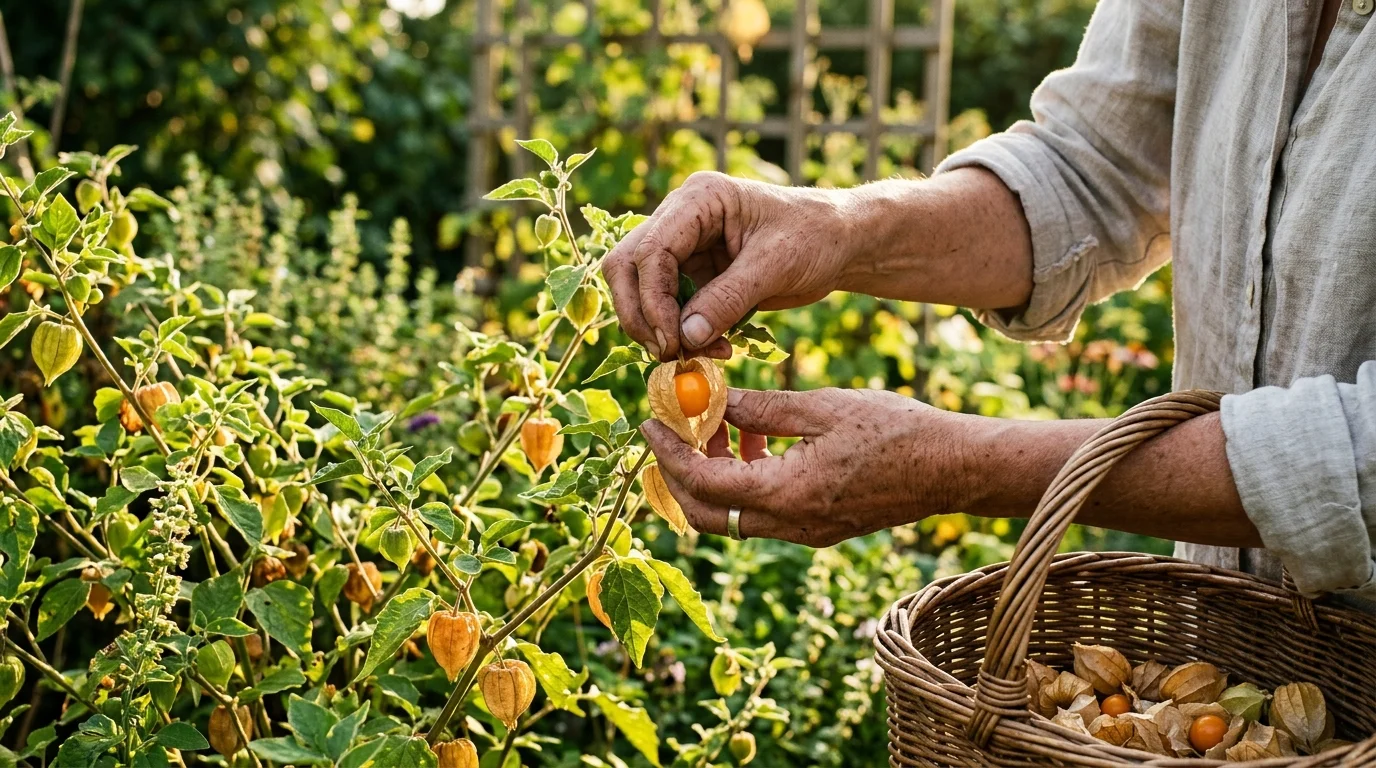
When to harvest
The reliable harvest signal is the husk, not the berry. Wait until the papery outer calyx has turned completely tan and feels dry and loose around the fruit inside. A ripe berry will be deep gold to orange in colour, firm but slightly yielding to gentle thumb pressure, and noticeably aromatic with a tropical, slightly sweet scent. GardenOracle’s cultivation notes confirm that Physalis peruviana fruit does not naturally drop from the plant when ripe in the way that ground cherries do, which gives growers more control over timing. Pick fruit by hand when the husk shows full tan colour. Any fruit with a green or partly green husk is unripe and, as covered in the previous section, contains solanine and should not be eaten.
EcoFarming Daily, drawing on Rutgers University field trial data, notes that one advantage of Physalis peruviana over its relative ground cherry is that ripe fruit stays on the plant without dropping, allowing growers to harvest on their own schedule rather than collecting from the ground.
Storage at room temperature
The husk functions as natural packaging. GardenOracle documents storage life of 30 to 45 days at room temperature when fruit is kept dry inside its intact brown husk. Keep harvested fruit in a single layer in a ventilated basket or paper bag in a cool, dry spot away from direct sunlight. Do not wash fruit before room temperature storage as moisture accelerates deterioration.
Refrigerated storage
Fruit kept with husks intact and refrigerated at 10 degrees Celsius stores for up to 20 days, according to a 2024 peer-reviewed study published in AIMS Agriculture and Food, which tested multiple storage conditions and temperatures for Physalis peruviana. For longer refrigerated storage with husks on, GardenOracle notes several months is achievable when kept dry. Once husks are removed and berries are stored directly in the refrigerator, consume within 7 to 10 days. PFAF Plant Database confirms that fruit stored carefully with the calyx intact can keep for three months or more, making golden berries one of the longer storing fresh fruits available to home growers.
Freezing and drying
For larger harvests, freeze husked berries in a single layer on a tray until solid, then transfer to a sealed bag. Frozen berries work well for jam, baking, and smoothies but lose their fresh texture after thawing. Drying is the most traditional preservation method. The Plants for a Future database notes that dried golden berry can be used as a raisin substitute, and commercially the dried fruit is often sold chocolate coated. A home dehydrator set to 55 degrees Celsius produces dried berries in 8 to 12 hours. Slice berries in half before drying to reduce time and improve texture.