

Most people picture oil pollution as a tanker spill in open ocean. The bigger and far more constant source is much less dramatic. It is the wastewater that pours out of refineries, manufacturing plants, restaurant kitchens, car wash bays, and oilfield operations every single day. The United States alone produces more than 34 billion gallons of wastewater daily, according to EPA data, and a significant share of that volume carries oil, grease, and petroleum byproducts that conventional treatment was never designed to fully remove.
Oily wastewater is considered one of the most hazardous categories of industrial effluent, and the reasons go well beyond what most people assume. It is not simply oil floating on water. It often carries dissolved hydrocarbons, heavy metals, and compounds capable of causing long term harm to soil, groundwater, and human health long after the visible oil sheen disappears.
This guide breaks down what oily wastewater actually is, why it causes the specific damage it does, and how industries are required to treat it before it reaches a drain, a river, or the ocean. It also covers the methods doing the heavy lifting behind the scenes, from simple gravity separation to advanced membrane technology, and what happens to the wastewater once treatment is complete.
What Oily Wastewater Actually Is and Where It Comes From
Oily wastewater is any water contaminated with oil, grease, or petroleum derived compounds, typically existing not as separate floating oil but as an emulsion where tiny oil droplets are dispersed throughout the water itself. This emulsified state is what makes it genuinely difficult to treat. Stabilizing agents, surfactants, and heat from industrial processes often hold these oil droplets in suspension, resisting the simple gravity separation that would otherwise let oil rise and water settle.
The list of industries producing this wastewater is far longer than most people expect. Oil refineries and petrochemical plants are the largest single source, and the scale is significant. Producing one tonne of refined oil generates between 0.5 and 3.5 tonnes of oily wastewater depending on whether the refinery processes domestic or foreign crude, according to research published in Advances in Environmental and Engineering Research. Refineries also use roughly 2.5 gallons of water for every gallon of crude oil processed, according to wastewater treatment industry data, almost all of which becomes contaminated in the process.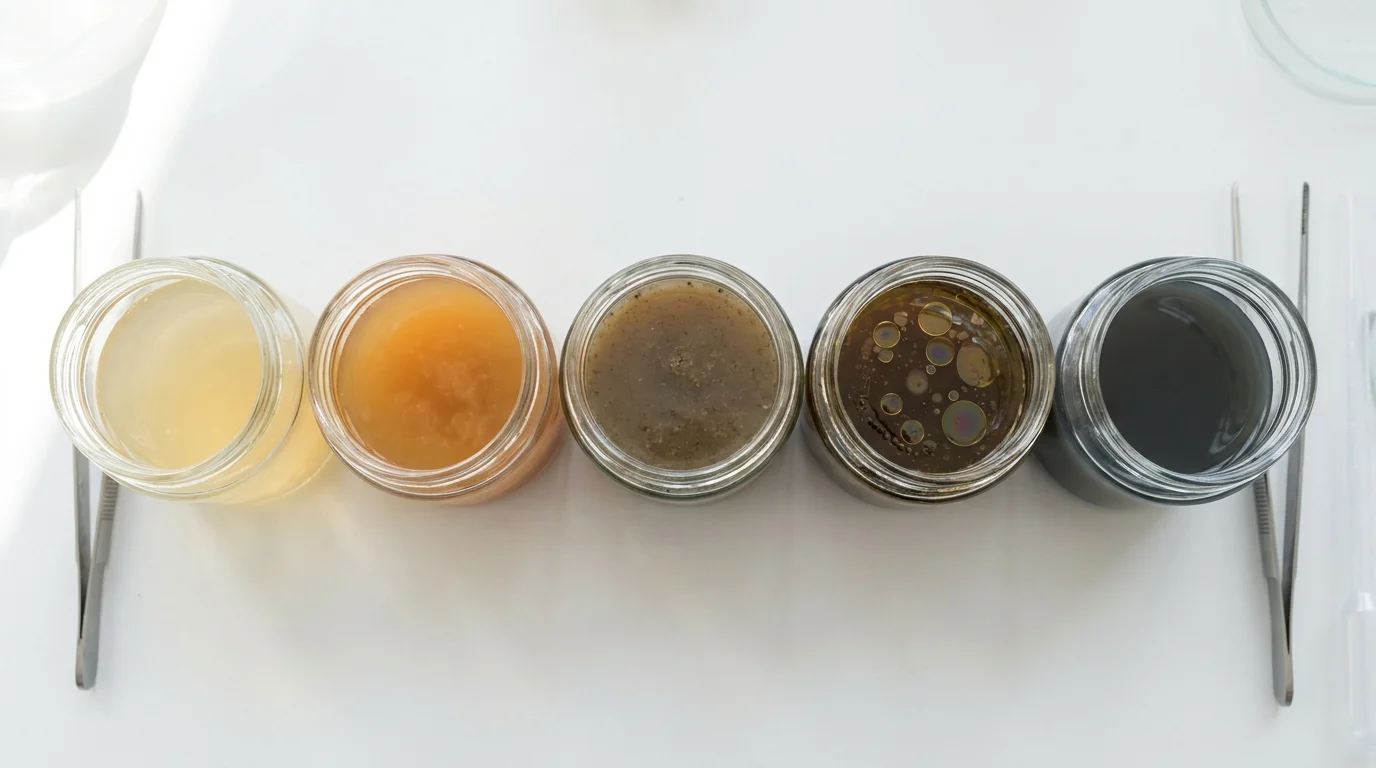
Beyond oil and gas, the source list extends into sectors most people never associate with oily discharge. Metal processing and steel mills generate oily wastewater from rolling mill lubricants and cooling fluids. Automotive manufacturing and vehicle maintenance shops produce it from motor oil residue and degreasing operations. Food and beverage processing plants discharge wastewater carrying cooking oils, animal fats, and cleaning residues. Restaurants and commercial kitchens contribute through cooking oil disposal and grease trap overflow. Car washes wash oil and road grease directly into drains. Even laundry facilities, paint and coating manufacturers, and leather tanneries generate their own oily waste streams.
What unites all of these sources is the underlying chemistry, not the industry. Whether the oil comes from a crude oil well or a deep fryer, it behaves the same way once it enters water: forming droplets that range from large enough to separate easily under gravity to microscopically emulsified droplets that pass straight through basic filtration. This range of droplet size and stability is exactly why treatment facilities rarely rely on one single method, a point covered in detail later in this guide.
Why Oily Wastewater Is Considered So Hazardous
Why is oily wastewater treated as such a serious hazard compared to other forms of pollution?
The reason comes down to a mechanism most people never think about: oil does not just float harmlessly on water. It physically blocks oxygen from entering the water column. A thin oil film on the surface of a treatment basin or natural waterbody can reduce oxygen transfer by up to 40 percent in heavily contaminated systems, according to industrial wastewater compliance data.
The chemistry behind this gets more specific. Oil and grease in wastewater dramatically raises Biochemical Oxygen Demand and Chemical Oxygen Demand, the two standard measurements regulators use to gauge how much oxygen a body of water will need to break down the pollution it contains. When oil and grease enter a biological treatment system above acceptable thresholds, they reduce biodegradation efficiency, cause sludge bulking from excess filamentous bacterial growth, and clog the biofilm carriers that treatment plants rely on to host the microorganisms doing the actual cleanup work.
This is precisely why regulators set such tight numerical limits. The US EPA Effluent Guidelines programme designated oil and grease as a regulated conventional pollutant under the Clean Water Act in 1979, and it now sets industry specific discharge limits across dozens of sectors including metal finishing, oil and gas extraction, and leather tanning. For metal finishing facilities specifically, direct dischargers face an average monthly limit of 26 milligrams per liter and a daily maximum of 52 milligrams per liter, with many permits additionally requiring that the water shows no visible oil sheen at all, regardless of whether it technically meets the numerical limit.
Beyond the oxygen and biological treatment problem, oily wastewater frequently carries dissolved heavy metals and persistent organic compounds that hitch a ride within the oil droplets themselves. These compounds do not break down through normal biological processes and can accumulate in sediment and aquatic tissue long after the visible contamination has cleared, which is the foundation of the human health and environmental damage covered in the following two sections.
How Oily Wastewater Affects Human Health
What does exposure to oily wastewater actually do to the human body?
The health concern centers on a group of compounds called polycyclic aromatic hydrocarbons, commonly shortened to PAHs, which form a core component of crude oil and petroleum byproducts. A systematic review published in Science of the Total Environment in February 2024 confirmed that PAHs have been proven highly carcinogenic to humans, with documented links to lung, bladder, skin, and kidney cancer across multiple population studies. The danger comes specifically from the chemical stability of these compounds. PAHs do not break down easily once they enter the human body, which allows them to accumulate in tissue over repeated exposure rather than passing through harmlessly.
Exposure does not require direct contact with industrial wastewater itself. Research published in ScienceDirect in March 2025 found that PAH contaminated water sources increase cancer risk through three separate routes, including drinking contaminated water, dermal contact during activities like swimming or irrigation work, and consumption of fish or seafood harvested from contaminated waterways. Communities living near rivers and waterways that receive industrial discharge face elevated exposure through all three pathways simultaneously, often without realizing the connection between nearby industrial activity and the water source they rely on daily.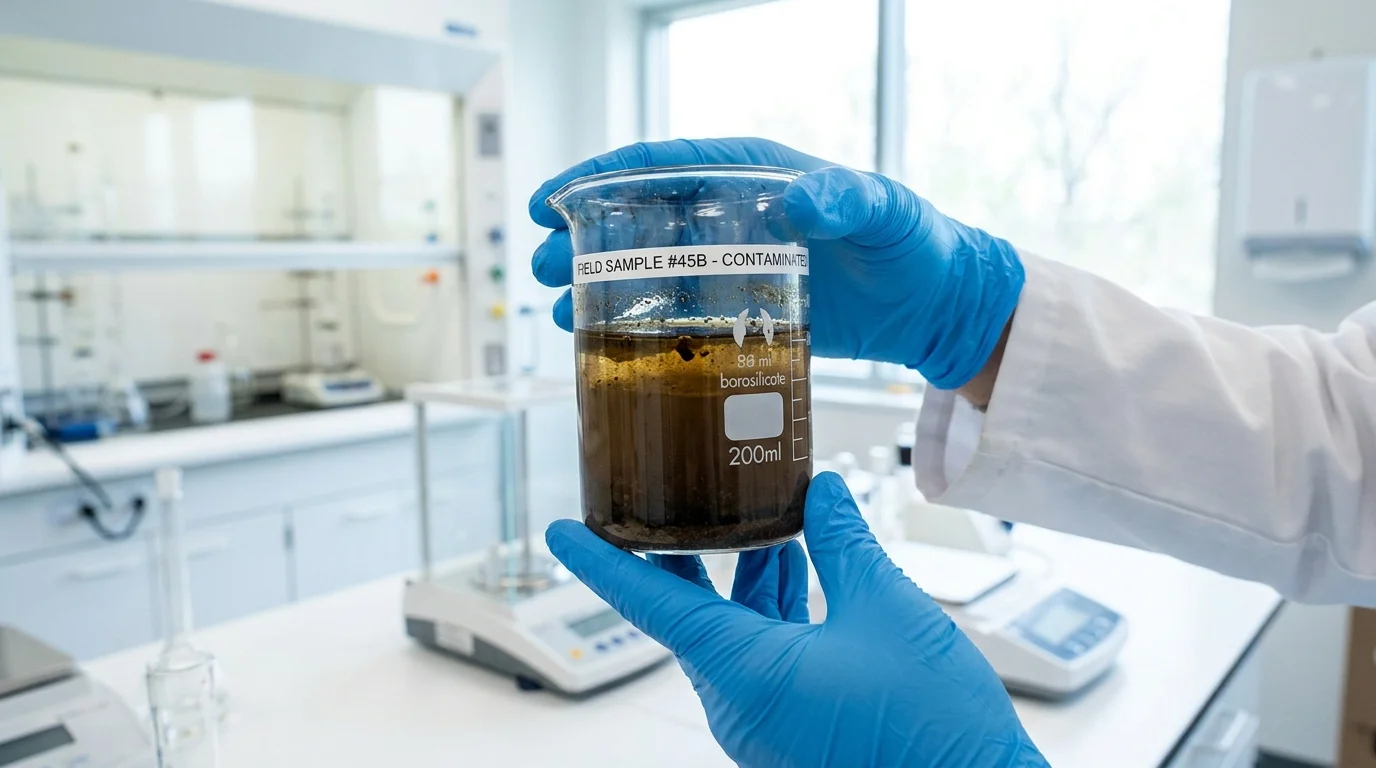
The concentration levels involved are significant from an industrial perspective. Produced water from oil and gas extraction operations, one of the largest sources of oily wastewater globally, has been documented carrying PAH concentrations ranging from 124 to 1,000 micrograms per liter according to research cited in recent water contamination studies. This is precisely why treatment before discharge matters so directly to public health, not just environmental compliance. Once these compounds enter a drinking water source or a waterway used for fishing and agriculture, removing them becomes vastly more difficult and expensive than preventing the contamination at the source.
Beyond cancer risk, PAHs are documented as teratogenic and mutagenic, meaning they can cause developmental harm and genetic mutation, and several studies identify children and other vulnerable populations as facing disproportionately higher risk from the same exposure levels that affect adults less severely.
How Oily Wastewater Damages the Environment
What specific environmental damage does oily wastewater cause once it enters a natural ecosystem?
The most immediate impact happens in the water itself. According to a review published in Applied Water Science through Springer Nature, high strength oily wastewater released into water bodies triggers excessive oxygen consumption by microorganisms breaking down the contamination, and once dissolved oxygen falls below 2 milligrams per liter, the result is mass death of aquatic organisms. This single mechanism explains why oily discharge events are frequently followed by visible fish kills and dead zones, even when the oil itself is never seen reaching the shoreline.
The damage extends well beyond open water. A 2025 review in ScienceDirect examining offshore oily wastewater pollution found that in the absence of adequate treatment, oil contaminated wastewater may infiltrate groundwater aquifers, resulting in prolonged environmental deterioration. Once contamination reaches groundwater, remediation becomes dramatically more difficult and expensive than treating the original wastewater stream, since aquifers can carry pollution across wide areas over years or decades.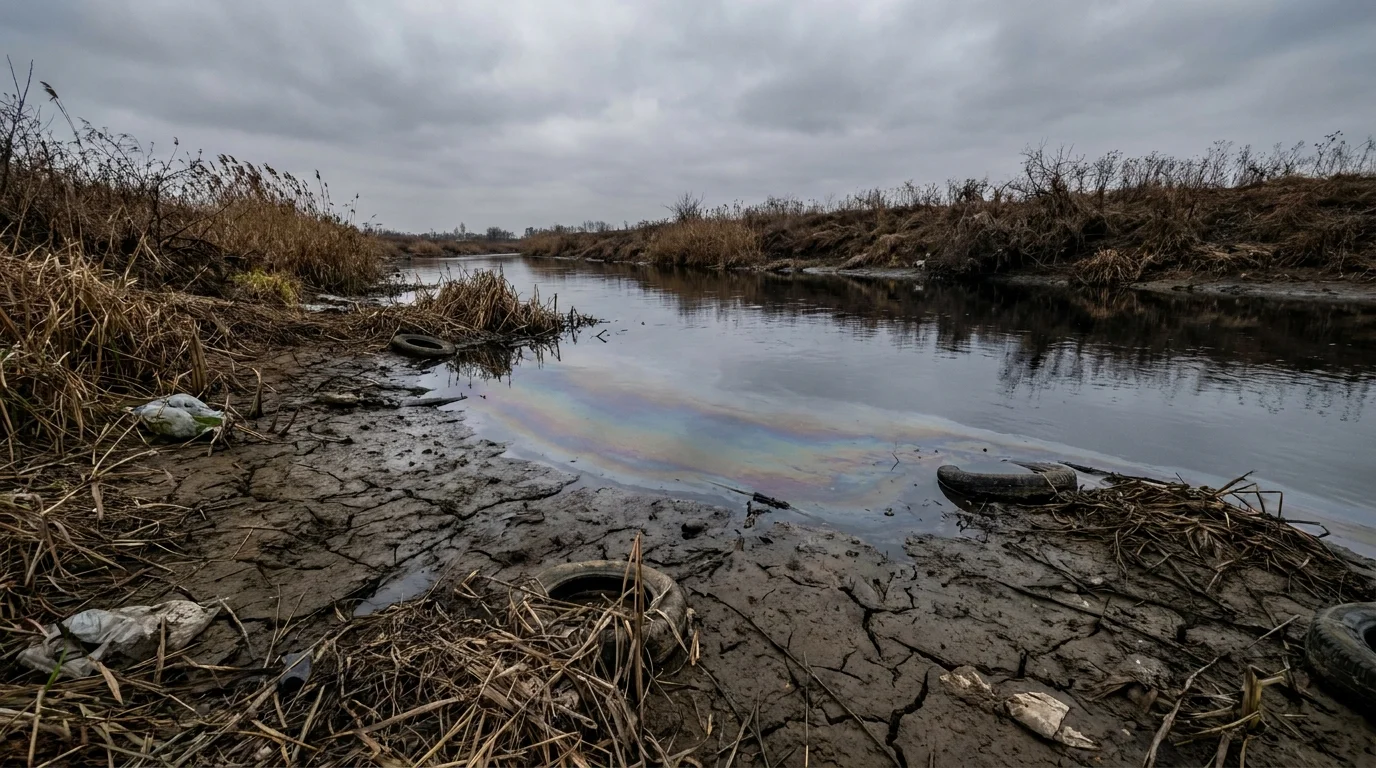
Soil and agricultural land face a separate set of consequences. The same Springer review documented that oily wastewater pollution can cause environmental degradation by impacting groundwater resources, crop output, and photosynthetic activity in plants, meaning the damage moves directly into the food supply chain rather than staying contained to the original discharge point. Heavy metals carried within the oil contamination accumulate in soil over repeated exposure, entering crops grown in that soil and eventually the food chain itself.
Marine and coastal ecosystems carry a distinct burden. The 2025 ScienceDirect review noted that offshore wastewater substantially adds to marine pollution, impacting biodiversity, altering aquatic ecosystems, and threatening fisheries and coastal livelihoods that communities depend on economically. Hydrocarbons and contaminants from oily discharge accumulate in marine organisms over time, a process that compounds with each additional discharge event rather than resetting between incidents.
What separates oily wastewater damage from many other pollution types is its persistence. Oil based contaminants resist natural biodegradation far longer than organic waste, meaning the environmental consequences from inadequately treated discharge can remain measurable in soil, sediment, and groundwater long after the source of pollution has stopped.
Expert Insight Note
One detail almost never explained is how regulators actually measure oil and grease in the first place, and it has real consequences. The standard method, hexane extractable material testing, does not distinguish between petroleum based oil and biological fats, waxes, or animal grease. A restaurant discharging cooking oil residue and a refinery discharging crude oil byproducts both get measured the same way and judged against the same numerical limit, even though the two contaminants behave completely differently in the environment and pose very different risks. This is part of why a single oil and grease number on a discharge permit can be misleading without knowing the actual source. There is a second, less obvious tradeoff worth understanding. Some of the most effective treatment methods for breaking up stubborn oil emulsions, particularly chemical coagulation and certain electrocoagulation processes, work by adding coagulant chemicals or generating metal ions that destabilise the emulsion. Done well, this is highly effective. Done poorly, or without proper sludge handling afterward, it can produce a secondary waste stream containing concentrated metals and chemical residues that is arguably more hazardous to dispose of than the original oily water was. Effective oil removal and genuinely safe disposal are not automatically the same outcome, which is exactly why sludge management gets its own dedicated attention in serious treatment facility design rather than being treated as an afterthought.
How Industrial Facilities Treat Oily Wastewater
How does a treatment plant actually process oily wastewater before it leaves the facility?
Most industrial facilities run their oily wastewater through four sequential stages, each designed to remove a different category of contamination that the previous stage could not handle. Preliminary treatment comes first and protects the rest of the system, removing large debris, grit, and solids through screening before they can damage downstream equipment.
Primary treatment is where the bulk of free floating oil actually leaves the water. Wastewater enters large settling tanks where the flow slows down significantly. Heavier solids sink and form sludge, while lighter materials, specifically oil and grease, rise to the surface where mechanical skimmers physically remove them. According to research published through Paques, this stage alone typically removes 50 to 60 percent of suspended solids, though the water still carries dissolved pollutants that primary treatment cannot touch.
Secondary treatment shifts from physical separation to biology. Beneficial bacteria are introduced into aeration tanks where they consume the dissolved organic matter that survived primary treatment, significantly reducing the Biochemical Oxygen Demand discussed earlier in this guide. This is also the stage most vulnerable to failure if oil and grease levels entering from primary treatment are still too high, since excess oil coats and damages the biological systems doing the work.
Tertiary treatment is the final polish. Filtration, advanced oxidation, and technologies like reverse osmosis or activated carbon adsorption remove the finer pollutants and specific contaminants that biological treatment cannot fully eliminate. Disinfection through chlorination, UV sterilisation, or ozone treatment typically follows, ensuring the water leaving the facility is free of pathogens before discharge or reuse.
The Main Methods Used to Treat Oily Wastewater
Which specific methods do treatment facilities rely on to actually separate oil from water, and how do they differ?
Gravity separation is the oldest and most fundamental method, exploiting the simple density difference between oil and water. Oil naturally rises to the surface where it can be skimmed off, and designs like lamella and tube separators improve this process by increasing the surface area available for separation. The limitation is significant. Gravity separation works well on free floating oil but cannot touch emulsified droplets smaller than roughly 10 micrometers, which is precisely the size range that causes the most persistent contamination.
Dissolved air flotation, often shortened to DAF, addresses part of that gap. Fine air bubbles are injected into the wastewater, and oil droplets attach to these bubbles and rise to the surface faster than gravity alone would allow. Hydrocyclones offer another physical option, using spiral fluid motion to separate oil from water based on density differences without any chemical input.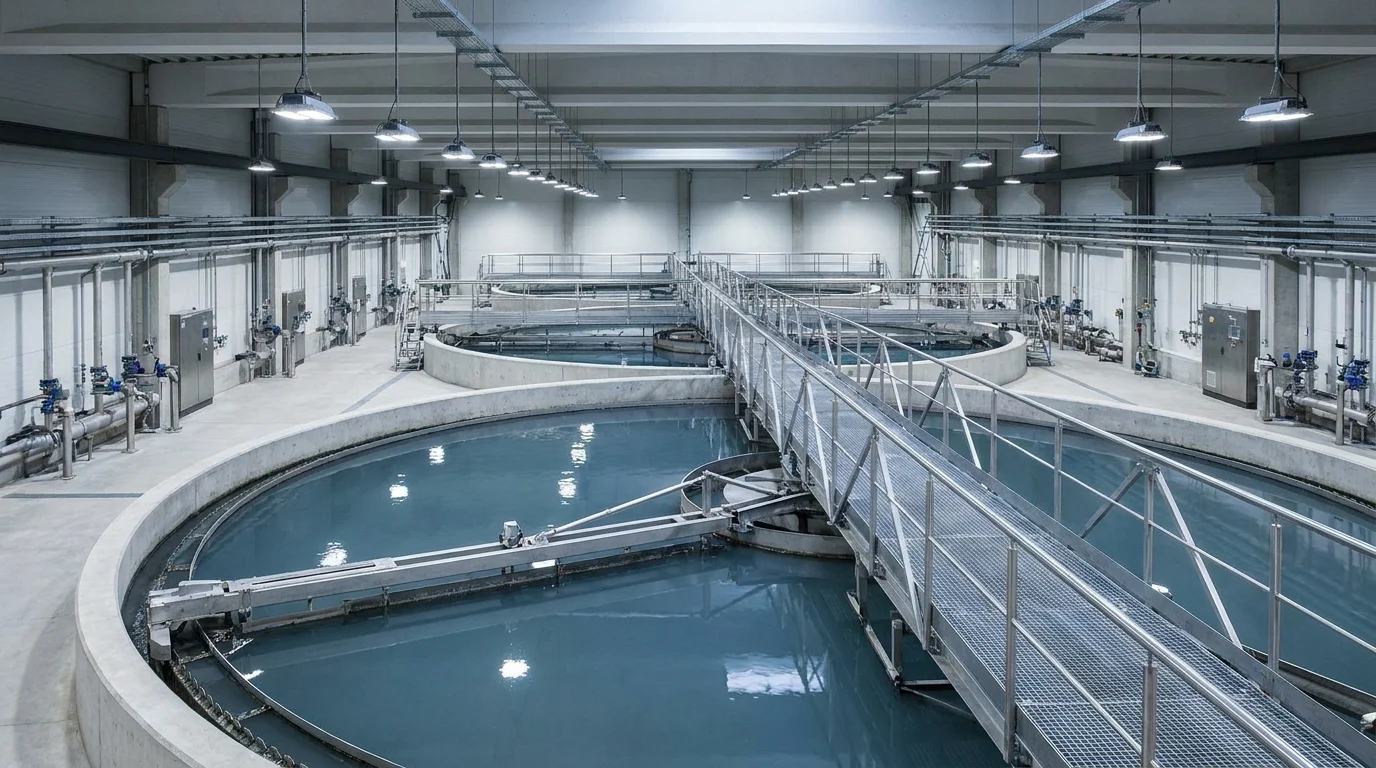
Electrocoagulation has emerged as one of the more effective methods for genuinely stubborn emulsified oil. A 2024 review published in ScienceDirect describes the process as using coagulation, oxidation, and flotation together to separate oil from water, while simultaneously removing metals, nutrients, turbidity, and color from the same wastewater stream. A separate 2026 Springer Nature review notes that electrocoagulation offers real advantages including ease of operation, minimal chemical usage, and small sludge production, though it does face challenges with electrode degradation and energy consumption that require ongoing optimisation.
Membrane filtration, including ultrafiltration, is widely regarded as the most efficient overall approach for the hardest to treat oily wastewater. According to research published in PMC in late 2024, membrane technology works through selective wettability, meaning the membrane surface is engineered to be hydrophilic and oil repelling, so water passes through while oil droplets are physically blocked. This is particularly significant for emulsified oil that traditional gravity separation methods cannot capture. A separate study confirms membrane technology can remove oil droplets smaller than 10 micrometers, directly closing the gap that gravity separation leaves open. The tradeoff is membrane fouling over time, which is why many modern facilities operate hybrid systems that combine gravity separation as a first pass with membrane filtration as a final polishing step.
In practice, virtually no facility relies on a single method. The most common real world setup, confirmed across multiple 2024 and 2025 academic reviews, follows oil and grease removal through primary gravity separation, secondary treatment using electrocoagulation or dissolved air flotation to target emulsified oil, and a tertiary membrane or advanced oxidation step to capture whatever remains before the water meets discharge standards.
How Treated Oily Wastewater Is Disposed Of or Reused
Once oily wastewater has been treated, what actually happens to it next?
The destination depends entirely on how thoroughly the water has been treated. The minimum standard route is direct discharge to surface water under a permit, where treated effluent must meet the numerical limits set by the EPA Effluent Guidelines programme under the Clean Water Act before it can legally enter a river, lake, or ocean outfall. These limits are technology based, meaning they reflect what the best available treatment technology can realistically achieve for that specific industry, rather than being set purely on environmental risk.
A growing share of treated oily wastewater never reaches a discharge point at all. According to the American Society of Civil Engineers, publicly owned treatment works in the United States process 34 billion gallons of wastewater daily, and a meaningful portion of that volume is now being redirected toward reuse rather than discharge. Treated water that meets the right quality threshold can be used for industrial process water within the same facility, agricultural and landscape irrigation, toilet flushing in commercial buildings, and in some cases groundwater recharge, where treated water is deliberately returned to aquifers to replenish supply.
The oil and gas sector has its own emerging reuse pathway specifically for produced water, the heavily oily wastewater generated during extraction. The New Mexico Environment Department proposed regulations in 2024 allowing produced water to be reused in approved projects, provided there is no discharge to surface or groundwater, reflecting a broader regulatory shift toward treating this wastewater stream as a resource rather than pure waste requiring disposal.
The strictest reuse category, direct potable reuse, where treated wastewater becomes drinking water, remains tightly controlled. California adopted formal direct potable reuse regulations in 2024, becoming only the second US state after Colorado to do so. This level of reuse requires treatment far beyond what oily wastewater typically receives, since it must remove not just oil and grease but every trace contaminant to drinking water standards.
For facilities that cannot economically reach reuse grade quality, sludge generated during treatment still requires careful handling. According to 2025 European regulatory analysis, limited land availability and tightening restrictions on agricultural sludge application are pushing facilities toward onsite treatment and disposal solutions rather than the traditional practice of hauling sludge to land application sites.
What ties all of these pathways together is a clear regulatory direction. Whether water is discharged, reused, or processed as sludge, the standards governing each route are tightening steadily, and facilities investing in better treatment upfront are increasingly finding that reuse options open doors that simple discharge compliance does not.