

What is Carbon Monoxide?
Carbon monoxide (CO) is a poisonous, colorless, odorless, tasteless, and non-irritating gas. Because we can’t see or smell it, it’s often called a “silent killer.” Scientifically, it’s made up of one carbon atom and one oxygen atom. Despite its simple structure, CO is highly toxic to humans and animals.
When inhaled, carbon monoxide enters the bloodstream and binds with hemoglobin, the molecule in red blood cells that carries oxygen. Unfortunately, hemoglobin has a much stronger attraction to carbon monoxide than to oxygen, about 200 to 250 times stronger. This means even small amounts of CO can block oxygen from reaching vital organs like the heart and brain. The result can be serious tissue damage, unconsciousness, or even death.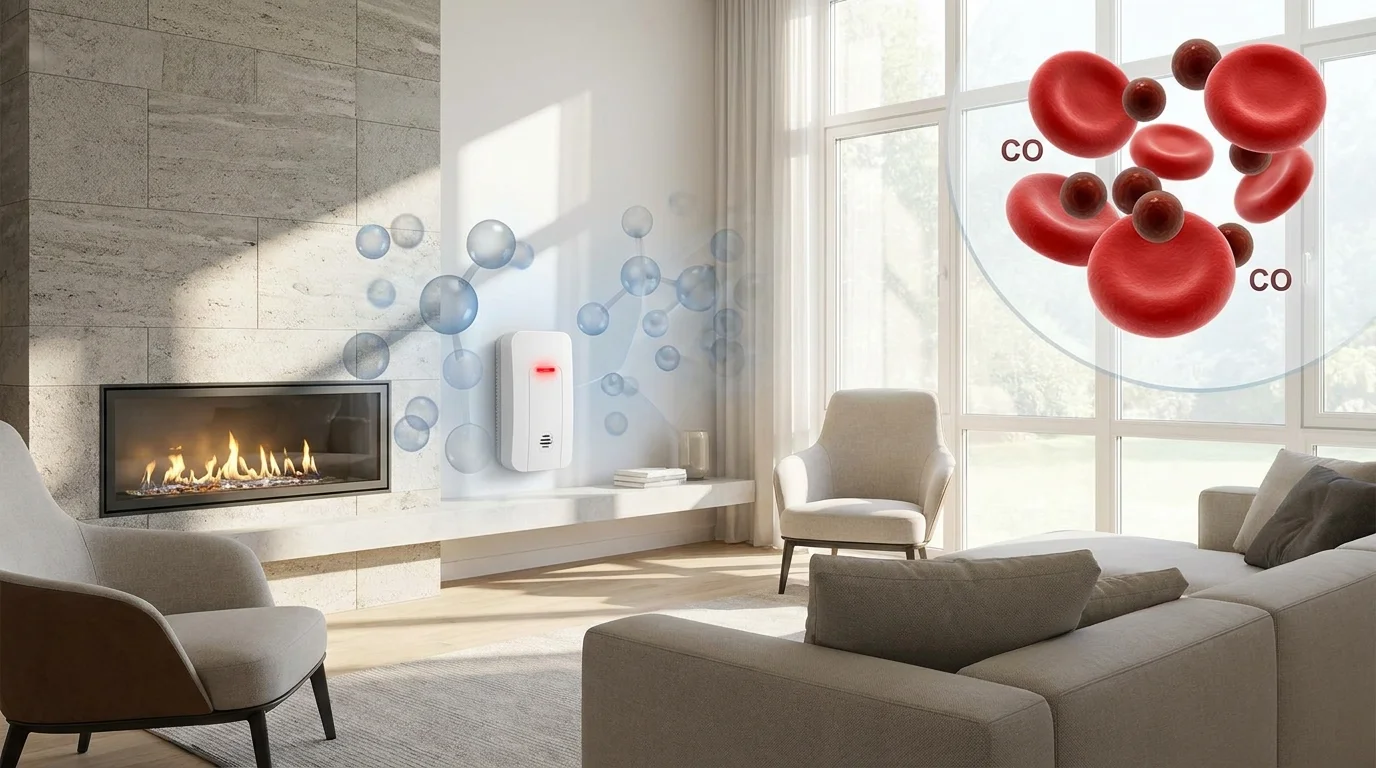
What Causes Carbon Monoxide?
Carbon monoxide is produced by incomplete combustion, a process where carbon-containing fuels don’t burn fully due to limited oxygen. Think of it like trying to light a campfire, but the wood is damp or the flame is choked. Instead of cleanly turning into carbon dioxide (CO₂), the fuel partially burns and releases carbon monoxide.
Main sources and causes of Carbon Monoxide
1. Household Appliances
Gas stoves, water heaters, furnaces, and fireplaces that burn natural gas, oil, wood, or coal can produce CO if they are not properly vented or maintained.
A blocked chimney can cause CO to build up inside the home instead of escaping outside.
2. Vehicles and Engines
Running car engines in enclosed spaces (like garages) is a major cause. CO can build up quickly without fresh air.
Generators, lawnmowers, and portable heaters powered by gasoline or diesel also emit CO, especially when used indoors or in poorly ventilated areas.
3. Fires and Tobacco Smoke
House fires release a mix of gases, including carbon monoxide.
Cigarette smoke also contains CO, and this is one reason why smokers have lower oxygen levels in their blood.
4. Industrial and Occupational Sources
Factories, welding operations, and metal processing plants can emit CO if safety controls are lacking.
Underground parking garages and tunnels can accumulate CO from multiple vehicles.
5. Natural Sources
While most CO comes from human activities, there are also natural sources, such as:
Volcanic eruptions
Wildfires
Photochemical reactions in the atmosphere involving methane and other hydrocarbons 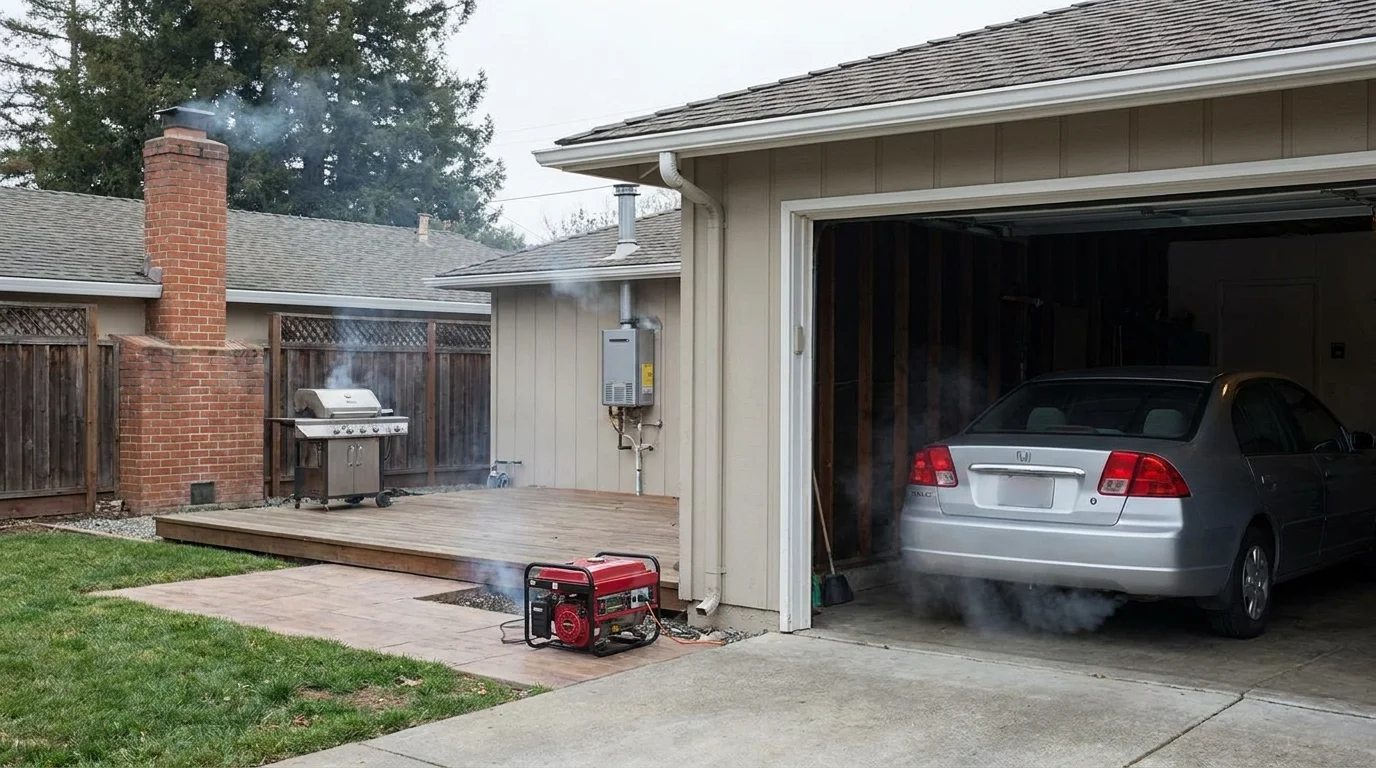
Can Air Conditioner Produce Carbon Monoxide?
This is an important question, especially for people concerned about indoor air safety. The short answer is:
No, typical air conditioners do not produce carbon monoxide. However, under certain circumstances, related systems in your home can be involved in carbon monoxide risks, especially when people confuse different types of heating and cooling units.
Let’s break it down clearly and thoroughly.
What Does an Air Conditioner Actually Do?
An air conditioner (AC) is a cooling appliance, not a heating or fuel-burning system. Most modern air conditioners work by using electricity to transfer heat from inside your home to the outside. They do not burn any fuel. This means:
Electric-powered air conditioners (like window units, split ACs, or central cooling systems) do NOT produce carbon monoxide.
They simply move heat using refrigerants and fans. There’s no combustion involved at all.
So, Where Does the Confusion Come From?
The confusion usually arises in homes that use combined HVAC systems (Heating, Ventilation, and Air Conditioning), or gas-powered furnaces alongside air conditioning. Here’s how:
1. Gas Furnaces or Boilers
If your HVAC system includes a furnace or boiler that runs on natural gas, propane, or oil, then that part of the system can produce carbon monoxide if it’s:
Poorly ventilated
Not maintained properly
Damaged or leaking
If this system shares air ducts with your air conditioning unit, people may think the AC is causing the problem, when in fact, it’s the heating part.
2. Portable Generators or AC Units in Emergency Use
During power outages, people sometimes use gasoline-powered generators to run portable AC units. Running these generators indoors or near windows can cause deadly levels of CO to enter the home, even if the AC itself is not the source.
| Type of AC | Fuel Combustion? | Can Produce CO? | Notes |
|---|---|---|---|
| Window AC unit | No | ❌ No | Powered by electricity |
| Split AC system | No | ❌ No | No combustion involved |
| Central AC (electric) | No | ❌ No | Safe if electric |
| HVAC with gas furnace (combined) | Yes | ✅ Possible | CO risk from furnace, not AC |
| Portable AC run via gas generator | Yes (generator) | ✅ Possible | Risk from generator exhaust |
How to Reduce Carbon Monoxide Exposure: A Practical and Scientific Approach
Carbon monoxide (CO) is a silent and invisible threat. It is a colorless, odorless, and tasteless gas produced by the incomplete combustion of fuels such as gas, wood, coal, oil, or charcoal. Because of its stealthy nature and its ability to cause serious health issues, including brain damage and death, preventing and reducing carbon monoxide exposure is not just wise, but essential for public health and household safety.
Let’s explore this in a way that makes sense both scientifically and practically.
Why Is Carbon Monoxide Dangerous?
When inhaled, carbon monoxide binds to hemoglobin in our red blood cells with an affinity over 200 times stronger than oxygen. This means it displaces oxygen in the blood, starving vital organs like the heart and brain.
Symptoms of exposure include:
Headaches
Dizziness
Nausea
Confusion
Chest pain
Loss of consciousness
In severe cases, death
Even low-level exposure over a long period can harm vulnerable individuals such as infants, elderly people, and those with heart or respiratory conditions.
How to Reduce Exposure: Step-by-Step
1. Install Carbon Monoxide Detectors
Think of these like smoke detectors, but for CO.
Place detectors on every floor of your home, especially outside bedrooms.
Make sure they are battery-powered or have battery backup in case of a power outage.
Test them once a month, and replace batteries twice a year.
Replace the entire detector unit every 5 to 7 years (as recommended by the manufacturer).
2. Maintain Fuel-Burning Appliances
CO is produced when fuel doesn’t burn completely. That’s why regular inspection and maintenance of such appliances is crucial.
This includes:
Gas stoves and ovens
Furnaces and boilers
Water heaters
Fireplaces and wood stoves
Dryers with gas connections
Have these systems inspected annually by a qualified technician.
3. Ventilation Matters
“Where there’s smoke, there should be an exit.”
Ensure that chimneys, flues, and vents are clear and not blocked by debris, nests, or snow.
Never block air vents or exhaust systems in heating or cooking areas.
Use range hoods or open windows when using gas stoves for long periods.
4. Be Cautious with Engines and Generators
Internal combustion engines, such as those in vehicles, generators, or power tools, are major CO producers.
Do NOT:
Run your car or motorcycle in a garage, even with the door open.
Use portable generators indoors, in basements, or near windows and doors.
Use gas-powered tools (like pressure washers or lawnmowers) indoors or in semi-enclosed spaces.
Always run these devices outdoors and far from windows.
5. Never Use Improper Heating Indoors
During power outages or cold weather, some people use emergency heating methods, often with deadly consequences.
Avoid using:
Charcoal grills, camping stoves, or propane heaters inside homes or tents.
Oven or gas stove as a heat source.
These devices are not meant for indoor heating and produce significant CO.
6. Educate Your Household
Prevention begins with awareness.
Make sure everyone in your home knows the signs of CO poisoning and what to do if the alarm goes off.
Teach children and elderly family members how to respond to an alarm: get out, get fresh air, and call emergency services.
7. Use Appliances for Their Intended Purpose
Do not leave your car running while parked in an attached garage.
Do not operate fuel-burning appliances longer than necessary.
Always follow manufacturer instructions for safe usage and ventilation.
8. Monitor Indoor Air Quality in High-Risk Settings
For workplaces or commercial buildings where fuel combustion occurs (factories, garages, warehouses):
Install commercial-grade CO monitoring systems.
Ensure adequate exhaust ventilation.
Provide safety training for employees working with combustion equipment.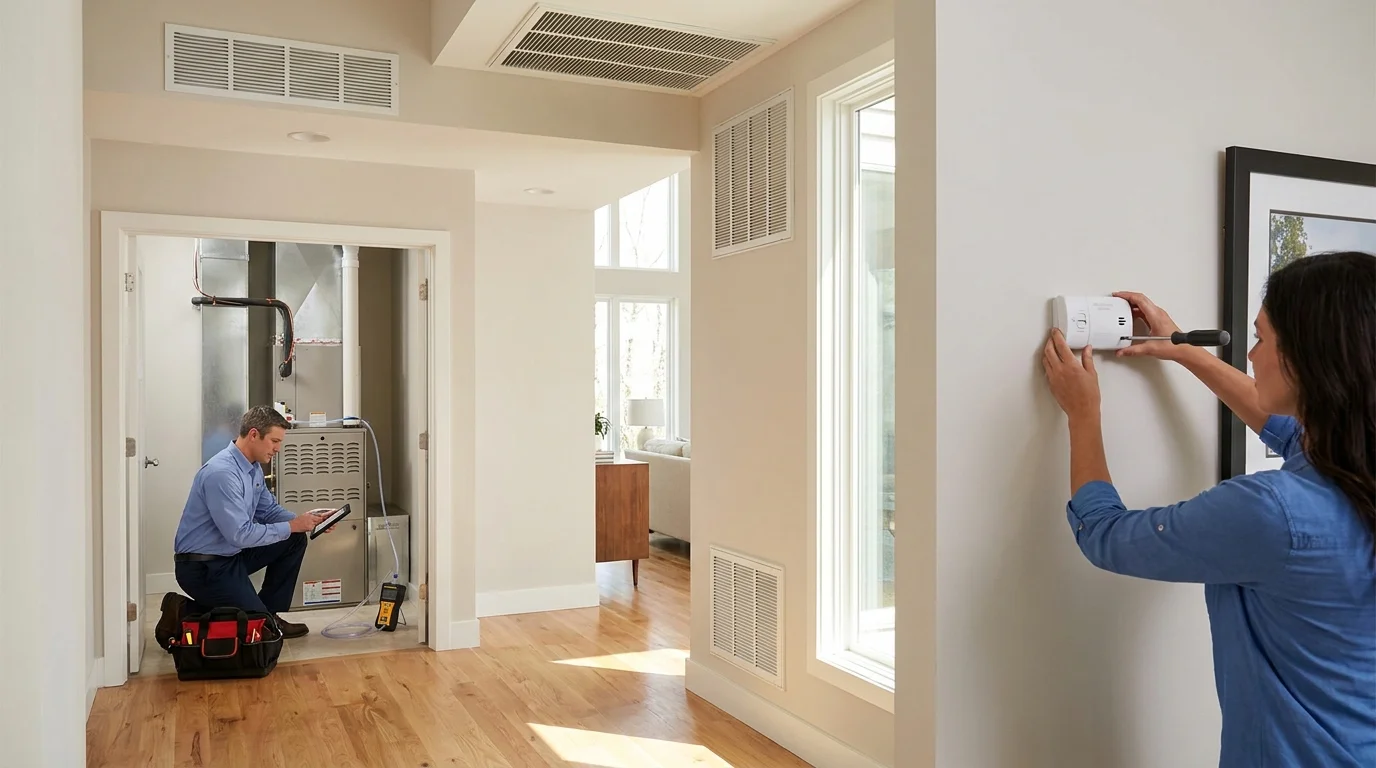
Quick Summary: Key Preventive Actions
| Action | Purpose |
|---|---|
| Install CO Detectors | Early warning of gas presence |
| Maintain Appliances | Prevent incomplete combustion |
| Ventilate Properly | Let CO escape outdoors |
| Use Engines Outdoors | Avoid enclosed buildup |
| Educate Family | Ensure quick and safe response |
| Avoid Improper Heating | Prevent unsafe combustion indoors |