
Grass under trees is one of the most frustrating lawn problems a homeowner can face. You seed it, water it, fertilise it, and it still thins out or dies. The problem is not your effort. The problem is that most people treat shaded grass the same way they treat open lawn grass, and those are two completely different growing situations.
The short answer to whether grass can grow under trees is yes, but only when you match the grass variety to the shade level, fix the soil properly, and understand what the specific tree above is doing to the ground below. A pine tree creates different soil conditions than an oak. A walnut tree creates conditions that most grass varieties cannot survive at all. Getting this right starts with knowing your tree, not just your grass.
This article covers everything you need to make grass grow under your trees and stay healthy through the seasons, including the one thing almost every other guide skips: how each tree type changes the problem you are actually trying to solve.
Why Grass Fails Under Trees
Three forces work against grass under trees, and shade is only one of them. Most homeowners focus entirely on sunlight and miss the other two, which is why their grass keeps failing even after they switch to a shade-tolerant seed mix.
Root competition is often more damaging than shade. Tree roots spread well beyond the visible canopy edge, sometimes two to three times the width of the tree above ground. These roots run at the same depth as grass roots and pull water and nutrients from the soil far faster than grass can access them. A single mature oak tree absorbs several hundred litres of water on a hot day, leaving almost nothing in the upper soil layer for turf.
Soil chemistry is the third factor almost nobody mentions. Leaf litter from different tree species breaks down in ways that gradually change the soil pH over years. Pine needles push soil acidic over time. Oak tannins do the same more slowly. When soil pH drops below 6.0, grass cannot absorb nitrogen properly even when the nutrient is physically present in the soil. Fertilising acidic soil is like pouring water into a leaking bucket. The grass looks weak, the homeowner adds more fertiliser, and nothing changes because the chemistry is wrong, not the nutrient level. Understanding all three forces together is what separates a lawn that eventually works from one that gets replanted every spring with the same result.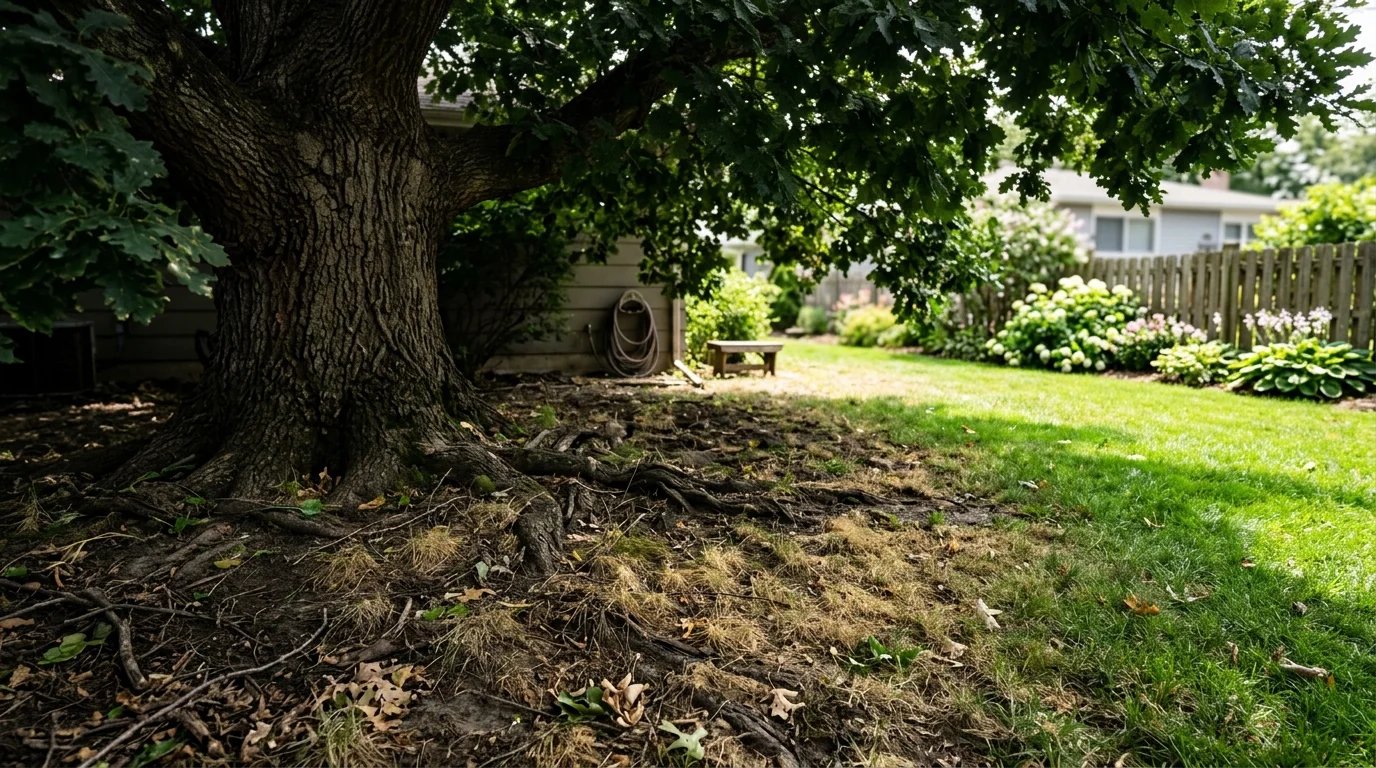
How Each Tree Type Changes the Problem
This is the section most grass guides skip entirely, and it is the most useful information you can have. The species of tree above your struggling lawn determines almost everything about what solution will work.
Oak trees create dense canopy shade that blocks 70 to 90 percent of available sunlight from reaching the ground underneath. Their leaf litter decomposes slowly and releases tannins into the soil, gradually lowering pH over several years. Grass under oaks tends to thin slowly and steadily rather than dying in one season, which makes the tree connection easy to miss. By the time the lawn looks truly bad, the soil chemistry has usually been building toward that point for years.
Pine trees drop needles continuously throughout the year. Accumulated pine needles are acidic, and in areas with established pine trees, the soil pH directly under the canopy can fall well below 5.5 over time. At that level, most grass varieties cannot absorb phosphorus or nitrogen regardless of how much fertiliser is applied. Grass under pines often looks yellow and weak rather than patchy and dead, which is the characteristic sign of nutrient lockout from acidic soil rather than simple shade stress.
Black walnut trees produce a natural chemical called juglone from their roots, decomposing leaves, husks, and bark. Juglone is toxic to many plant species and kills most common grass varieties when it accumulates in the soil at sufficient concentrations. If you have a black walnut tree and a circle of bare or dying ground beneath it, juglone is almost certainly the reason. Standard shade advice and shade-tolerant grass varieties will not solve a juglone problem. Only a small number of grass types show any tolerance to this chemical, and even those struggle in heavy concentrations directly under the canopy.
Maple trees create a different set of challenges. Their root systems are notoriously shallow and spread across the top layer of soil rather than growing downward. These surface roots compete aggressively with grass and often push through the soil surface as the tree ages, making mowing difficult and the soil underneath nearly impossible to work. Maples also cast wide, dense shade from their broad canopies. The combination of surface root competition and low light makes mature maples one of the hardest trees under which to establish a lawn that actually lasts.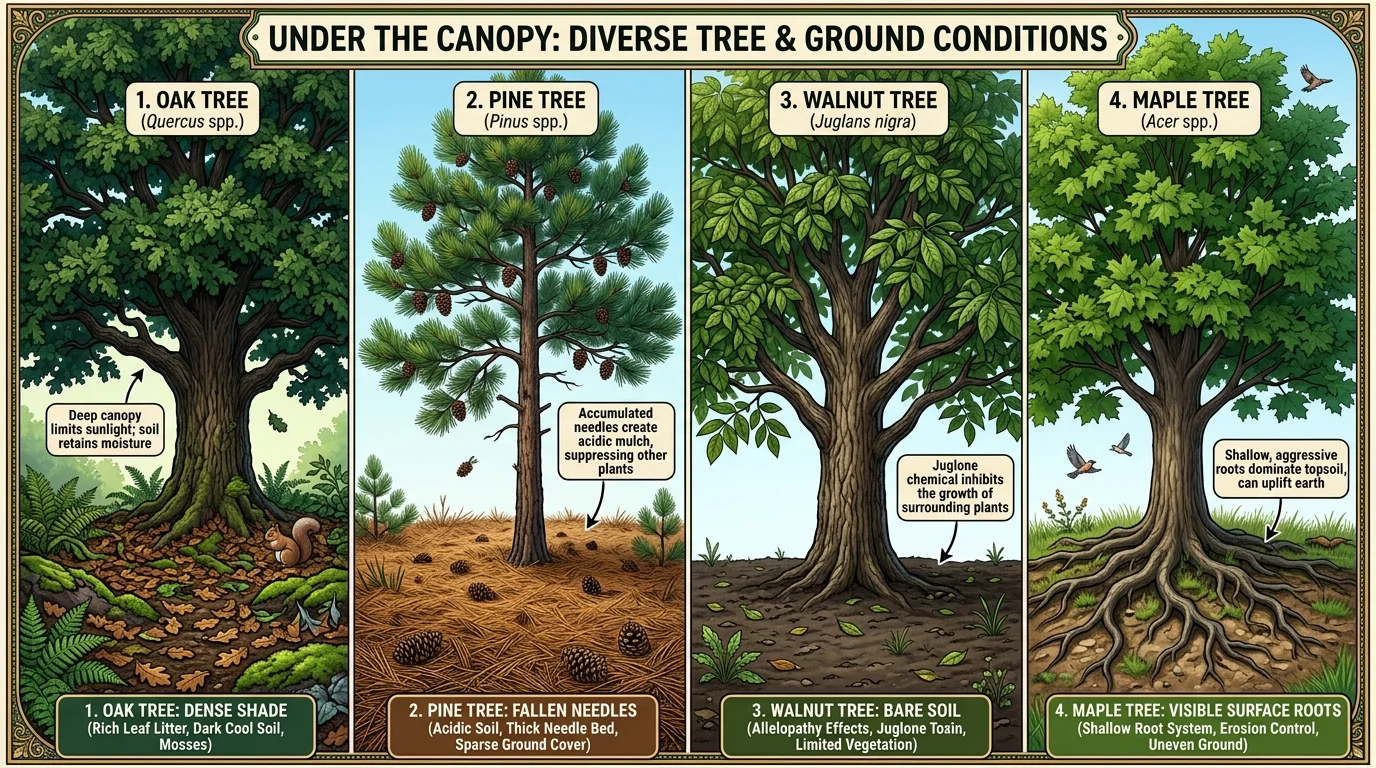
Choosing the Right Grass for Shaded Areas
Picking a shade-tolerant variety is not optional. Planting a sun-loving grass and hoping it adapts is one of the most common reasons this project fails repeatedly. Grass produces its food through photosynthesis, and any variety that needs six or more hours of direct sun to do that properly will always thin out and eventually die in significant shade, regardless of how well you manage everything else.
For cool-season regions, fine fescues are the strongest performers. Creeping red fescue, hard fescue, and chewings fescue all survive on three to four hours of filtered light per day. They grow slowly, which is actually an advantage under trees because slow growth means less water demand and less competition with tree roots. Fine fescues also tolerate the dry, slightly acidic soil conditions that develop under most deciduous trees better than Kentucky bluegrass or perennial ryegrass.
For warm-season regions, St. Augustine grass has the best shade tolerance of the common warm-season varieties. Certain cultivars like Palmetto and Seville perform noticeably better in shade than others. Zoysia grass handles partial shade reasonably well but struggles in deep shade. Bermuda grass, despite being very popular in warm climates, is one of the worst choices for shaded areas and will thin rapidly under any significant tree canopy regardless of how well the rest of the lawn management is done.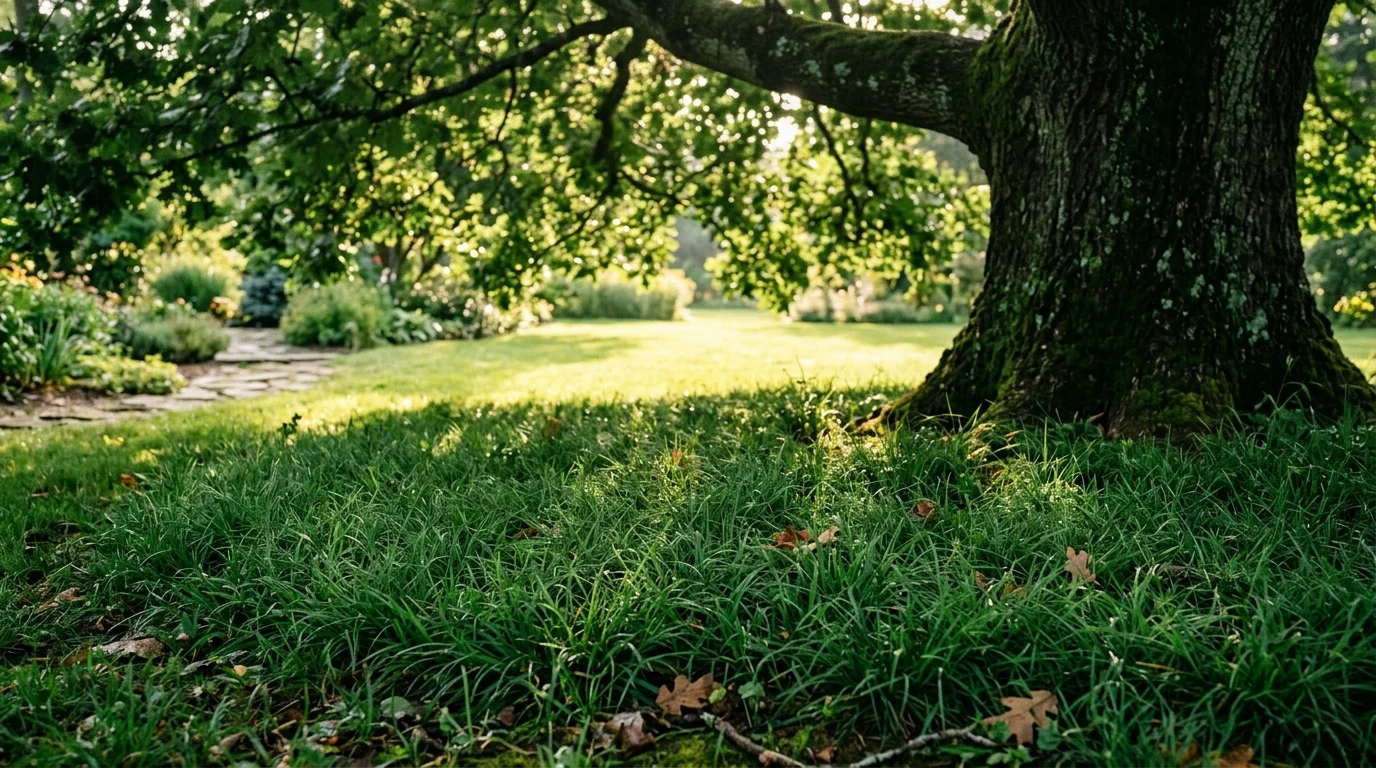
For black walnut situations specifically, tall fescue shows more consistent tolerance for juglone than other grass varieties. It will not thrive directly under a heavy juglone zone, but it survives better on the outer edges of the affected area than fine fescues or bluegrass.
Most homeowners test soil pH once in the open areas of their lawn, find it acceptable, and assume the whole property is the same. Soil pH directly under a mature pine or oak canopy can be 0.5 to 1.0 units lower than the pH just five metres away in the open lawn. That difference is enough to lock out nitrogen and phosphorus completely. Grass fertilised at normal rates in acidic soil under a tree will show almost no response because the nutrients are chemically unavailable for uptake. Always take a separate soil sample from directly under the tree canopy before diagnosing a grass problem there. The fix is lime, not more fertiliser.
How to Fix the Soil Before You Plant Anything
Soil preparation under trees is genuinely different from standard lawn preparation, and skipping it is the most common reason second and third planting attempts fail just like the first. The goal is not to fight the tree. The goal is to change the soil conditions enough that grass can survive alongside it.
Start with a soil pH test taken specifically from the shaded area under the canopy. Do not use a reading from the open lawn. If pH is below 6.0, apply garden lime at the rate your test results recommend for your soil type. Lime raises pH gradually over several weeks, so apply it four to six weeks before seeding if possible. According to guidance from the University of Minnesota Extension, a pH between 6.0 and 7.0 gives cool-season grasses the best access to the nutrients already present in the soil.
Aerate the soil before seeding. Compaction is severe under established trees for two reasons. Surface roots reduce the natural pore structure of the soil, and foot traffic in shaded areas tends to be concentrated because people walk the same paths repeatedly in those spots. Core aeration pulls small plugs from the soil, which improves water movement and gives grass seed better contact with the ground when sowing. Running the aerator in two different directions produces better results than a single pass.
Add a thin layer of compost, no more than one centimetre deep, after aerating. Compost improves moisture retention, adds organic matter, and helps moderate soil pH over time. Do not add thick layers of topsoil over surface tree roots. Adding more than two to three centimetres of soil over shallow roots reduces oxygen supply to the root system and can cause long-term damage to the tree. This applies especially under maple and beech trees where surface roots are most exposed.
The Right Way to Seed Grass Under Trees
Timing is more important under trees than in any other part of the lawn. For cool-season grasses, late summer to early autumn is the best window. Soil temperatures are still warm enough for germination but air temperatures are dropping, which reduces heat stress on young seedlings. Autumn seeding also means the new grass spends its first weeks competing with tree roots during a period when the tree is slowing down before dormancy, which gives the grass a slightly better chance to establish before the following summer.
Spring seeding works as a second option but carries more risk. Young grass planted in spring must compete with peak tree root activity, increasing temperatures, and higher water demand all at once before it has developed deep enough roots to survive summer stress. Many spring plantings under trees look acceptable in May and then collapse in July for exactly this reason.
Seed at one and a half times the normal rate shown on the package. Germination rates under shade are lower because seedlings depend on light to build their initial energy reserves. A higher seeding rate compensates for the lower percentage that makes it through and gives you enough surviving plants to form a usable turf cover. After sowing, keep the seedbed consistently moist for the first three weeks by watering lightly and frequently rather than deeply and infrequently.
What Most People Get Wrong About Mowing Shaded Grass
This is where many homeowners undo all the preparation work they did. Shade-grown grass is mowed at the same height as the rest of the lawn, and that single habit is enough to kill it over time.
Grass growing in shade needs more leaf surface area than open lawn grass to capture the limited light available for photosynthesis. Cutting it short removes the very part of the plant it depends on for energy. Shaded grass cut too low essentially starves itself. Raise your mowing height by at least two to three centimetres in shaded areas compared to your standard lawn height. For fine fescue varieties, this means mowing at eight to ten centimetres rather than five or six. For St. Augustine grass in warm climates, maintain ten to twelve centimetres under tree canopies.
Fertilise shaded areas separately from the rest of the lawn and use less nitrogen. High nitrogen fertilisation stimulates rapid leafy growth that a shade-stressed plant cannot sustain without adequate photosynthesis. A slow-release fertiliser applied at half the standard rate in spring and again in early autumn gives the grass enough nutrition to stay healthy without pushing growth the plant cannot support.
Remove fallen leaves promptly in autumn. A thick leaf layer blocks the already limited light reaching the grass, traps surface moisture, and accelerates soil acidification. Mulching leaves with a mower is fine in the open lawn but directly under tree canopies where light is already scarce, physical removal is better. Just as gardeners managing other plants in difficult conditions know that soil health drives everything else, the same principle applies here. Good soil management under a challenging canopy is what makes the difference between grass that survives and grass that disappears by midsummer.
Raising the Tree Canopy to Let More Light Through
Many people never look up when their grass is failing, but the canopy above is one of the most practical things you can change. Raising the canopy means removing the lower branches of the tree to increase the height of the lowest foliage. This allows more light to reach the ground and improves air circulation, which reduces the humid conditions that encourage fungal diseases in shaded turf.
Removing branches up to two metres from ground level on a medium to large tree can increase light levels under the canopy by 20 to 40 percent, depending on the tree structure. That improvement alone will not solve a deep shade problem, but combined with shade-tolerant grass varieties and proper soil work, it produces a measurable difference in how well grass establishes and survives.
Avoid removing more than 25 percent of a tree’s canopy in a single season. Heavy pruning stresses the tree and can trigger aggressive compensatory growth the following year that actually thickens shade more than before. Spread significant canopy work across two seasons if the tree needs substantial pruning to let enough light through.
When Grass Is Not the Right Answer
Some trees genuinely do not allow grass to establish consistently, and accepting this early saves years of wasted effort and money. Black walnut trees in heavy juglone zones, large Norway spruce trees with their near-total canopy coverage, and very large mature beeches with dense surface roots and deep shade are genuine cases where even well-managed fine fescue plantings will fail repeatedly.
Ground covers are often more practical and more attractive in these situations. Pachysandra terminalis is a low-growing evergreen that handles deep shade reliably and spreads steadily once established. Vinca minor, also called periwinkle, grows well in shaded areas and produces small purple flowers in spring that add some colour. Both require far less ongoing maintenance than grass once they cover the ground, and neither needs mowing.
A mulch ring is another clean and genuinely useful option. A ten centimetre deep ring of wood chip or bark mulch extending to the drip line of the tree removes the bare soil problem entirely. Mulch protects tree roots from compaction, retains moisture during dry periods, and actually improves tree health over time. Just as plants growing in dry or low-water environments need soil preparation matched to the specific challenge, ground under a tree needs a solution matched to what that particular tree is doing to its surroundings. For gardeners interested in plants that genuinely adapt to low-water and difficult soil conditions, the approach used when growing drought-tolerant plants from seed shares the same fundamental principle: match the plant to the conditions, not the conditions to the plant you want.
Avoid piling mulch directly against the tree trunk. Keep it five to ten centimetres clear of the bark. Mulch touching the trunk creates conditions for rot and pest damage that can harm a healthy tree over several years.