
Swapping plastic for something “greener” feels like an easy win. Paper straws, bamboo toothbrushes, compostable cups and glass jars are everywhere now. But not every plastic alternative is better for the environment, and some just move the problem somewhere else. The best choice depends on what the product is, how long you’ll use it and what happens to it afterwards.
Quick answer: The best plastic alternatives are durable, reusable products made from materials like stainless steel, glass, aluminum, cotton and silicone, used many times instead of once. For single-use items, paper, cardboard and certified compostable materials can help, but only if they are disposed of correctly. Reducing and reusing beats simply swapping one disposable material for another.
Why Look for Plastic Alternatives?
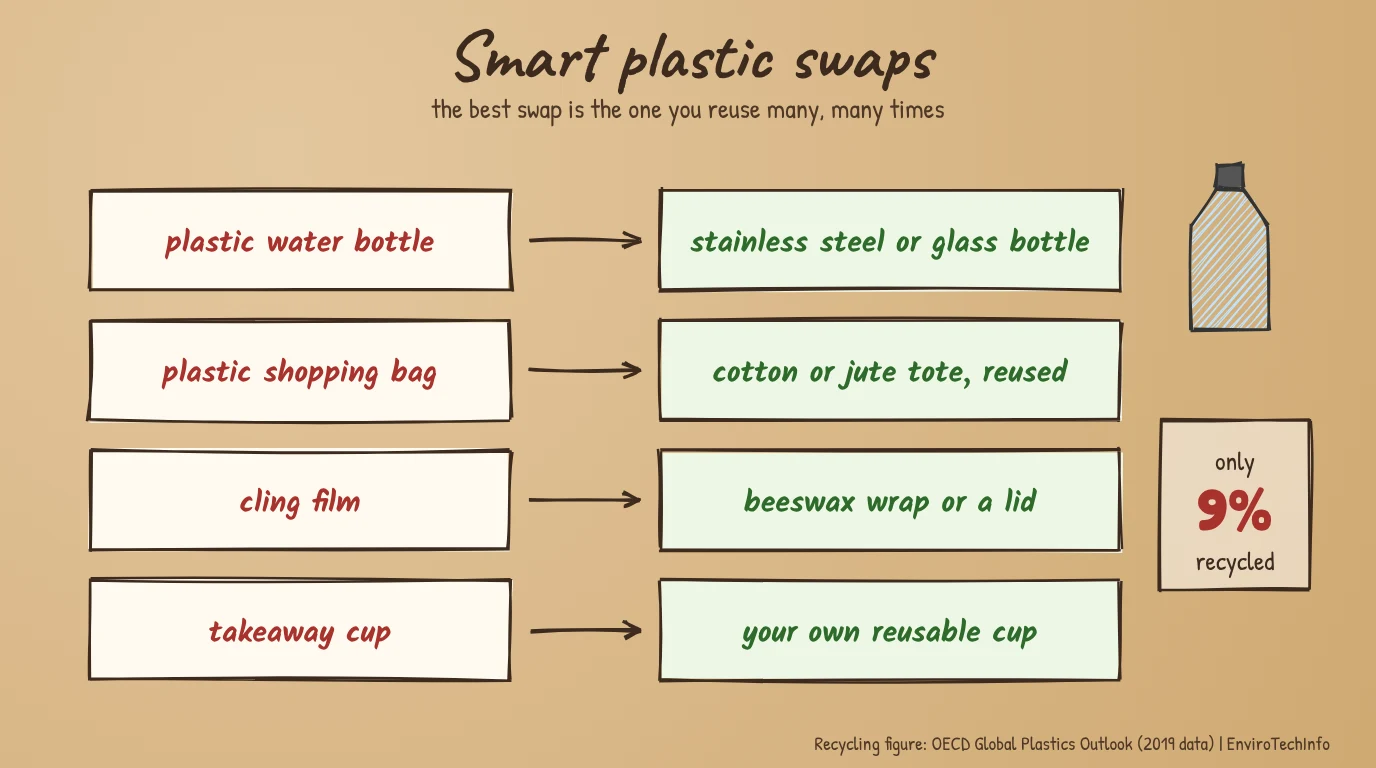
Plastic is cheap, light and useful, but its waste is overwhelming our systems. The OECD’s Global Plastics Outlook found that the world produced 460 million tonnes of plastic in 2019, double the amount in 2000. That same year, 353 million tonnes of plastic waste were generated. As Circular Online summarised, only 9 percent was recycled, 19 percent was incinerated, 50 percent went to landfill and 22 percent escaped waste management systems altogether, ending up in uncontrolled dumps, open burning or the environment.
The OECD estimates that 6.1 million tonnes of plastic leaked into rivers, lakes and seas in 2019, including 1.7 million tonnes that reached the oceans. Once there, plastic breaks into smaller and smaller fragments, eventually becoming microplastics.
The Best Plastic Alternatives by Material
Stainless steel
Strong, long-lasting and easy to clean, stainless steel works well for water bottles, food containers, lunch boxes and straws. Its environmental cost is front-loaded in manufacturing, so it pays off when you use it for years.
Glass
Glass doesn’t leach chemicals into food, can be washed thousands of times and is widely recyclable. It’s ideal for food storage and refillable jars at home, though its weight makes it less efficient for long-distance shipping.
Aluminum
Aluminum is light and can be recycled again and again without losing quality, which makes cans and reusable bottles good options where recycling systems exist. Our article on whether aluminum is biodegradable explains why recycling matters so much for this metal.
Paper and cardboard
Paper-based packaging comes from renewable sources and breaks down far faster than plastic. However, it often needs more energy and water to make, and paper coated with plastic film can be hard to recycle. It works best for dry goods and short-term packaging.
Natural fibres: cotton, jute and wool
Reusable cotton or jute bags and wool or felt products can replace synthetic items. Natural fibres biodegrade, but some, like cotton, are resource-intensive to grow, so they make the most sense when used repeatedly. See our guide to whether felt is biodegradable.
Silicone, bamboo and beeswax wraps
Silicone food bags and lids are durable and heat-resistant, though not easily recycled. Bamboo grows quickly and suits items like toothbrush handles and utensils. Beeswax-coated cloth can replace plastic cling film for many foods.
Biodegradable vs Compostable: What’s the Difference?
These labels are some of the most misunderstood in green marketing. Biodegradable simply means a material can eventually be broken down by microorganisms, but it doesn’t say how long that takes or under what conditions. Some products labelled biodegradable may persist for years in the environment.
Compostable is more specific. It means a material breaks down into natural components within a defined time under composting conditions. Many compostable plastics, such as those made from PLA, are designed for industrial composting facilities, which reach higher temperatures than a home compost heap. Look for recognised certifications such as EN 13432 in Europe or ASTM D6400 in the United States, and check whether your area actually collects compostable packaging.
The key point is that a compostable cup thrown into a regular bin or into nature doesn’t solve anything. It may end up in landfill or contaminate plastic recycling. Disposal matters as much as the material.
When Plastic Alternatives Can Backfire
A heavier or more resource-intensive material only becomes the greener choice if it’s reused enough times to make up for its higher production footprint. A sturdy cotton tote used once is not automatically better than a plastic bag, and a glass bottle shipped thousands of kilometres has a transport cost too. Watch out for greenwashing as well: vague terms like “eco-friendly” or “plant-based” don’t guarantee a product is recyclable or compostable.
A Practical Order of Priorities
The most reliable way to cut plastic waste is to follow a simple order. First, refuse what you don’t need, such as extra bags, straws or packaging. Second, reuse durable items like bottles, cups, containers and bags as many times as possible. Third, choose recyclable or certified compostable options when a single-use item is unavoidable, and dispose of them correctly. Finally, recycle what’s left according to local rules. Small changes repeated every day make a far bigger difference than one perfect product.
Conclusion
Plastic alternatives can genuinely reduce pollution, but only when they’re chosen and used wisely. Durable, reusable products beat disposable ones of any material, and labels like biodegradable and compostable mean little without the right disposal system. With just 9 percent of plastic waste recycled worldwide, the smartest swap is often the one that means you need less stuff in the first place.